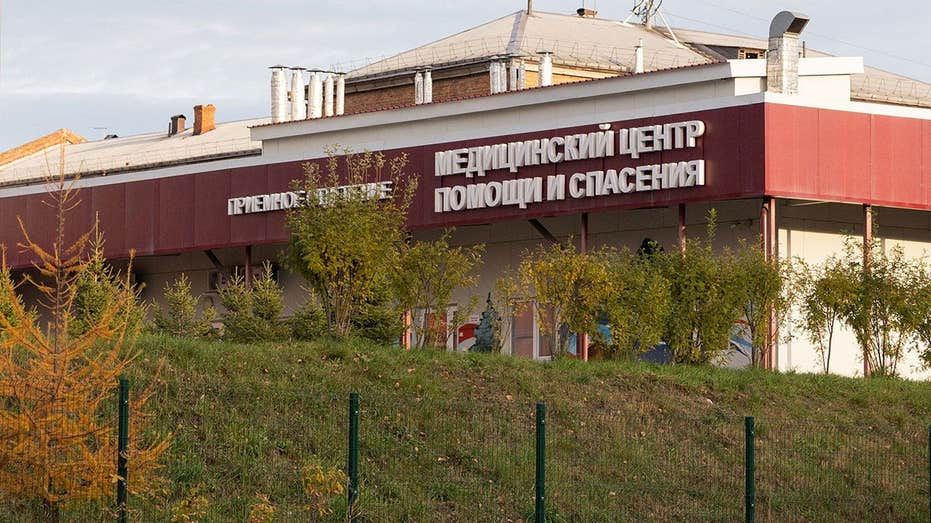
The unexplained death of a researcher at a Russian anti-plague institute has one former senior U.S. arms official warning it could be 'far worse' than the bacteria that caused the Black Death. Marshall Billingslea, who served as President Donald Trump's special presidential envoy for arms control, said a top Soviet bioweapons defector told him decades ago about secret work on antibiotic-resistant plague at the same facility where the recent plague-related death occurred. "This may not be just 'the plague.' It may be far worse," Billingslea wrote on X.
He spent much of the 1990s working on proliferation and arms control issues on the Senate Foreign Relations Committee — and during that time worked with Ken Alibek, the former No. 2 official in the Soviet biological weapons program who defected to the U.S. BIOWEAPON THREAT EXPOSED AS ANTHROPIC SOUNDS ALARM ON FOREIGN ACTORS PLOTTING VIRUS EXPERIMENTS "He claimed that they had engineered a strain of plague that was antibiotic-resistant & that they had worked on plague chimeras (fusing 2 or more pathogens)," Billingslea wrote of Alibek. "He specifically called out Irkutsk for being involved in the BW program," he added.
Billingslea's warning comes after a 28-year-old employee of the Irkutsk Anti-Plague Institute of Siberia and the Far East died last week from what Russian authorities have described as pneumonia of undetermined origin. Russia has not said the woman died of plague and said testing found no microorganisms in her body linked to her work. The World Health Organization (WHO) said Tuesday that Russian officials told the agency no plague or other high-threat pathogen had been detected among her close contacts, though they are still awaiting confirmation of what caused her fatal pneumonia.
DEFENSE DEPARTMENT SCIENTIST’S ACCIDENTAL DEATH RAISES QUESTIONS AS PROBE INTO MISSING SCIENTISTS GROWS About 60% of the woman's identified contacts have been tested so far, according to Russian authorities, with two cases of COVID-19 and two rhinovirus infections detected — but no other infectious disease pathogens. Still, the unexplained death at a facility that works with dangerous pathogens has drawn scrutiny from biosecurity experts — including questions about why the cause remains unknown. Kevin Esvelt, an MIT professor who studies biological security and catastrophic pandemic risks, said Russia's latest explanation suggests the researcher did not die from plague while leaving unanswered what killed her.
"If we take the Russian authorities at their word, it is not plague," Esvelt wrote Tuesday. "But untargeted research-grade sequencing reliably identifies pathogens, and people seldom die of pneumonia without pathogens, let alone 28-year-olds," he added. "It would be surprising if they did not know the cause." Esvelt cautioned that more alarming explanations remain hypothetical.
"The concerning possibility is still only a possibility," he wrote. The questions surrounding the death come against the backdrop of the Soviet Union's documented history of secretly developing biological weapons, including weaponized plague, and U.S. assessments that elements of that program continued after the Soviet collapse. In its 2025 arms control compliance report, the State Department assessed that Russia maintains an offensive biological warfare program in violation of the Biological Weapons Convention and that the Soviet program was "absorbed, not dismantled" after the Soviet collapse.
Extract — continue reading at the source.