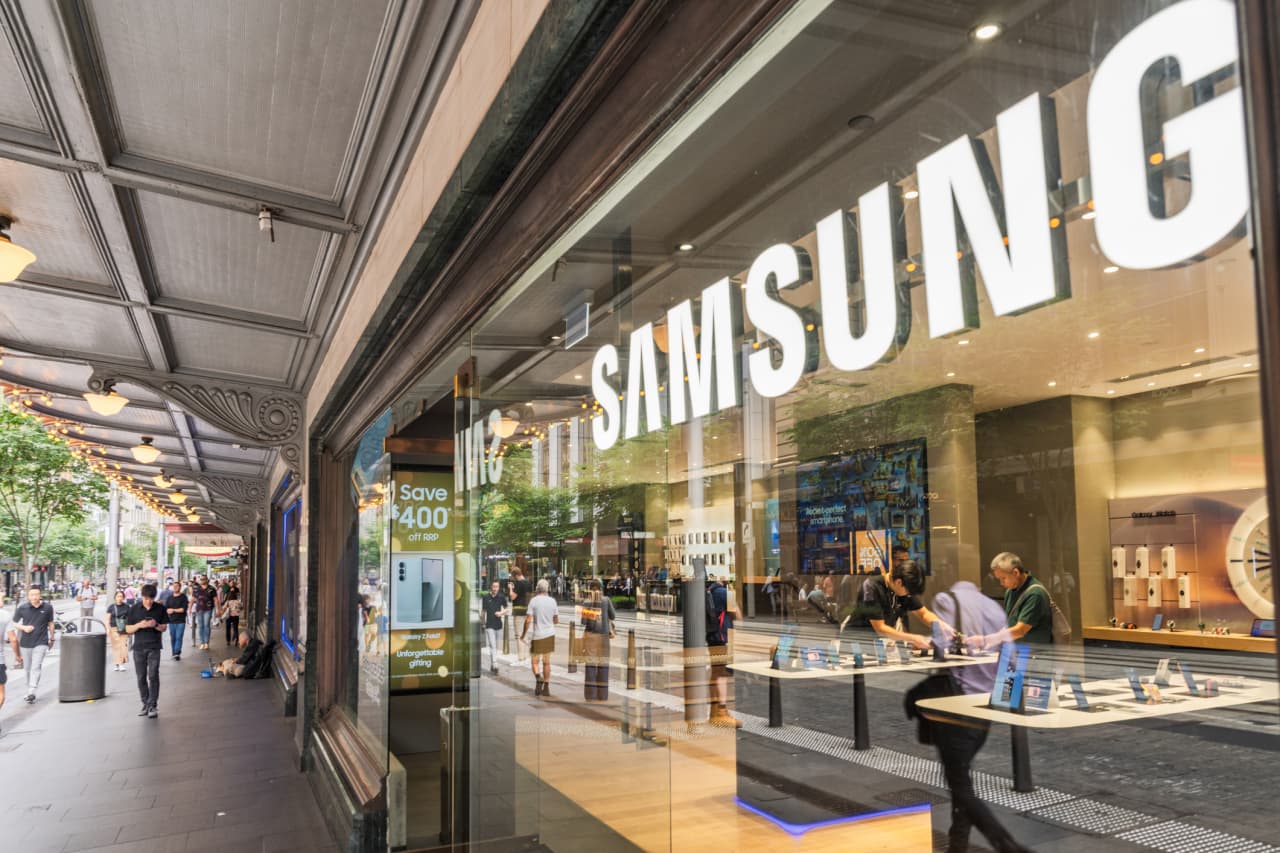
Samsung’s preliminary operating profits of 107 trillion won ($80.1 billion) showed a 782% increase year-over-year Samsung’s preliminary operating profits of 107 trillion Korean won ($80.1 billion) showed a 782% increase year-over-year. Investors can be difficult to satisfy. Despite announcing the highest quarterly operating profit ever for a tech company,according to , Samsung Electronics shares fell almost 2.5% in Seoul, and the stock is still languishing 25% below its all-time high set in June.
Investors remain skeptical about the sustainability of the chip makers’ margins in the event of a potential slowdown in AI spending. Samsung’s full results will be published Oct. 29 but the company forecast third-quarter revenues of 195 trillion won, a 127% increase over the same period last year, and an operating profit of 107.4 trillion won, up almost ninefold. The surge in profits results from the shortage in global memory-chip market that has persisted since 2025 and shows little sign of abating any time soon, as chief executives ranging from Elon Musk at SpaceX and Lisa Su at AMD have reiterated recently.
Why humanoid robots are so hard to mass-produce Play video: Why humanoid robots are so hard to mass-produce In a note dispatched to investors after the announcement, CGS International analyst Kyunga Lee noted the figures were broadly in line with the Bloomberg consensus of 106 trillion won, despite the headwinds of a stronger Korean won that has rallied 11% in the last quarter and provisions made to give employees profitability-related bonuses. Don’t Short Yourself offers weekly money tips to help you earn it, stack it and grow it. I would like to receive updates and special offers from Dow Jones and affiliates.
I can unsubscribe at any time. Lee upgraded her forecasts for full year 2026 through 2028 by between 1% to 4% and maintained her target price of 550,000 won, showing more than 100% upside, and her recommendation that investors add to positions. On her numbers, Samsung is trading on a fiscal 2027 price-to-earnings multiple of just 3.6 times, with a dividend yield of 6.63% and a return on equity of 51.9%.
That skepticism extends to Samsung’s memory-chip rivals. Micron Technology trades on 6.3 times this year’s earnings and SK Hynix trades at 7 times, according to FactSet. The low valuations reflect a well-established concern among global investors that AI capex may decelerate in 2027 and the huge margins currently enjoyed by the chip companies may not endure in the face of growing competition from cheaper Chinese products.
However, a report by technology analyst Harvey Robinson of Panmure Liberum sent to clients Monday showed that the global semiconductor market is set to almost double in 2026 and then increase by another 27% in 2027. Moreover, as Lee pointed out in her note, Samsung is boosting sales of its higher-margin, cutting-edge, high-bandwidth memory chips. In addition, the memory-chip makers are trying to persuade customers to commit to multi-year contracts that may smooth out an earnings profile that has, historically, been extremely volatile.
Extract — continue reading at the source.