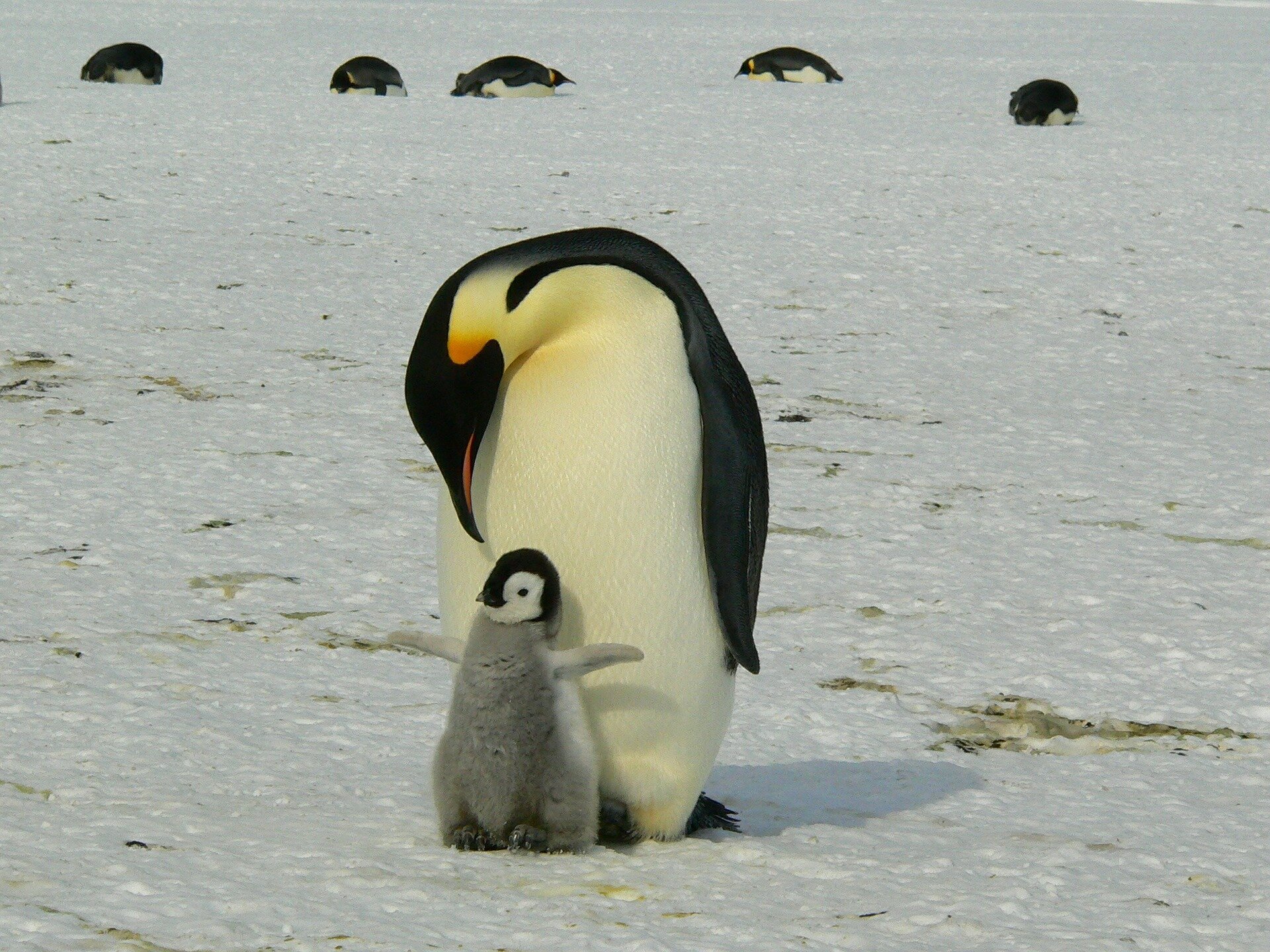
This article has been reviewed according to Science X's editorial process and policies. Editors have highlighted the following attributes while ensuring the content's credibility: The color of penguin poop, as seen from space, is offering a new window into how Antarctica's ecology and environment are changing over time. Adélie penguins are among the most abundant predators in the Southern Ocean.
They rely on food sources in the ocean but nest on rocky outcrops around the Antarctic continent. Penguin colonies often have hundreds of thousands of nesting birds, which generate a lot of guano—so much that it can be readily identified from space using NASA's Landsat satellites. A multidisciplinary group of scholars that I led has used thousands of satellite images dating to the 1980s to examine these patches of penguin guano and reveal what these birds are eating and how changes in the environment are affecting their diets—which also affect their survival.
In particular, we found that when there is an abundance of sea ice at a colony, Adélie penguins there tend to rely more on small fish. When there is less sea ice, they depend more on krill, which are small shrimplike crustaceans. Krill have a pink exoskeleton that penguins don't fully digest, which contributes a rosy shade to their guano.
We can use the color of guano to determine what penguins are eating. This approach relies on a method we developed that examines guano color and links it to the share of a penguin's diet that is krill. To develop that link, we collected penguin guano at several locations.
With a spectrometer, we determined the color of each sample as a satellite would see it. This was done in a small makeshift lab on a ship in the Antarctic, which likely smells of penguin guano to this day. We analyzed what was in the guano, using tools from environmental chemistry, to determine the diet that had generated that color.
That information, along with statistical modeling, allowed us to determine what penguins are eating based on the color of their guano as observed from satellites. More broadly, it provides a window into what is happening in the larger Antarctic marine food web—information typically hidden under the surface of the Southern Ocean. To our knowledge, this is the first effort to directly monitor what animals are eating from space.
Extract — continue reading at the source.


