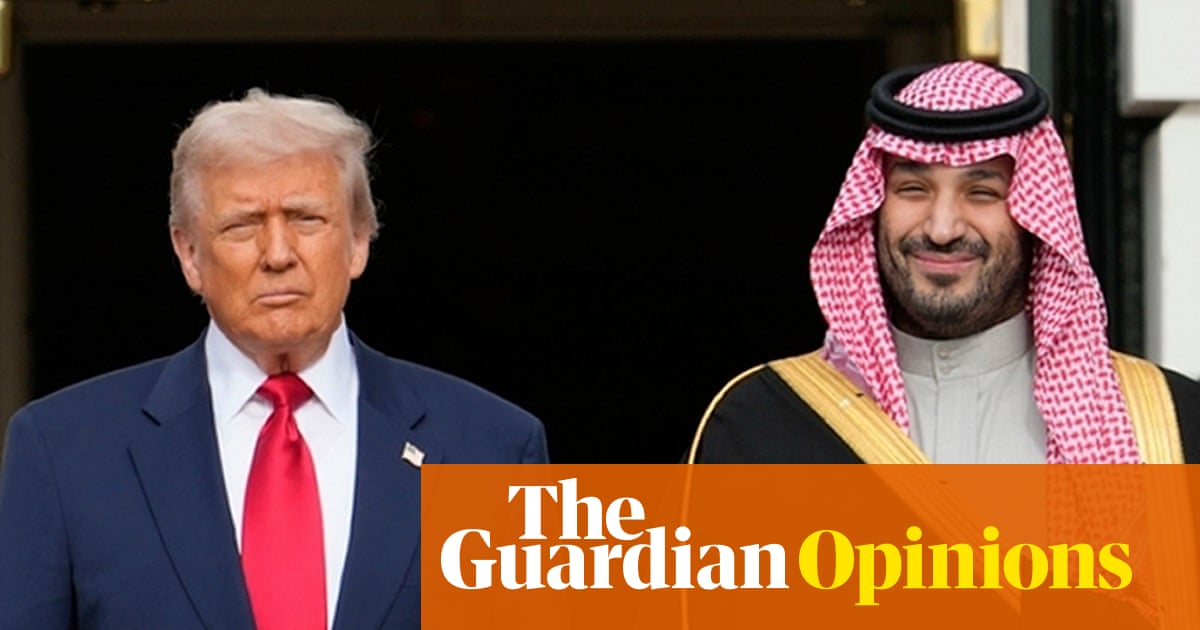
For years, Saudi Arabia’s crown prince, Mohammed bin Salman, cultivated a close relationship with Donald Trump and his son-in-law and former top adviser, Jared Kushner. The prince understood the president’s transactional approach to power: he signed deals to buy billions of dollars’ worth of US weapons and invested billions more in American companies. Days after Trump returned to the White House in January 2025, Prince Mohammed pledged to expand investment and trade with the US by $600bn over four years.
He later promised to increase that investment to nearly $1tn, although it wasn’t entirely clear how Saudi Arabia would manage to plough a sum close to the kingdom’s entire annual GDP into a foreign economy over a few years. On a visit to Washington last November, Prince Mohammed sealed a defense cooperation agreement with the US and signed a deal for the monarchy to buy dozens of F-35 stealth fighter jets, America’s most advanced warplane. Behind this flurry of deal-making, Saudi Arabia’s de facto ruler expected the US to defend the kingdom if it was attacked, as Washington has done in the past.
But Prince Mohammed, like the leaders of other Arab petrostates who have invested billions of dollars to appease Trump, is learning a hard lesson: never count on Trump to protect you. Over the summer, Trump’s war against Iran rekindled a years-long conflict between Saudi Arabia and the Houthi militia in Yemen. Last month, as the Houthis intensified their attacks on Saudi territory and the kingdom’s Yemeni allies, the prince called Trump multiple times in September, urging him to launch US airstrikes against the Houthis, who are allied with Iran.
For now, Trump has resisted appeals from Prince Mohammed to drag American forces into the Houthi-Saudi battle – one of the best foreign policy decisions of an otherwise disastrous second term. But the conflict is escalating in dangerous ways. On 10 October, the Houthis fired a cruise missile at the international airport in the Saudi capital, Riyadh, killing at least 13 people and wounding more than 300.
After that attack, when reporters in Washington asked Trump whether he would be more willing to order US strikes against Yemeni rebels, he was non-committal. We’re going to look at it,” he said. So we’ll make a decision.” The Houthi-Saudi conflagration is the latest illustration of Trump’s decision to attack Iran spiraling into an unpredictable regional conflict, as Middle East experts and some US intelligence officials warned would happen.
It also reveals that Saudi Arabia and other Arab Gulf countries can’t rely on the Trump administration to protect them, even after they have spent tens of billions of dollars to buy American weapons and build US bases – some of which were decimated by Iranian attacks over the past seven months. Trump’s resistance to ordering US attacks on the Houthis has been particularly embarrassing for Prince Mohammed. Billions of dollars in Saudi investments have been directed into Kushner’s private equity firm and the president’s family business, the Trump Organization.
Extract — continue reading at the source.