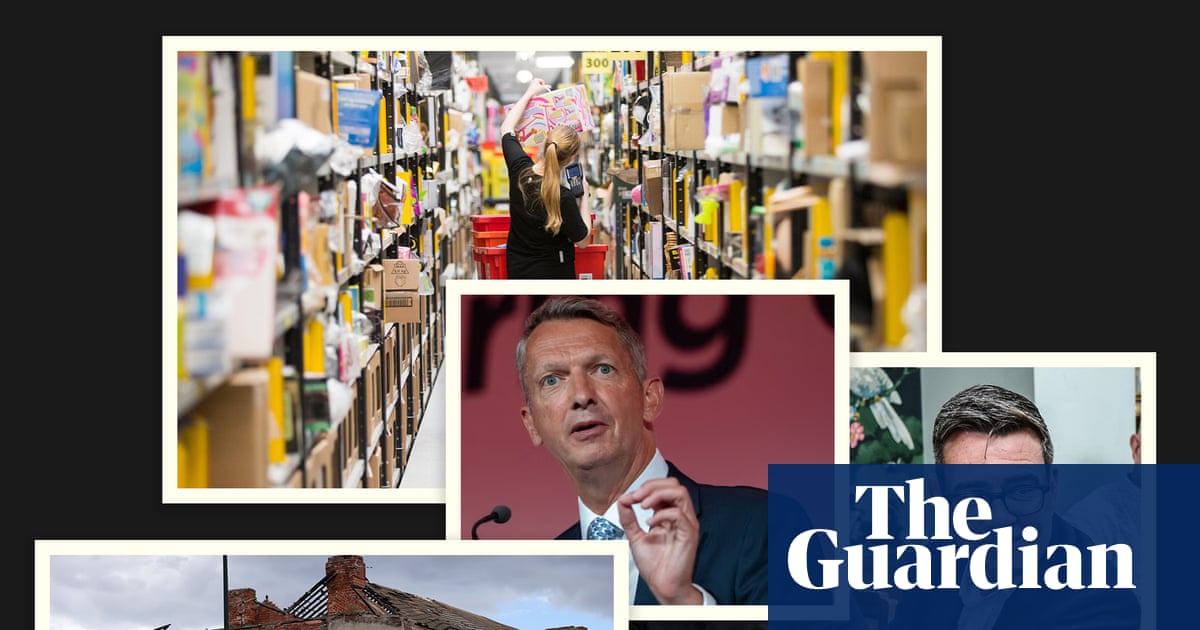
Andy Burnham has been urged by one of his most senior former advisers to tax internet sales at a higher rate than those in physical shops to help “level the playing field” for struggling high streets. As the prime minister and his chancellor, John Healey, prepare for their first budget next week, Andy Haldane joined calls for them to take action to stop the shutters coming down on growing numbers of shops across the UK. In an interview for a Guardian series looking at how Britain can reverse the declining fortunes of towns, the former Bank of England chief economist urged them to launch a realignment of the tax system away from favouring online sellers, alongside a review of business rates and measures to turbocharge devolution.
Calling on Burnham to follow through with Labour’s manifesto promise to “replace” the business rates system, Haldane said “some levelling of the playing field” was needed to help smaller operators battling with soaring costs and evaporating demand. The prime minister has made town centres a top priority after years of decline that have left many hollowed-out, with shops closed, buildings boarded up and once-busy hubs sitting empty. Healey’s budget on Wednesday is tipped to include measures to ease the pressure on these struggling high streets, including a tax crackdown on online marketplaces such as Amazon and eBay.
The measure could raise up to an extra £1bn by forcing them to collect VAT on behalf of large-scale sellers based in the UK as well as those overseas. He is also expected to honour the promise Burnham made in June to take more small players out of the system altogether by raising the rent valuation threshold at which businesses start paying. The Treasury is also understood to have taken an interest in a report by the IPPR thinktank calling for an online sales tax to fund lower high street business rates.
Big retailers including Morrisons, Waterstones and the UK’s biggest supermarket, Tesco, have long called for such a move. Labour has already had one business rates shake-up. In April, taxes on warehouses used by online retailers were increased, but the increase on the UK’s most valuable commercial properties also drew other large buildings such as department stores and hotels fuelling calls for further tweaks.
Some retailers have warned against a more targeted warehouse tax because many big chains now combine online shopping with a high-street presence. Allen Simpson, the boss of the trade body UKHospitality, said the government had indicated it would ease costs on his sector, but he sensed ministers were wary of US retribution if taxes on big US-based tech firms such as Amazon and eBay were hit, warning that “Trump might hit us with a tariff”. Burnham’s push to revive communities with measures to hand more power and money to local leaders comes as Nigel Farage’s Reform UK pushes to weaponise high-street decline.
Research shows public support for his rightwing populist party has grown most in the places where high-street vacancy rates have risen most. Haldane, who is the president of the British Chambers of Commerce, advised Burnham as he prepared to enter Downing Street, but did not take a formal position in government. A leading expert in regional economic development who masterminded Boris Johnson’s levelling up plans – before distancing himself from the Conservatives over cuts to local government – praised Burnham’s agenda to hand more power and funding to local leaders.
Extract — continue reading at the source.