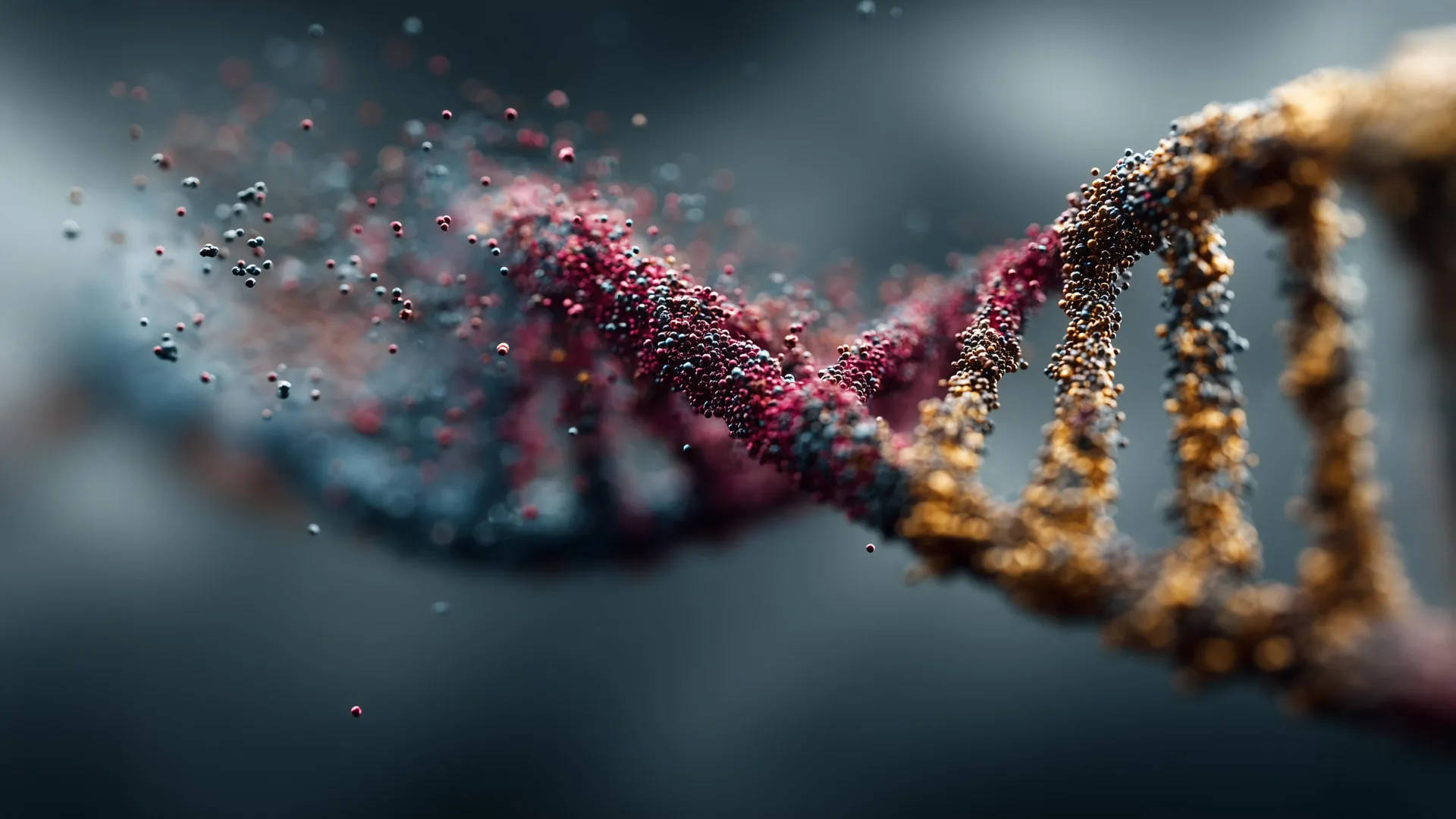
A routine experiment involving a microscopic organism from a freshwater pond led scientists to an extraordinary genetic discovery. The tiny creature was found to interpret DNA instructions in a way researchers had never documented before, challenging a long held assumption about how the genetic code works. The surprise came when scientists examined a previously unknown protist called Oligohymenophorea sp.
Two genetic signals that ordinarily tell cells to stop making proteins had taken on completely different functions. Even more remarkably, the signals had been reassigned to two different amino acids, breaking a pattern scientists believed was closely linked by evolution. The discovery, published in PLOS Genetics in October 2023, revealed an unexpected level of flexibility in one of life's most fundamental biological systems.
Subsequent research has uncovered additional genetic code variations in related microorganisms, suggesting that many more surprises could be waiting in the microscopic world. An Accidental Genetic Discovery in a Freshwater Pond Dr. Jamie McGowan, who was a postdoctoral scientist at the Earlham Institute, made the discovery while studying a protist collected from a pond at Oxford University Parks in England.
The project had originally been designed to test a DNA sequencing method capable of analyzing extremely small quantities of genetic material, potentially from just one cell. McGowan worked alongside scientists at the Earlham Institute and a research group led by Professor Thomas Richards at the University of Oxford. Rather than investigating genetic code evolution, the researchers were trying to improve the tools available for studying organisms that are difficult to grow and analyze in laboratories.
But when they assembled and examined the organism's genome, they noticed something unexpected. The protist belonged to a previously unidentified species, and its genetic instructions appeared to operate according to an unusual set of rules. McGowan said: "It's sheer luck we chose this protist to test our sequencing pipeline, and it just shows what's out there, highlighting just how little we know about the genetics of protists." What Are Protists, and Why Are They So Unusual?
Protists are among the most diverse and least understood groups of organisms on Earth. Many consist of just one cell and are too small to see without a microscope. Familiar examples include amoebas, various algae, and diatoms, which are microscopic organisms often found in aquatic environments.
Extract — continue reading at the source.


