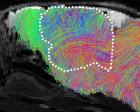
Researchers have created mice with half-human brains in an effort to understand and develop new treatments for disorders such as schizophrenia, epilepsy, cerebral palsy, intellectual disability and rare forms of dementia. The scientists transplanted lab-grown human brain cells into animals that were engineered to be born without a cortex or hippocampus. This made space for the human tissue to grow inside the rodents’ skulls.
The procedure means scientists can now take cells from patients with brain disorders, turn them into brain tissue in the laboratory, and grow that tissue in living animals. The animals can then be studied to see how the disorder takes hold in human brain tissue, and how drugs might treat the conditions. While potentially transformative for brain medicine, organoids have sparked a wave of ethical concerns, not least around whether the clumps of tissue could become conscious or feel pain, and the welfare of animals implanted with organoids.
Pașca said the work had received extensive ethical oversight from the start. Experts said this would need to continue. Emily Jackson, professor of law at London School of Economics and chair of a recent report on neural organoids for the Nuffield Council on Bioethics, said: “Animal welfare is a really important concern, and it will be necessary to closely monitor these animals in order to evaluate the impact on them.” In previous work, the Stanford team transplanted human neurons into rat brains.
The tissue took root and wired into the animals’ brain circuits, but there was too little room for the human tissue to grow very much. To solve the problem, the researchers genetically engineered mice to stunt the growth of key brain regions, the cerebral cortex and hippocampus. Surprisingly, the mice survived because the remaining parts of the brain took on new roles.
While the mice look normal, they are cautious on their feet and more forgetful. Writing in Nature, Paşca describes how the mice were injected with human brain organoids that were themselves created by reprogramming donated skin cells. The newborn mice received several injections, each containing about 100,000 human brain cells, into the space where their own brain tissue was missing.
In total, the rodents lacked about 14m mouse brain cells and ended up with about 4m human ones – half the brain by volume. Three months after surgery, the human tissue had hooked up to the mouse’s blood supply and almost entirely filled the cavity, taking up about half the size of the rodent’s brain. Some of the human neurons formed connections with mouse brain cells and spinal cord.
Extract — continue reading at the source.


