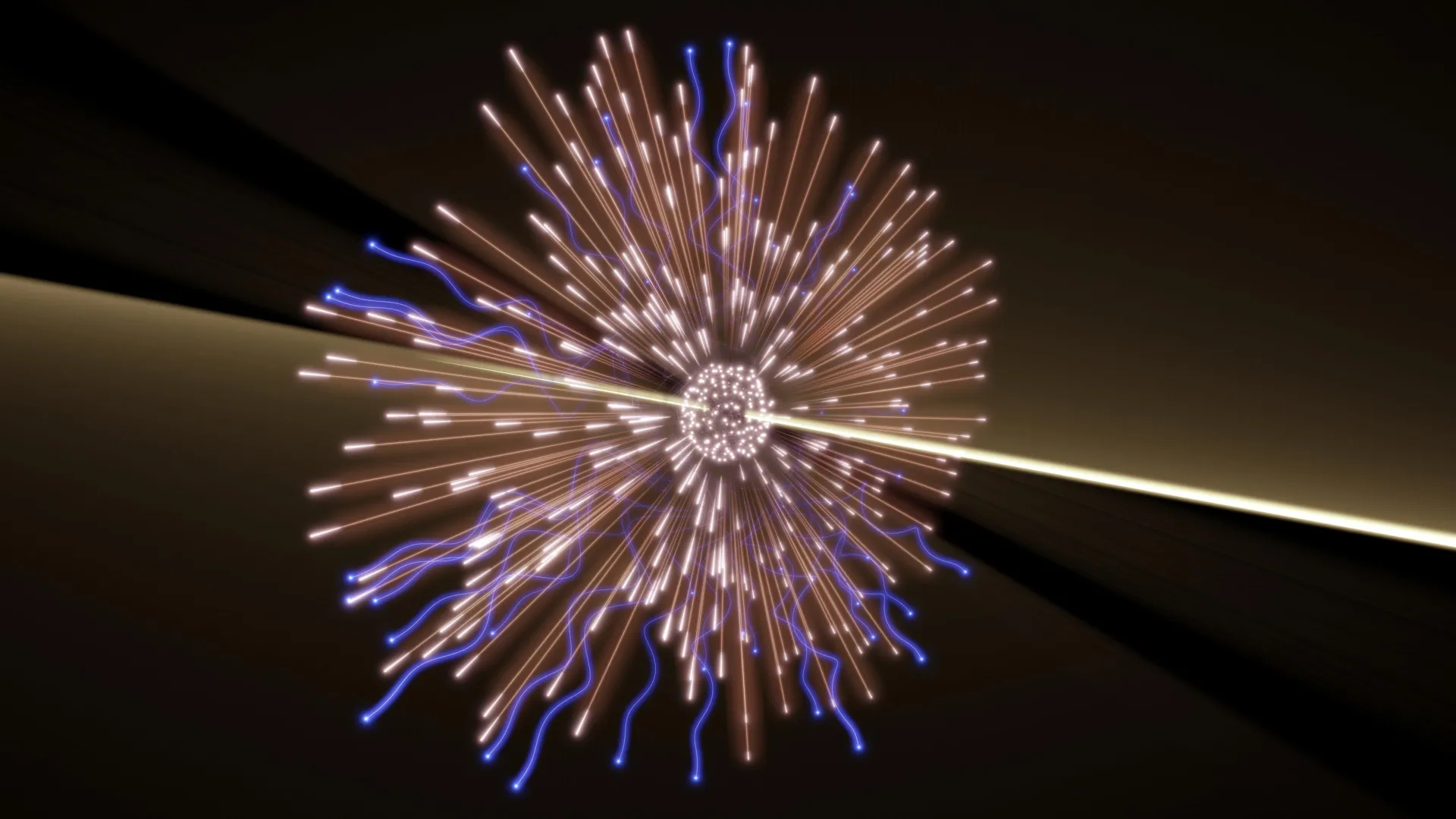
Even after a nuclear reactor is switched off, activity continues deep inside its core. Long-lived radioactive fission products keep decaying for months or even years, releasing a weak stream of particles called antineutrinos. (Anti)neutrinos are the lightest and most elusive known particles in the Universe, and they can pass through both the reactor and its surrounding shielding with little interference. Scientists with the Double Chooz collaboration have now measured this lingering antineutrino emission for the first time.
The research, recently published in Physical Review Letters, was led by Anthony Onillon and Thierry Lassere of the Max-Planck-Institut für Kernphysik (MPIK) in Heidelberg, Germany. The findings show that antineutrino detectors can gather information about nuclear reactors even while they are shut down, potentially creating new opportunities for reactor monitoring, nuclear safety, and safeguards. Detecting Antineutrinos From a Shutdown Reactor The measurement took place at the Chooz nuclear power plant in northern France.
The Double Chooz detector sits underground about 400 meters from the facility's two reactor cores. Inside the detector are more than 30 cubic meters of liquid scintillator, a material that produces tiny flashes of light when an antineutrino interacts within it. "Antineutrinos interact only extremely rarely with matter.
However, when one interacts within the Double-Chooz detector, a characteristic double-light signal is produced that can be distinguished from background events," explains Thierry Lasserre from the independent research group OMINA, also located at MPIK. This distinctive signal enables scientists to identify antineutrinos coming from the reactors. Researchers examined 17.2 days of observations collected while both reactor units were fully shut down.
Over that period, the detector recorded around 100 antineutrino candidate events linked to residual radioactivity in the reactor cores and nearby spent-fuel cooling pools. Measurements Match Nuclear Fuel Predictions The detected signal closely matched detailed simulations that accounted for the remaining nuclear fuel inventory and the decay of long-lived fission products. The result provides the first direct experimental confirmation of predictions describing antineutrino emissions from shut down reactors and spent fuel.
"Until now, reactor antineutrino experiments have mainly focused on operating reactors, where the antineutrino flux is much larger. Detecting the tiny residual signal after shutdown required exceptionally low backgrounds and careful analysis techniques developed by the Double Chooz collaboration over many years," adds Dr. Other experiments are already beginning to explore this new area.
Extract — continue reading at the source.