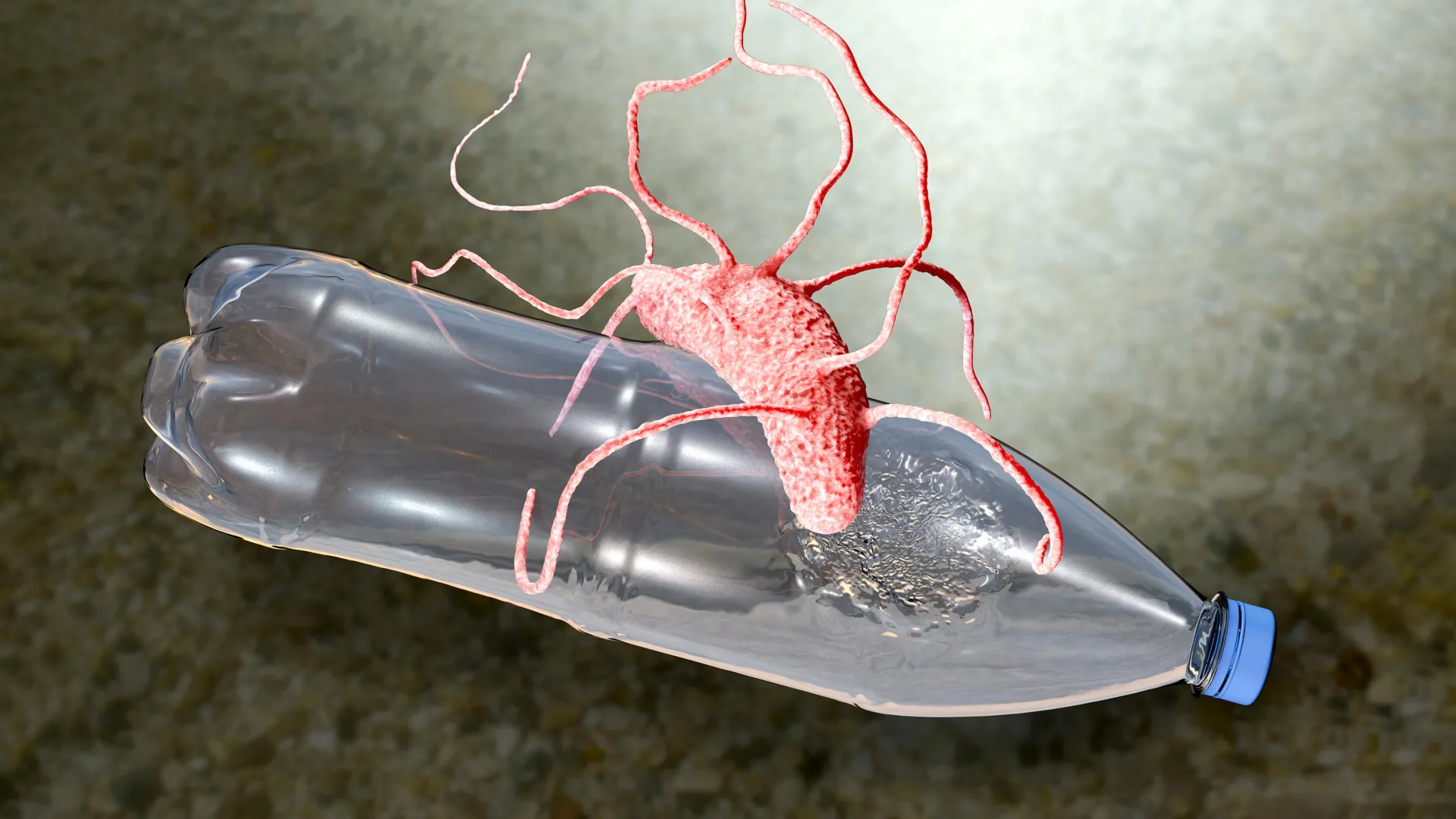
Plastic pollution is one of the world's most persistent environmental problems. Vast amounts of discarded plastic accumulate in the oceans, sometimes forming enormous garbage patches that threaten marine life. Most conventional plastics break down extremely slowly because microorganisms struggle to digest the synthetic polymers from which they are made.
Instead of disappearing, these materials gradually fragment into increasingly smaller particles, including microplastics and nanoplastics. Yet plastic waste is not completely beyond the reach of nature. Bacteria and other microorganisms can colonize its surfaces, forming communities known as biofilms.
These communities create a distinctive microbial ecosystem that scientists call the "plastisphere." Researchers at the University of Konstanz have now discovered an unusual enzyme that could reveal how some bacteria are becoming better equipped to break down certain types of plastic. The enzyme can digest particular polyesters and biodegradable plastics, but it has another unexpected ability: it can also break down penicillin, suggesting a possible connection to antibiotic resistance. Scientists have nicknamed it the "Pac-Man enzyme" because its molecular structure features a remarkably wide opening where chemical reactions take place, known as the active site.
The discovery suggests that bacteria may be adapting to digest certain plastic materials more quickly than researchers previously believed. However, the findings also highlight an important limitation. For microorganisms to make a meaningful difference in reducing plastic pollution, more plastic products would need to be made from biodegradable materials that contain chemical bonds microbes can break apart.
Testing How Bacteria Break Down Bioplastics To investigate how microorganisms digest biodegradable plastics, University of Konstanz biologists Harry Lerner and David Schleheck studied the entire process of microbial decomposition. They wanted to determine not only whether the materials could be completely broken down, but also which microorganisms were responsible and what biological mechanisms allowed them to do it. The researchers examined the composition of the microbial communities involved and analyzed their collective genetic information (the metagenome).
This approach allowed them to search for genes that might produce enzymes capable of breaking apart plastic polymers. Their experiments focused on long-chain aliphatic polyesters (LCAP), a class of biodegradable plastic materials developed by a research team led by chemist Stefan Mecking. These materials contain chemical bonds that certain microorganisms can potentially break down, unlike the more resistant structures found in many conventional plastics.
Extract — continue reading at the source.


