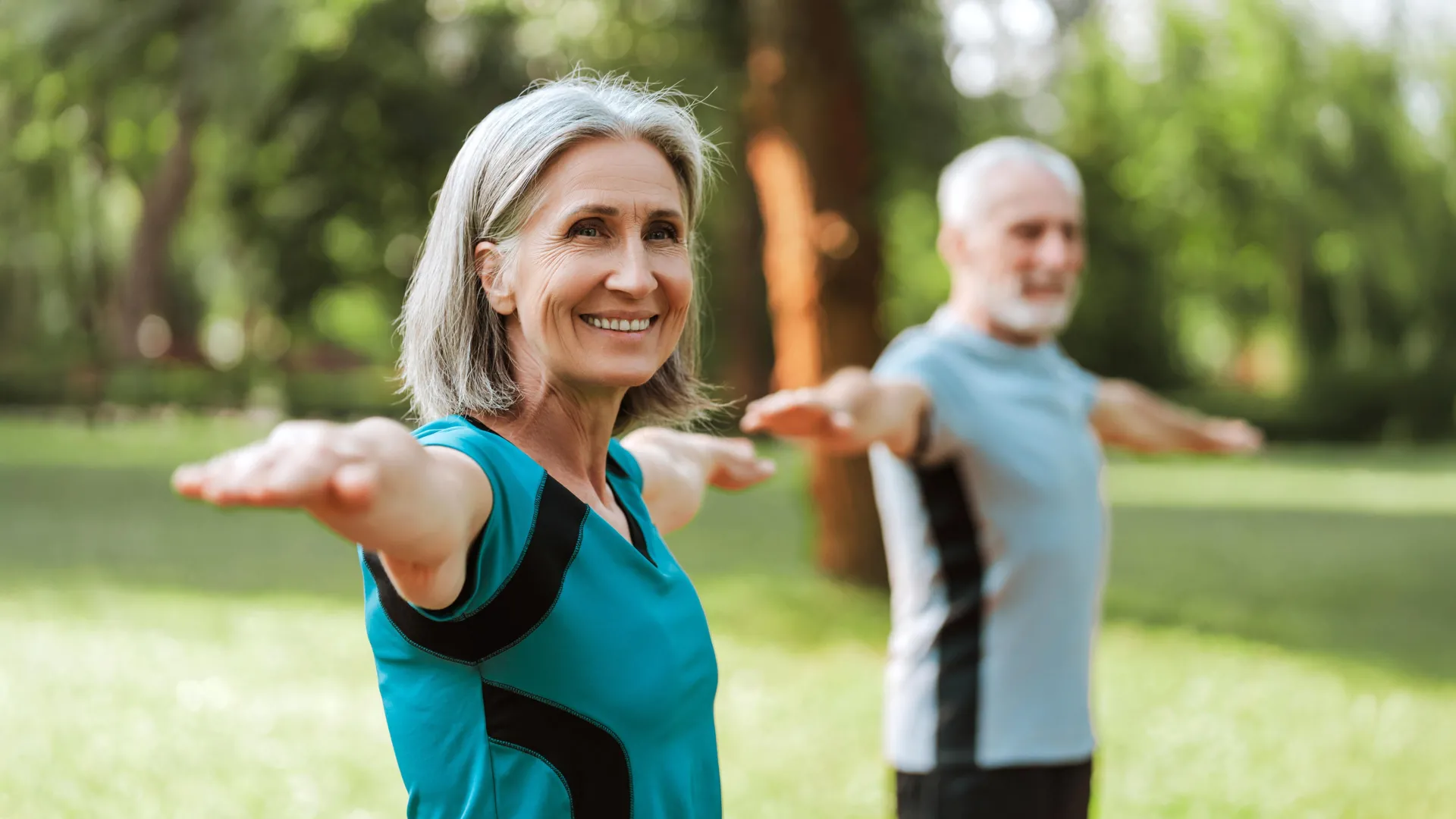
People with Parkinson's disease who are more physically active may experience slower declines in memory, thinking, and movement, according to a new study published October 7, 2026, in Neurology, the official medical journal of the American Academy of Neurology. The findings suggest that staying active could offer two important advantages for people living with Parkinson's. However, researchers emphasize that the study identified a connection between physical activity and slower symptom progression.
It does not establish that exercise directly causes the disease to progress more slowly. "Parkinson's disease is a brain disorder that causes movement and cognitive problems that gradually worsen leading to disability and a loss of independence," said study author Dong-Woo Ryu, MD, PhD, of the University of Cincinnati in Ohio. "Previous research has shown associations between physical activity and movement symptoms.
Our study found physical activity may have dual benefits, with associations with slower declines in movement and cognition." Tracking Exercise and Parkinson's Symptoms Over Seven Years The research involved 294 adults with mild to moderate Parkinson's disease. Participants were 66 years old on average, and researchers monitored their health for up to seven years. To understand their activity habits, participants completed questionnaires estimating how many hours each week they spent being physically active.
The questions covered activities performed at work, around the home, and during hobbies or recreation. Researchers classified activities by their intensity. Moderate activities included brisk walking, doubles tennis, leisurely swimming, and household tasks such as cleaning windows, vacuuming, or mowing the lawn.
More demanding activities included running, cycling at higher speeds, participating in team sports, playing singles tennis, shoveling, and carrying heavy objects. The team examined physical activity in three ways. First, they calculated the total time participants spent doing moderate or vigorous activities.
Second, they estimated overall activity volume by combining duration with intensity, giving greater weight to strenuous exercise. Third, they separately measured the amount of time spent doing vigorous activities. Based on total weekly activity time, participants were placed into three categories.
Extract — continue reading at the source.