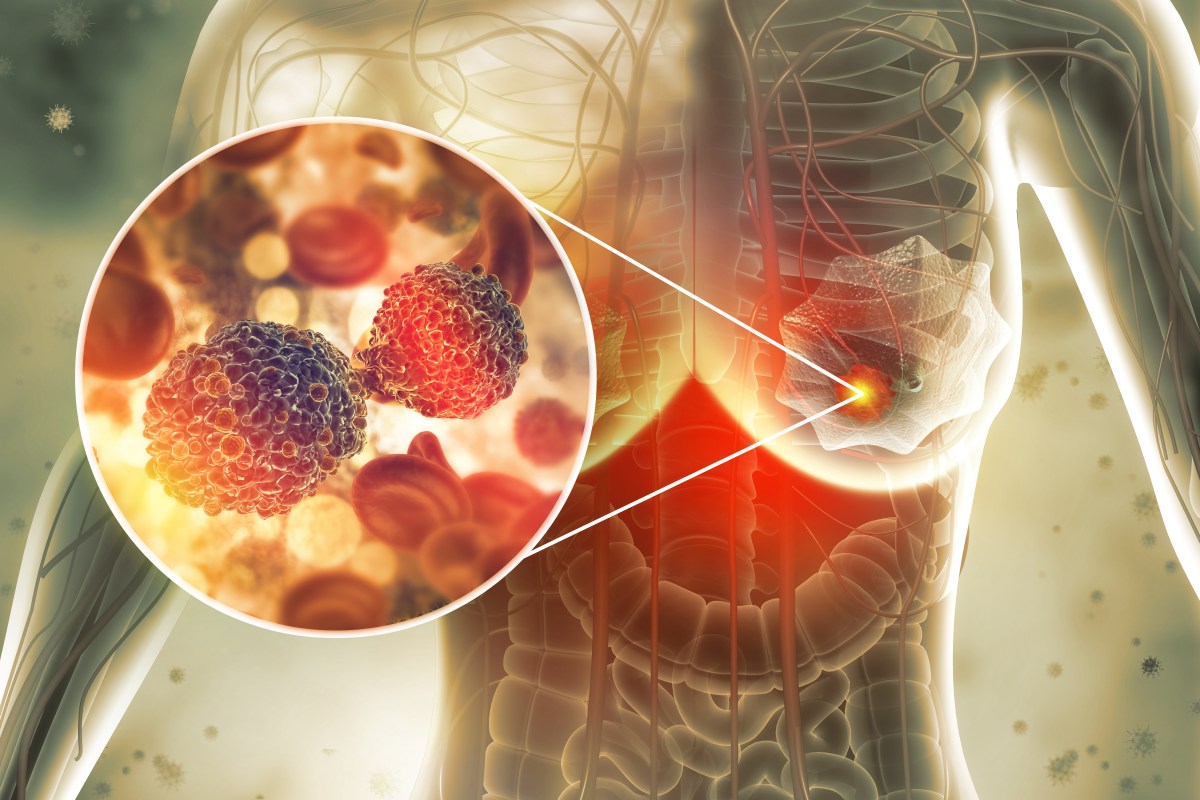
Researchers may have discovered how dense breast tissue leads to cancer, and they hope they can get ahead of tumor formation. Breast cancer often grows in dense tissue, and women found to have this type of breast tissue are typically flagged for follow-up appointments after a mammogram. According to the Mayo Clinic, dense breast tissue makes breast cancer screening more difficult, as it appears as solid white on a mammogram image, and it also increases the risk of developing breast cancer.
Now, researchers at UC San Francisco believe they have uncovered the mechanism that could explain why a person with dense tissue has a modestly higher risk of developing breast cancer than those without. Dense tissue is stiffer than normal tissue and attracts immune cells to the breast, prompting them to release chemicals that mutate DNA, according to a news release from Medical Xpress. These chemicals damage the DNA of nearby cells, raising the risk of cancer.
For decades, medical staff have used the knowledge of this relationship between dense tissue and cancer risk to find cancer once it had occurred, but the new research may enable them to prevent this effect from happening. First author Mary-Kate Hayward told Newsweek: "We've long known that dense breast tissue raises cancer risk, but not why. "Our study shows that the physical stiffness of dense tissue changes the behavior of immune cells called macrophages, causing them to release reactive chemicals that damage nearby cells' DNA.
This mechanism may help explain how dense tissue drives cancer development." The researchers analyzed public genomic data from breast tumors and found that patients with worse outcomes had more breast tissue scarring, more DNA mutations and more of the immune cell macrophage. In the study, published in Cancer Cell, researchers searched for a link by examining breast tumor samples from patients, measuring tumor stiffness and taking microscopic images of the protein collagen, which makes tissues stiffer. Their analysis found that the stiffer parts of tumors had more collagen, as well as the scarring, macrophages and DNA mutations.
These stiffer areas also had elevated STAT3, a signaling pathway that drives cancer, which researchers noted could be a link between the stiffness and the increase in macrophages. Researchers grew tumors in different gels, followed by mouse models of cancer, and found that the stiff environment prompted breast cells to turn on STAT3, which then released other signals that brought in macrophages. Scientists suspect those are the same macrophages that help cancer grow.
Macrophages grown on stiff gels made chemicals called reactive oxygen species (ROS), a hallmark of cancer. ROS are short-lived, however, and it was unclear how they could travel far enough from the macrophages to damage nearby cells. Researchers uncovered that ROS caused oxidative damage to fats in the macrophages, turning them into chemicals capable of damaging DNA and traveling to nearby cells.
Extract — continue reading at the source.