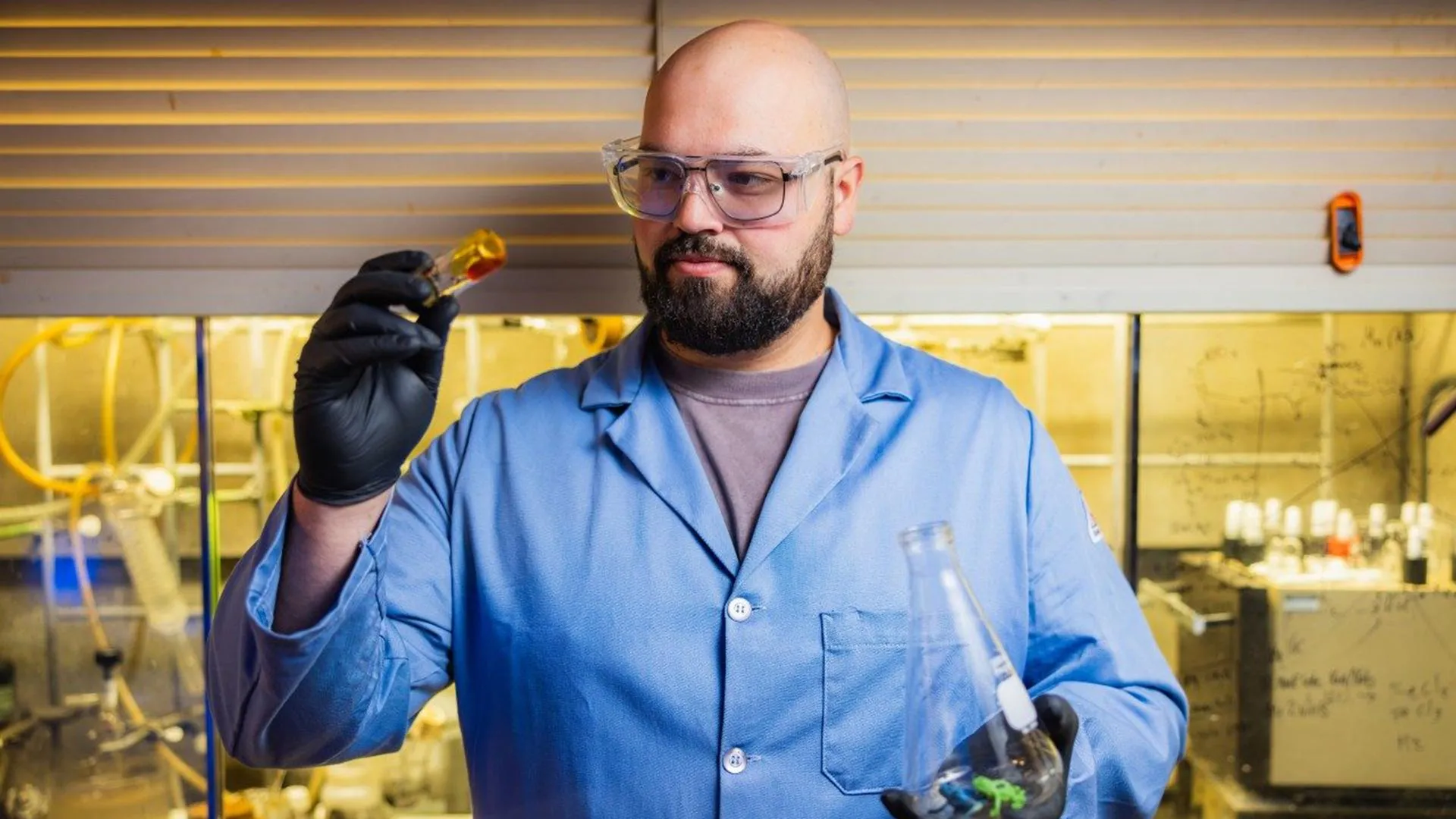
Virginia Tech chemist and chemical engineer Guoliang "Greg" Liu and his research team have developed a method for transforming polyvinyl chloride (PVC) into polyalphaolefin, an important ingredient used in lubricants including engine oil. Published Aug. 5 in Nature, the work could offer a way to address two separate environmental problems at once: the difficulty of recycling PVC and the need to produce valuable industrial lubricants more sustainably. PVC is especially challenging to recycle because it contains chlorine and can include a wide range of additives depending on how it was manufactured.
Those complications mean large quantities of PVC ultimately end up in landfills. Meanwhile, demand continues to grow for lubricants such as engine oil, which can carry a significant environmental cost to produce. Converting discarded PVC into a useful lubricant component could therefore reduce plastic waste while creating a valuable new product.
Lubricants rarely attract much attention, but they are essential to modern machinery. Engine oil is used in equipment ranging from lawn mowers and passenger cars to jet engines, so industries depend on a steady supply of the materials used to make lubricants. Liu's laboratory has now developed a process that could provide another destination for PVC waste and help address the growing problem of plastic pollution.
The method begins with PVC similar to the material found in household plumbing, window structures, and even credit cards. Researchers place the PVC in a solvent, then add aluminum trichloride and alpha olefins. The mixture is heated to 158 degrees Fahrenheit for three hours.
Afterward, the researchers extract a relatively thick oil from the solvent that functions as a lubricant. "Number one, we have proved that it is feasible to use plastic waste to make high-performance lubricants. Number two, these lubricants are green, and they can meet the emerging needs for sustainability by the market," Liu said.
Building on Earlier Plastic Upcycling Research The project grew out of previous work by the team that was published in Science and Nature Sustainability. In those studies, the researchers developed approaches for converting other types of plastic waste into surfactants used in products such as soaps and detergents. After those efforts proved successful, Liu and his colleagues decided to investigate whether PVC could also be converted into something useful.
Extract — continue reading at the source.


