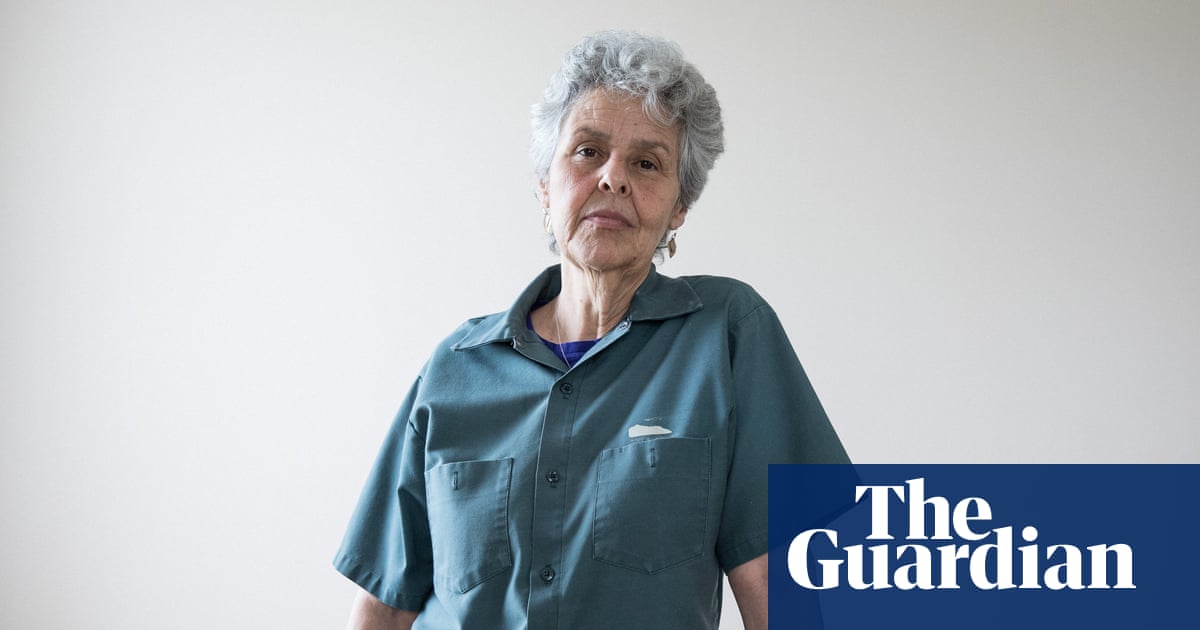
Human rights activists and celebrities including the lawyer Helena Kennedy, the actor Harriet Walter and the theatre director Phyllida Lloyd have urged the Home Office to overturn its decision to refuse a visa to a former member of the radical US group the Weather Underground, saying her decades of rehabilitation should count in her favour. Judith Clark, 77, was the inspiration for Walter’s portrayal of prisoners in the Donmar Warehouse all-female Shakespeare trilogy, including Brutus in Julius Caesar and Prospero in The Tempest. Clark had been invited to speak about rehabilitation and restorative justice at a Royal Shakespeare Company production of Julius Caesar in Stratford-upon-Avon next month, but her application to visit Britain was refused last week.
She had also hoped to attend the UK launch of her daughter Harriet Clark’s first novel, The Hill, on 5 November. Kennedy said that while the Home Office had rules governing visas for people with serious criminal convictions, there was also ministerial discretion, which should be exercised in Clark’s case. Lloyd said Clark had become a touchstone for the creative team’s understanding of repentance, redemption and rehabilitation during the making of the Donmar trilogy.
She was later involved in the May 19th Communist Organization, which pursued armed revolutionary activity. In 1983, she was convicted for her role as a getaway driver in an attempted robbery of a Brinks armoured truck in New York in 1981, during which a security guard and two police officers were killed. She was sentenced to three consecutive terms of 25 years to life.
In 2017, the then-New York governor Andrew Cuomo commuted her sentence, allowing her to seek parole. She was released in 2019, after serving 37 years. During her incarceration at Bedford Hills correctional facility in New York, Clark helped establish an Aids education and support group, developed programmes to help mothers maintain relationships with their children, raised service dogs for veterans and first responders and helped build a college education programme.
She has since worked in criminal justice reform and support for formerly incarcerated women. In 2025, she became director of the Survivors Justice Project, which works to secure legal relief for survivors of domestic violence facing prison sentences. Walter and Lloyd met Clark while researching their Shakespeare trilogy, which reimagined the plays as productions staged by women in prison.
Walter said Clark had helped her understand Brutus, the politically conflicted character in Julius Caesar, who struggles with the moral consequences of his actions. Her story also informed Walter’s portrayal of Prospero in The Tempest. The RSC has invited Clark to take part in a post-show discussion entitled Can Art Save Lives?
Extract — continue reading at the source.