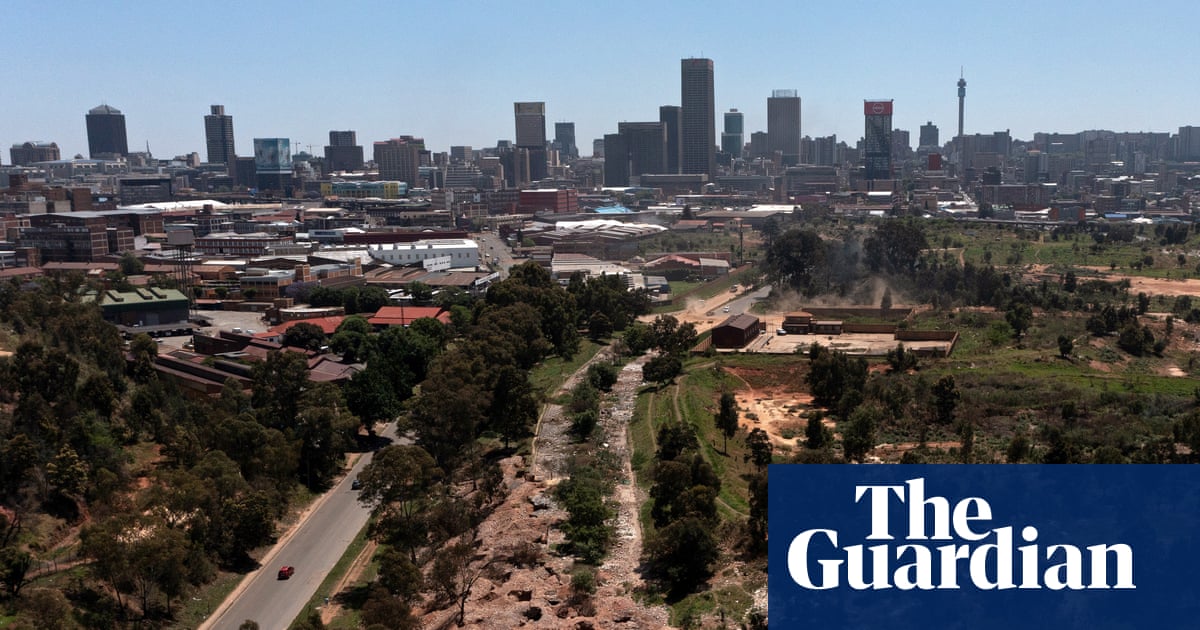
Cora Bailey has been encountering illegal miners ever since she first started treating injured animals in the townships around Roodepoort, west of Johannesburg, in 1991. But as the price of gold has soared, so too has activity in the abandoned mine shafts that mark the area. In late September, dozens of zama zamas – the name given to illegal miners in South Africa, meaning roughly “to take a chance” in Zulu – arrived to dig for gold across the dirt road from her charity, Claw (Community Led Animal Welfare).
Soon, they were taking water for their panning and processing from the organisation’s two 25,000-litre water tanks, which are filled irregularly by the city government for the 100 or so rescued and injured animals on site. Police told her that the scale of the illegal mining was too big for them to do anything about, she said at the time. About a week later, officers sheared away the grass that had partly hidden the zama zamas.
But within a few days a smaller group had returned, although Bailey said they were now taking Claw’s water only for drinking. South Africa’s police regularly trumpet their success in tackling illegal mining. On 19 October, they said they had arrested 71 suspected zama zamas across the country in the previous week.
However, researchers put the number of illegal miners in the tens of thousands. In 2019, Marcena Hunter, a researcher at the Global Initiative against Transnational Organised Crime, estimated that a tenth of South Africa’s gold production, worth about $1bn, was being exported illegally. Police operations have also led to tragedy.
In 2025, 93 bodies were pulled from a mine shaft in Stilfontein, after officers blocked food and water from being delivered underground. Meanwhile, there is no end in sight to the dynamics driving illegal mining, including the high price of gold, poverty, unemployment, corrupt politicians and police profiting, and the failure of mining companies to fulfil their legal obligation to seal mining shafts when they cease operating. South Africa’s modern history is tied to mining.
In 1884, gold was found on a farm, sparking a gold rush that led to the creation of Johannesburg. Gold production peaked in the 1970s, but South Africa was the world’s largest producer, a title it held for more than a century, until 2007. In 2009, Morris Viljoen, a geology professor at the University of the Witwatersrand, estimated that the reef that gave the university its name had produced more than a third of the gold ever mined globally.
Extract — continue reading at the source.