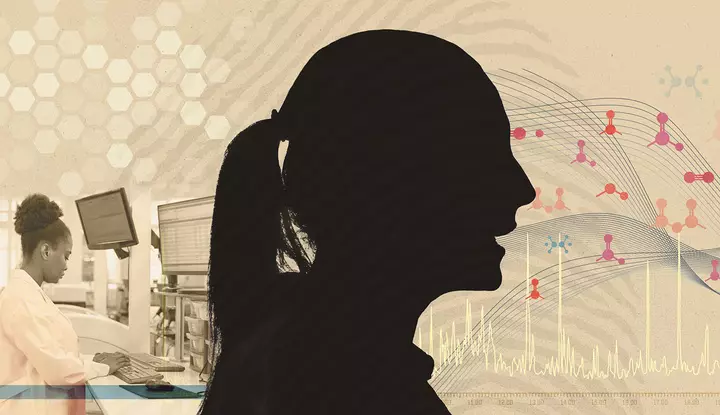
Researchers have made progress in identifying compounds emitted by the body that indicate various ailments. Molecules that waft from breath, skin and urine can hold clues to Parkinson’s, cancer and other ills. Scientists hope to harness these signatures for non-invasive medical tests.
When social anthropologist Hanna Marie Ihlebæk interviewed nurses at a Norwegian cancer ward for her PhD thesis, she was surprised to learn that many of them relied on their sense of smell in their work. Another claimed to be able to pick out digestive bleeding and cell necrosis. Long ago, in the 5th century BCE, the Greek physician-philosopher Hippocrates held that disease could be identified by body odor.
In modern times, we have stories of Oscar the cat who seemed to perceive which residents would soon pass away at a Rhode Island nursing home, and dogs that have been used to detect bladder cancer, malaria and Covid-19. In Africa, giant pouched rats are employed to sniff out tuberculosis. Listening for schizophrenia: How AI could help with early diagnosis For years, scientists have been exploring how the molecules that waft from our breath or skin might be harnessed to sniff out a laundry list of diseases — Parkinson’s, Alzheimer’s, certain cancers, the flu and the common cold.
Yet the field has struggled to bring such tests to the clinic. Now, with new tools that can detect tiny amounts of molecules, as well as advances in machine learning, that goal appears within reach. A variety of ailments might soon be efficiently diagnosed with non-invasive tests that employ devices as simple as Breathalyzers.
A handful of breath-based tests are already in use, such as one that detects gastric infection by _Helicobacter pylori_, a major cause of stomach ulcers. Patients drink a solution spiked with urea containing a “heavy” version of carbon; if _H. pylori_ is present, the bacterium will use the urea to make carbon dioxide and the test will detect that heavy-carbon CO 2 in the patients’ breath. But tests like that require swallowing a special substance and shipping a sample to a lab for analysis.
Today, researchers are also working to develop tests that could give results directly at home, or at a doctor’s office. They are designed to sniff out volatile organic compounds, or VOCs. Such compounds are mostly in gas form at room temperature and can be emitted from breath, sweat, urine, blood and fecal matter.
Extract — continue reading at the source.