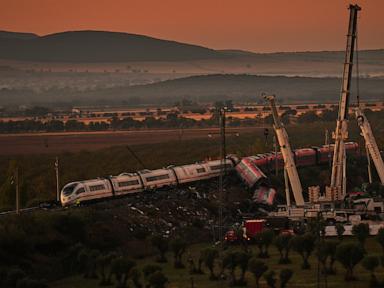
Spain faces fresh concerns about rail safety after a second high-speed train crash this year killed 69 people URDA, Spain -- Spain's second high-speed rail disaster this year, in which one train struck another from behind, killing 69 people, has raised fresh concerns about the safety of the country's rail network ahead of a national election. Search teams with sniffer dogs continued to look for victims on Thursday morning, a day after the collision in central Spain. Cranes helped shift the carriages as police and soldiers helped pick through the wreckage strewn down the gravel slope where at least three train carriages were tossed by the impact.
One more body was found overnight, taking the death toll to 69, according to the regional leader of Castilla La Mancha, Emiliano García-Page. García-Page said that a crane would lift a damaged carriage that had flipped over. He added that 50 people remained hospitalized.
Spain’s government declared three days of mourning starting Thursday. Spain’s high-speed rail network has been considered one of the nation’s crowning achievements. It is the world's second-largest, after China's.
Until this year, it had not endured a deadly crash since coming into service over three decades ago. The collision Wednesday morning that turned a sleepy stretch of rail lined by olive groves into a scene of carnage came just four weeks before the country votes in a national election. Spanish Prime Minister Pedro Sánchez visited the crash site in the province of Toledo on Wednesday after regional authorities confirmed that more than 60 people had died and dozens more were being treated at hospitals.
In January, 46 people had died when one train jumped the track and slammed into the side of another going the opposite way in southern Spain. Sánchez pledged an investigation into the latest collision and improvements to prevent another tragedy like the two that have shaken trust in a rail system that carried 45 million travelers last year, including millions of tourists. Each involved a train operated by state-owned RENFE and another operated by privately owned IRYO.
Spain liberalized its high-speed rail service in 2021, with the Italian IRYO starting service the following year. Sánchez has weathered many crises since taking power in 2018, staying in office and winning reelection after the COVID-19 pandemic and the global rise in inflation. But polls show he faces another uphill battle when voters cast ballots in Spain's first national election since 2023.
Extract — continue reading at the source.