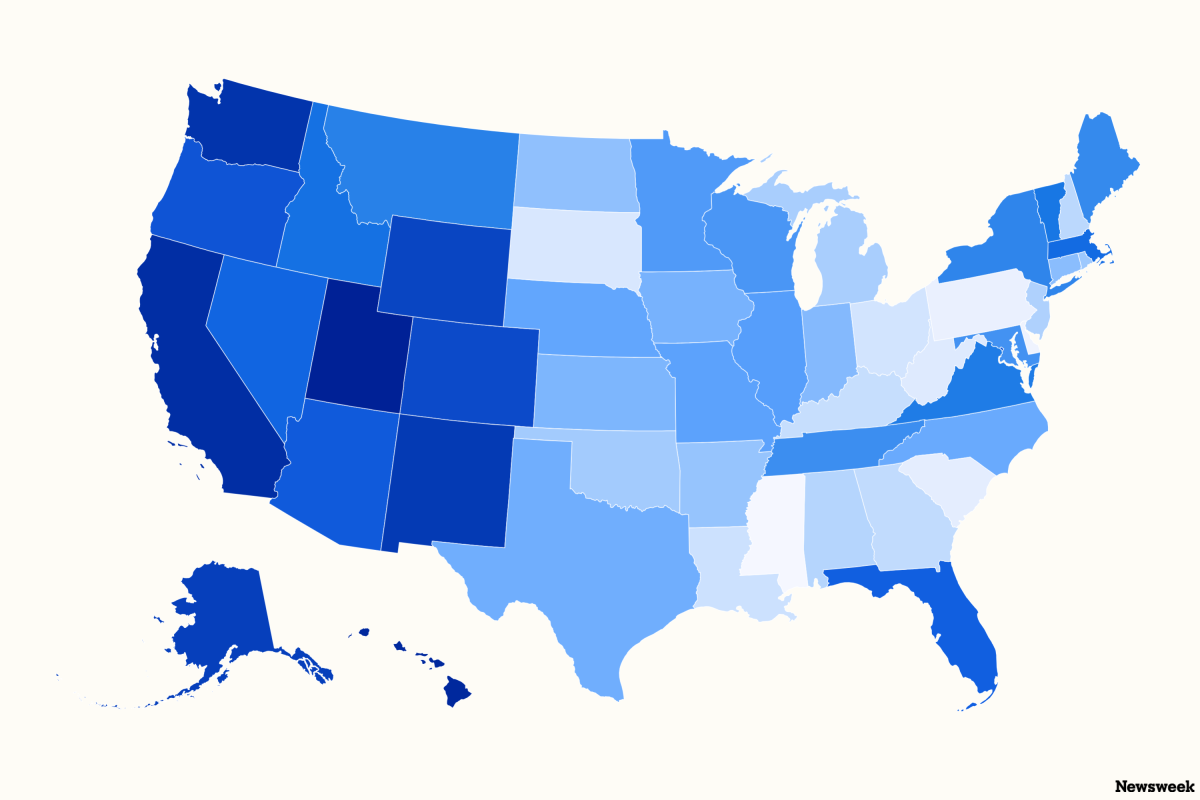
Millions of Americans with federal student loans are facing another major change to their repayment plans as a key deadline approaches, while a new analysis shows wide differences in student debt and work opportunities across states. A new WalletHub analysis ranks Mississippi as the state with the biggest student debt problem, followed by Delaware, Pennsylvania, South Carolina and West Virginia. The state has the third-worst availability of jobs for students and the second-lowest share of paid internships.
Borrowers in Mississippi owe an average amount equivalent to more than 54 percent of the state's median income, the highest share in the country. Mississippi also has the nation's highest student loan default rate. In Delaware, borrowers are also having trouble finding jobs and owe an average of nearly $40,000, the analysis found.
That average is equivalent to more than 39 percent of Delaware's median income, while 60 percent of students have student loans. Neither state has a student loan ombudsman law, which would provide a designated resource for borrowers seeking help with student loan complaints. At the other end of WalletHub’s analysis, Utah ranked lowest for student debt, followed by Hawaii, California, Washington and New Mexico.
WalletHub compared all 50 states and the District of Columbia across two broad categories: student-loan indebtedness and grant and economic opportunities. The data was collected as of August 20, 2026, from sources including the U.S. Census Bureau, Bureau of Labor Statistics and the U.S.
Dina El-Mahdy, a professor of accounting at Morgan State University's Earl G. Graves School of Business and Management, said in the analysis that the effects of student debt can extend beyond borrowers' monthly payments and weigh on the broader economy. She added that large student loan balances can also affect borrowers' access to other forms of credit and delay major financial decisions.
Millions of federal student loan borrowers face a deadline less than two weeks away as they transition out of the Biden administration's Saving on a Valuable Education, or SAVE, plan. Earlier this year, the Education Department directed the 7.5 million borrowers who were enrolled in SAVE to choose a new repayment plan. On July 1, loan servicers began sending borrowers notices giving them 90 days to make the switch.
Extract — continue reading at the source.