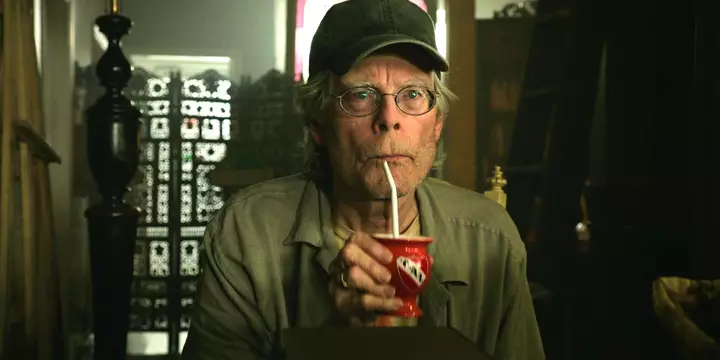
The Master of Horror has published over 65 novels and novellas, countless short stories, and five nonfiction books since the mid-’70s. The hype that surrounds him is well deserved. King is the kind of writer who appeals to everyone, whether you’re a genre enthusiast or a literary snob.
His work has been adapted into TV shows and films, and he’s never afraid to voice his complaints and praise in equal measure. But there’s one adaptational grudge that towers above all. The Shining, published in 1977, is one of King’s most personal works.
The novel follows Jack Torrance, a struggling writer who takes a job as the caretaker of a cursed hotel. There, he slowly loses his mind and puts his family in danger. King has called the novel a reflection of his own struggles with alcoholism and fears related to parenting.
Three years later, it was adapted into a movie. Stanley Kubrick’s The Shining is one of the most enduring works of horror in cinema history. It’s nihilistic and cold, and one of the best showcases of Kubrick’s omnipotent camera.
King is famously not a fan. Jack Torrance (Jack Nicholson) is an aspiring novelist and former teacher who takes a job as the caretaker for the Overlook Hotel in the Colorado Rockies. He moves there with his wife Wendy (Shelley Duvall) and their son Danny (Danny Lloyd) as the hotel closes for the winter season.
The three are locked in alone, as the weather grows colder and the snow piles up, haunted by ghosts and inexplicable occurrences. In their isolation, they’re confronted by their deepest demons: Jack, as he tries and fails to write; Wendy, as she blinds herself to her husband’s true nature; and Danny, possessing a psychic gift that plagues him with terrifying visions. While Kubrick makes it clear the hotel is haunted and is actively pushing Jack towards the murder of his family, there’s an undercurrent of violence in the character since the start.
Extract — continue reading at the source.