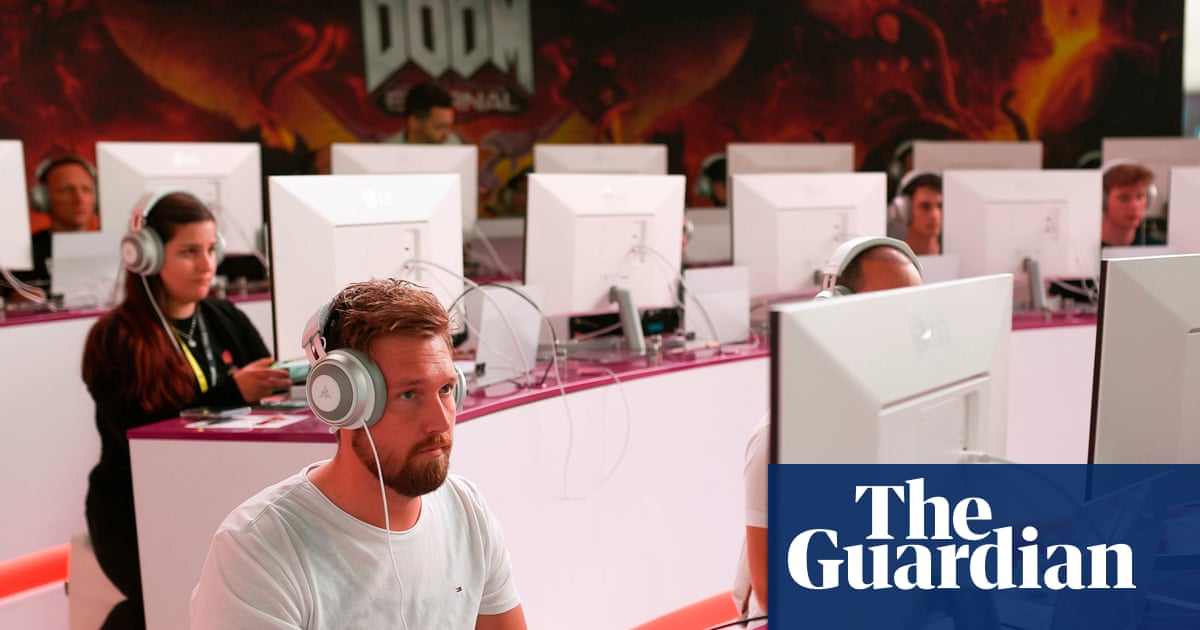
In August 2009, at the very first Gamescom expo, I sat in a small meeting room in Germany and played Mario Kart and World of Warcraft on a laptop, via technology that was then completely new: cloud gaming. It was a demonstration for a yet-to-be-launched service called Gaikai that promised to let you play any game in a browser window, without a console. (Here is an ancient video of that demonstration, featuring a very young Keza.) With a single click I could launch into any game, hosted on servers hundreds of miles away. It really did look like the future.
Since then, plenty of companies have tried to be the first to truly crack game streaming, vying to be the Netflix of games. Sony ended up buying Gaikai for $380m (£242m) in 2012; its technology now powers the streamable classic games library on PlayStation, and the PS5’s advanced game streaming. OnLive, Gaikai’s first competitor, launched in 2011 but shut down after less than a year, leaving Sony to acquire all its patents.
Google’s Stadia cloud gaming service also imploded, launching in 2019 and shutting down three years later. Despite the fact that people simply don’t seem to want game streaming services – or at least not enough to pay a stand-alone monthly subscription for them – Sony and Microsoft have remained steadfastly committed to the idea, bundling game streaming into their PlayStation Plus and Xbox Game Pass services. I use both quite regularly when I want to check out a game quickly, mostly because modern download sizes are ridiculous (Final Fantasy VII Rebirth, say, takes up nearly 150GB of my PS5 space, almost a quarter of its usable storage).
Who wants to do 30 minutes of hard drive management every time they want to play something new? Last week, however, Microsoft announced that it was introducing time limits for game streaming: you’re now allowed 5-15 hours a month, depending on your subscription tier. And yes, you’re right: that is not enough time to play through even one single average-sized game.
This brings Microsoft’s previously unwavering commitment to cloud gaming into question – and when even Microsoft with its infinite resources can’t seem to make it work, is the writing on the wall for game streaming as a whole? In the early days, the biggest problem with streaming was input lag: the time it took for the game to respond to your button-pressing. Normally, when you’re playing a game this lag is imperceptible.
Via streaming, it would often be horribly obvious, your character taking maybe a full second to jump after you’d pressed the A button. Not all games rely heavily on timing and finesse, but a lot of them do, and playing games on a minor time-delay felt nauseating. This is much less of an issue now, but another problem has only gotten worse: game streaming requires the instantaneous transmission of a lot of data, making it taxing on your internet connection and expensive for the service provider.
Extract — continue reading at the source.