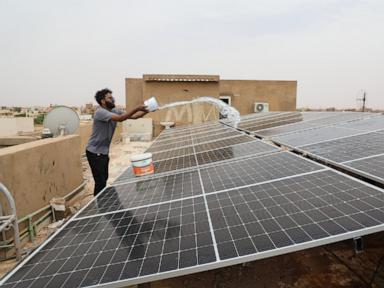
In Sudan, many residents are turning to solar energy to cope with frequent blackouts caused by the ongoing conflict OMDURMAN, Sudan -- For almost a year, Randa al-Mansour, a 31-year-old Sudanese housewife, has relied on solar energy panels installed on the rooftop of her building to survive the recurrent blackouts triggered by the war-torn country’s deteriorating electricity grid. It is very hard for them to study under such a high temperature.” The Sudanese military and the paramilitary Rapid Support Forces have been fighting since April 2023, killing at least 59,000 people, though aid groups say the number could be higher, and displacing some 13 million. The conflict also has strained an already weak power infrastructure, forcing many Sudanese to seek alternative energy sources, especially during scorching summer heat.
The United Nations Development Program has estimated the damage inflicted on the electricity grid at $3 billion. However, not everyone in Sudan can afford this solution,” said al-Mansour, who supports her family with remittances from her husband working in Saudi Arabia. In recent months, billboards advertising solar panels, batteries, and inverters have expanded in the capital as more Sudanese consider transitioning to solar energy.
Manahel Madany, a 43-year-old diabetic civil servant, cannot afford the transition, despite needing steady electricity for her fridge for her insulin. She lives in a two-bedroom house with her mother and sister in Omdurman, and like many Sudanese, the three are forced to sleep in their house courtyard to escape the searing heat indoors. The Sudan Doctors' Network, which tracks violence across the country, warned that the continued electricity cuts could impact patients in hospitals, especially kidney patients who need constant care.
At least 30% of Sudan’s population has no access to electricity, with rural areas bearing the brunt, according to the World Bank. Conditions in grid-connected urban centers have also deteriorated, with power outages reaching up to 16 hours in many parts of the country in recent months, according to two electricity department officials who spoke to The . Electricity production has dropped from 4,400 megawatts before the war to 1,100 megawatts as many power plants were hit by drones launched by the RSF, while nearly half of Sudan’s best electricity engineers and technicians have also left the country since 2023, the officials said, citing a survey by a local labor union.
The two spoke on condition of anonymity because they were not authorized to brief the media. Sudan has limitless potential to generate solar energy given the long hours of sunshine that often exceed 4,000 hours per year, according to the U.N. However, the high upfront cost of imported solar energy systems and a depreciating local currency derail the transition to clean energy. ___ Yassir Abdullah reported from Shendi, Sudan. 24/7 coverage of breaking news and live events
Extract — continue reading at the source.