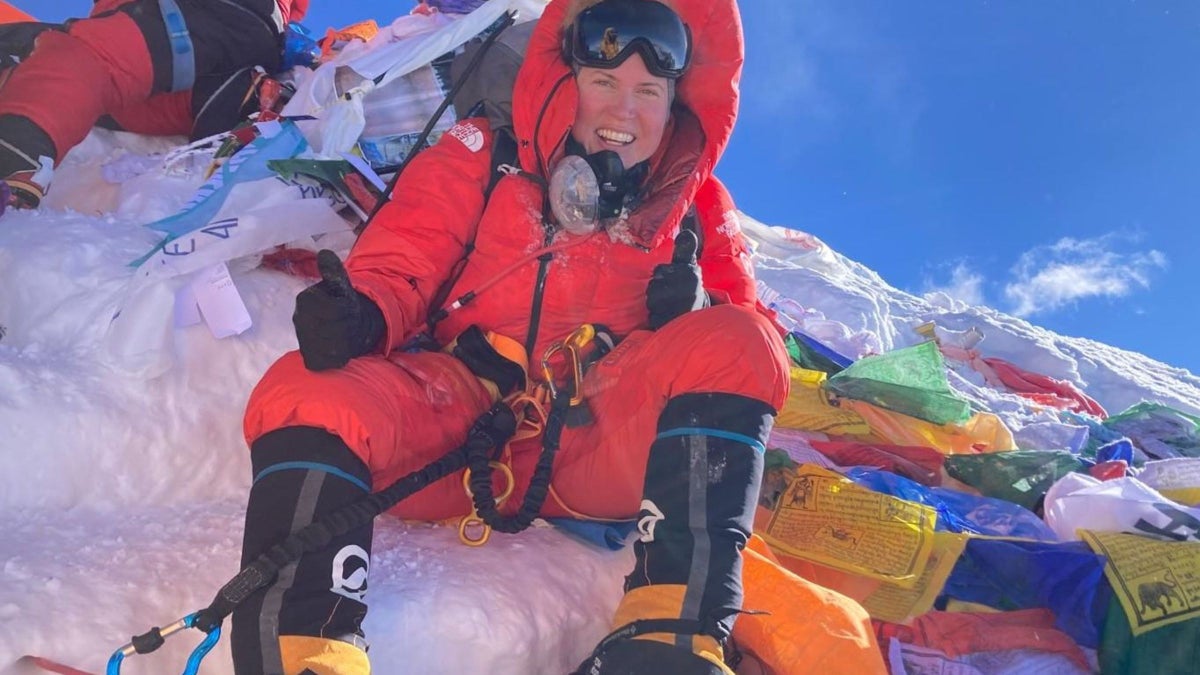
Mountaineer Megan Rath reaches the summit of Lhotse (the world's fourth-highest mountain at 27,939 feet). ( ne not only enduring a long-haul flight, but then having to compete physically soon after you land. Top athletes have no time for jet lag symptoms, such as extreme fatigue, headaches, insomnia and gastrointestinal issues. They have more important things to do, like scaling mountains or qualifying for the Olympics.
Two recent research reviews focusing on how jet lag impacts athletic performance outline how jumping three or more time zones during extended east- or westbound travel disrupts the body’s internal clock. Current Sleep Medicine Reports says transatlantic travel exposes athletes to stressors like prolonged inactivity and dehydration, which not only affect sleep patterns and quality but can also impair an elite athlete’s cognitive and physical performance with symptoms including trouble concentrating, disorientation, light-headedness and irritability. The journal Sports also found jet lag can disrupt athletes’ physiological, circadian, and performance systems.
Athletes might experience hormonal and mood shifts, blood pressure or heart rate changes, and cognitive impairment that can affect strength, coordination, reaction time and velocity—any of which could impede high-performance outcomes. From sleep scheduling and strategic exposure to light and dark to proper nutrition and hydration, four top competitors, including a high-altitude mountaineer and an ultramarathon runner, share with Outside how they beat jet lag and stay on their game while traveling. Long before she plunges her paddle into the water, two-time Olympic sprint canoe medalist Katie Vincent prepares for international competitions by following a detailed protocol.
But even with three to five days, you can at least get enough sleep, get into your routine and start competing.” During flights, Vincent wears compression socks, a sleep mask, and earplugs, and prefers a window seat where she can curl her 5-foot-9 frame into a comfortable sleeping position. Upon arrival the next morning, she drinks two cups of coffee and aims to stay awake all day, i.e. no naps. The next few days are spent waking up, training, and going to bed at her regular time.
She avoids napping and takes melatonin as needed to help her sleep. But everyone’s different; some can fall asleep in an instant, and others need more time to fall into the rhythm. There’s no one way to handle jet lag, but there are ways to navigate it.” As a professional ultrarunner, former U.S.
Biathlon National Team member, and a Carmichael Training Systems (CTS)-certified endurance sports coach, Corrine Malcolm has clocked countless hours in the air to run 100-mile races in Asia, Europe, Australia, and New Zealand. She is based in Leavenworth, Washington, and hosts Trail Society, a podcast about trail running. In the days leading up to a flight, Malcolm practices sleep banking—going to bed earlier and staying in bed longer to shore up resilience in anticipation of sleep loss.
Extract — continue reading at the source.