Major earthquakes often result in severe injuries, including limb amputations, with long-lasting physical and psychosocial consequences. The February 6, 2023 Kahramanmaraş earthquakes in Türkiye caused a substantial number of amputations. While surgical management and rehabilitation have been documented, limited research has explored the combined impact of phantom pain, body image changes, and psychosocial adaptation from the patient’s perspective.
This study explores the lived experiences of amputees after the 2023 Kahramanmaraş earthquakes, focusing on phantom pain, body image changes, and psychosocial adaptation. A qualitative phenomenological approach was employed. Fifteen participants who underwent upper or lower limb amputations due to earthquake-related injuries were recruited via purposive and snowball sampling.
Data were collected through semi-structured in-depth online interviews conducted between December 2024 and March 2025. Interviews were transcribed verbatim and thematically analyzed using manual coding in MAXQDA20.4.0 qualitative data analysis software. Trustworthiness was enhanced by member checking and peer debriefing.
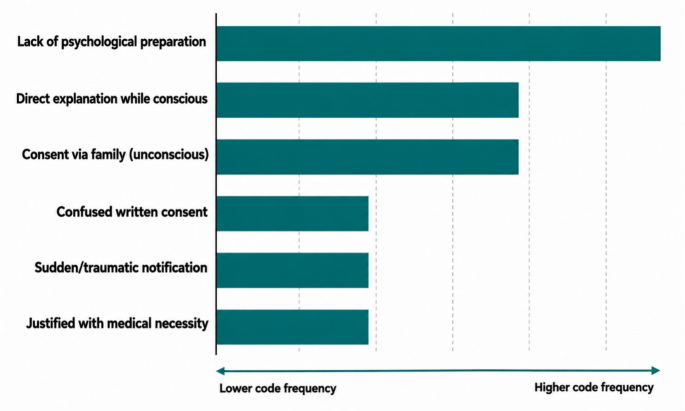
Five major themes were identified: (1) Communication patterns surrounding the amputation decision; (2) psychosocial reactions to amputation; (3) altered body image and role limitation; (4) phantom limb–related experiences; and (5) prosthesis-related issues. Participants reported limited communication during the amputation decision, intense emotional reactions following limb loss, altered body image and role limitations, persistent phantom limb pain, and challenges in adapting to prosthesis use. Post-disaster amputation is not only a physical loss but also a profound psychosocial experience, where phantom pain and body image changes play a central role in adaptation.
Incorporating patient-centred, multidisciplinary, and culturally sensitive approaches into post-disaster healthcare frameworks is essential to support both physical recovery and psychosocial well-being. Earthquakes rank among the most catastrophic natural disasters, profoundly impacting human life and social structures. Beyond the tragic loss of life, they result in severe injuries and long-term health challenges.
The magnitude 7.7 and 7.6 earthquakes that struck the Pazarcık and Elbistan districts of Kahramanmaraş province on February 6, 2023, stand as some of the most devastating events in Turkey’s recent history, resulting in 50,783 fatalities and 115,353 injuries1. The majority of post-earthquake injuries pertain to the musculoskeletal system, prominently featuring extremity fractures, soft tissue damage, nerve injuries, crush injuries, compartment syndrome, vascular lesions, and amputations2,3. Severe crushing injuries, particularly in individuals trapped under debris for extended periods, along with severe infections and coagulation disorders that develop, have resulted in numerous limb losses4,5.
Extract — continue reading at the source.


