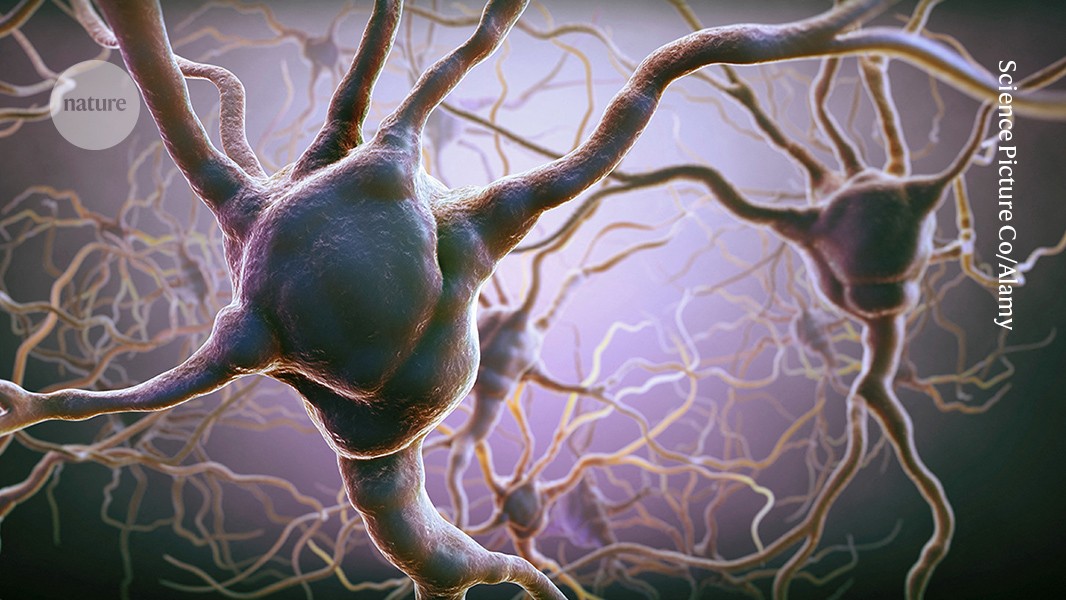
Some of the most rewarding decisions we make in life come with risk: do you take that job with a higher salary if it means moving to a new city and starting your life afresh? It’s an achingly tough choice. Now, researchers have observed how neuronal circuits in the human brain resolve such a dilemma in real time, revealing a ‘tug of war’ between rival neuronal groups during the moments before a decision is made.
In a study1 published in Nature Neuroscience on 15 September, researchers recorded electrical activity directly from the brains of six people. The team identified two neighbouring areas in the orbitofrontal cortex (OFC) — a region in the brain’s frontal lobe — that are involved with the decision-making process when risk and reward must be balanced. The researchers found that neurons in one OFC area became more active before participants chose to pursue a reward, whereas neurons in the other OFC area became more active before they chose to avoid a risk.
For tough decisions, neuronal signals rapidly flickered between the two regions before settling on a choice. So, millisecond by millisecond, when one is excited, the other is suppressed,” says study co-author Clara Starkweather, a neurosurgery resident at the University of California, San Francisco. The findings might help researchers to better understand risk-taking and avoidant behaviour in conditions such as anxiety, obsessive–compulsive disorder, addiction and gambling disorders.
The OFC is “the usual suspect for decision-making”, says Billeke. But because it is “right above the eye socket, and it sits on top of a big sheet of bone and above your sinuses and your eyes”, it is difficult to analyse in brain-imaging studies, says Starkweather. Starkweather and her colleagues worked with six participants who had had electrodes surgically implanted in their OFC as part of an existing treatment for epilepsy or psychiatric conditions.
The researchers designed a video game in which participants had to navigate through corridors lined with treasure chests and bombs. Participants had six seconds to choose whether to approach or avoid each hallway. Some choices were a “no-brainer”, says Starkweather, such as entering a corridor featuring seven treasure chests and no bombs.
But others presented the participants with an approach–avoidance conflict: would you decide to enter or avoid corridors that had an even number of each or, say, seven treasures and four bombs?
Extract — continue reading at the source.


