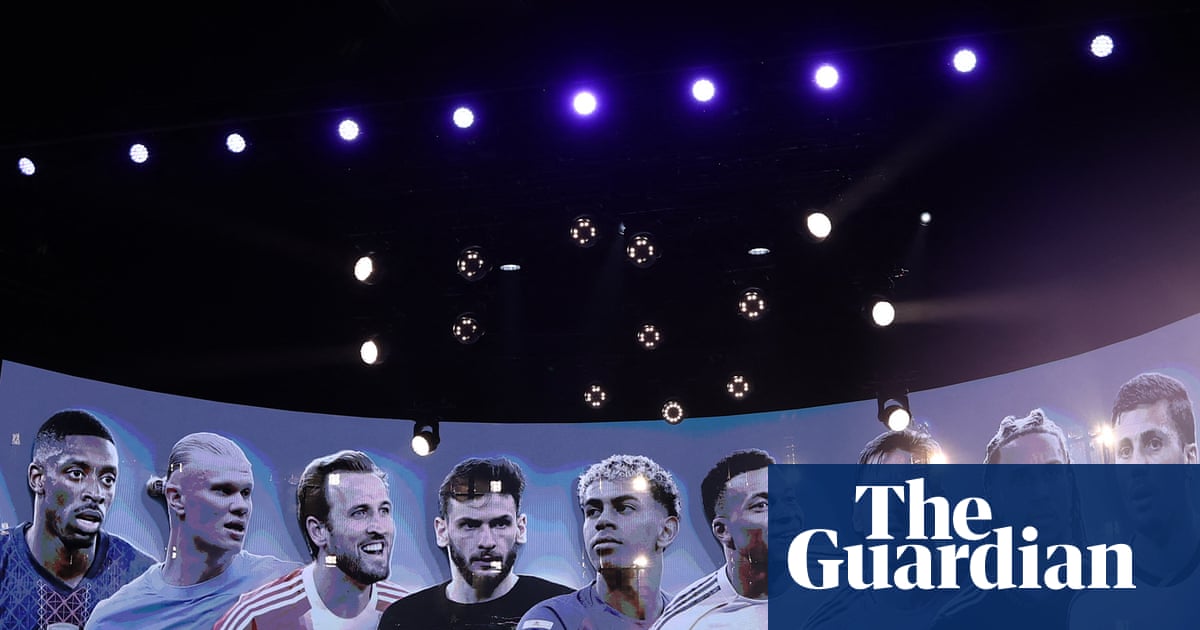
It was an awards show that, as Michael Owen admitted, could have been a phone call – as it was in 2001 when he won. A quarter-century on, a ballroom full of footballers, power brokers, a gravity-defying dancer and a handful of heckling rabble-rousers plodded through a three-hour slog of a ceremony. Aside from a reminder to viewers at home just how precious our free time is, what could be gleaned from the men’s element of the Ballon d’Or ceremony?
As early voting for the midterms progresses in the United States, the party affiliation of a candidate carries as much weight as their name. This year, as with many this century, the panel of voters were similarly interested in team performance beyond individual accomplishments. Not to say that Harry Kane didn’t make a strong individual case to win.
The presumptive frontrunner this year, Kane also took home the honor as top men’s striker of the year roughly 45 minutes before the top prize went his way. Scoring 64 goals in 56 club matches is staggering. So, too, is his growing reputation as a world-class chance creator with the through balls he threads with increasing ease.
Kane stands out as a stat-accumulator in a waning era of meticulous systems, and his gilded peers playing for teams operating off such intricate models were largely held back. Premier League-winning Arsenal also reached the Champions League final, yet none of their players ranked higher than 15th (Declan Rice). Paris Saint-Germain won club of the year, yet their top finisher (Khvicha Kvaratskhelia) was down in sixth.
Likewise, a (relatively) poor season for a team can sink their stars’ cases. Rodri (fourth) and Erling Haaland (eighth) were immense at the World Cup this summer – more on that later – but Manchester City’s inability to overcome Arsenal seemingly dinged each star’s candidacy. A year after controversially moaning about Ousmane Dembélé pipping Vinícius Júnior to the honor, Real Madrid’s chaotic campaign sank a few otherwise intriguing candidates.
The big pre-ceremony shock came when the award’s social media admins posted that Jude Bellingham finished 11th. Clearly, his club form had sideswiped his World Cup brilliance. In the end, this came down to two of this era’s great frontmen whose individual brilliance commanded attention beyond the rest of their storied clubs.
Extract — continue reading at the source.