A year ago, Donald Trump was talking tough about Russian oil. NATO countries should stop buying it altogether, the president declared in a Truth Social post on September 13, 2025. Their continued purchases were "shocking," Trump said, because they weakened the alliance’s leverage over Russian leader Vladimir Putin.
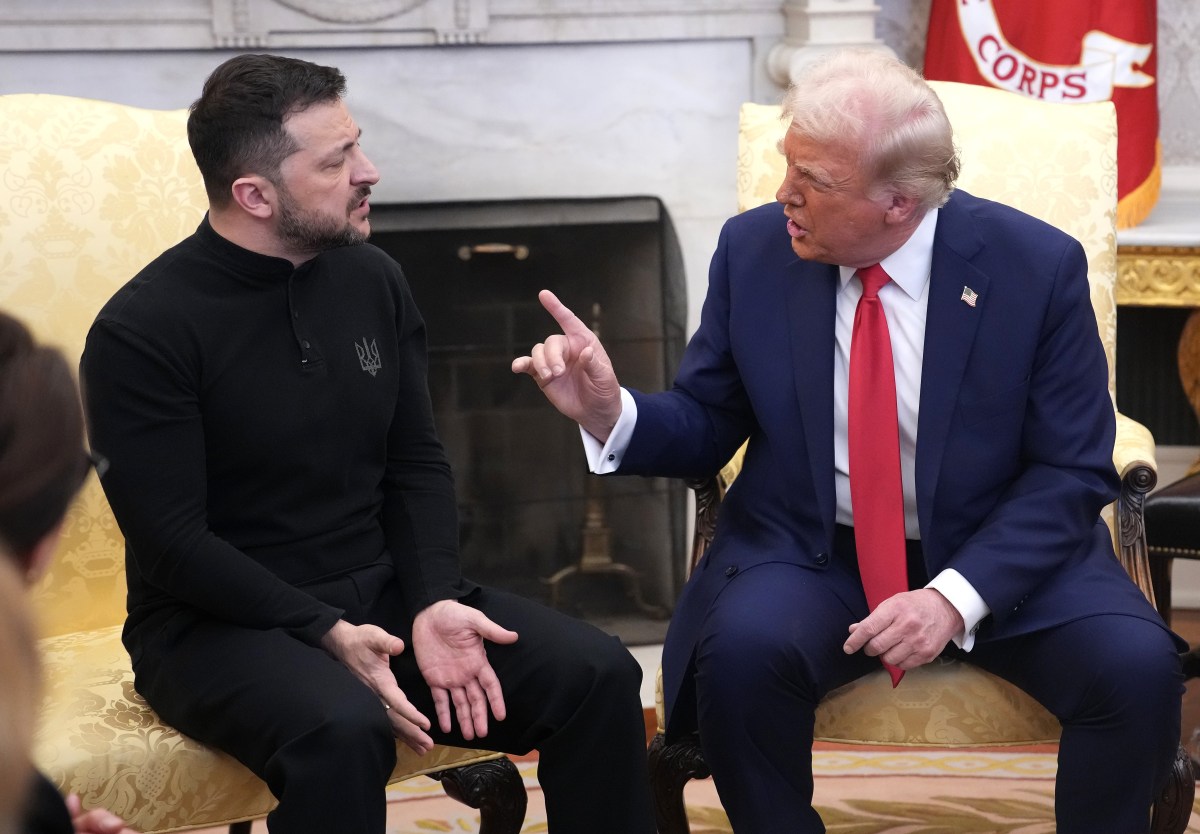
If NATO acted, Trump was "ready to do major Sanctions" on Russia, and added the bloc should slap 50 to 100 percent tariffs on China for good measure. "This is not TRUMP’S WAR," he pointed out—but sounded willing to help finish it. Exactly one year later, the U.S. president had a very different message for his opposite number in Kyiv.
"Stop knocking out diesel fuel in Russia," he warned Volodymyr Zelensky on Sunday, as prices hit $6 a gallon. "That’s hurting the world!" Russia-Ukraine might not be Trump’s war, but he started one of his own in the Middle East. Now, that conflict is dictating his policy toward this one.
Trump unleashed Operation Epic Fury on February 28—a shock-and-awe campaign designed to ensure Iran would never have a nuclear weapon. And to cripple its missile industry. And its Navy and Air Force.
And end its threats to shipping. And trigger regime change. More than six months later, Washington has failed to produce a result on several of those counts, but has succeeded in tearing apart the energy market on which Trump’s Russia policy, and U.S. diesel and gasoline prices, depended.
The International Energy Agency estimates that more than 10 million barrels a day of Gulf oil production remained shut in during August. Gulf oil exports were running at roughly half their prewar level, while diesel and gasoline exports—the kind that dictate the numbers appearing outside gas stations across the U.S.—averaged just 390,000 barrels a day, barely a quarter of what they had been before the fighting began. The chances of this improving any time soon also look rather slim.
Extract — continue reading at the source.