The Ballon d’Or is football’s most prestigious individual honour. On Monday, Bayern Munich striker Harry Kane became the first Englishman to win it since Michael Owen in 2001. But his victory also raises a fundamental question about the award: How can individual excellence be fairly assessed in a team sport?
For much of the past two decades, that question has been overshadowed by the extraordinary rivalry between Lionel Messi and Cristiano Ronaldo. From 2008 to 2017, one or the other won the Ballon d’Or every year, turning the annual award into a contest between the two superstars. Messi eventually accumulated a record eight trophies and Ronaldo five, together accounting for 13 of the 17 awards presented between 2008 and 2025.
Their rivalry generated unprecedented excitement around an award first presented in 1956, when England’s “wizard of the dribble”, Sir Stanley Matthews, became its inaugural winner. But it also pushed several important questions into the background. Has the growing commercialisation of the Ballon d’Or distracted from its purpose?
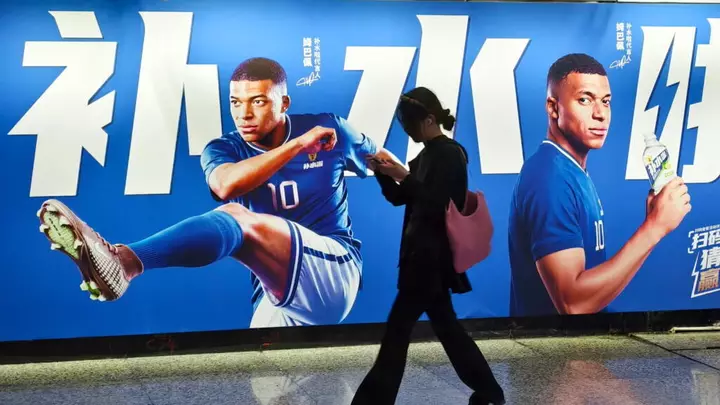
Why does it overwhelmingly reward attacking players? And why does a supposedly global award remain so heavily focused on European football? The commercialisation of the Ballon d’Or reflects the transformation of football into a global entertainment industry, in which individual players have become brands in their own right.
They control their own destiny, and they market themselves.” Former Switzerland defender Ramon Vega has been more critical of this development. The Ballon d’Or has undoubtedly become a bigger spectacle, but the attention surrounding the award should not obscure the question of what constitutes individual excellence. And commercialisation is not its only problem.
The award has also long favoured players in attack over those in other positions. A goalkeeper’s or defender’s performance is as important as that of midfielders and strikers, in a sport where a team is supposed to be as great as the sum of its parts. Yet Russia’s Lev Yashin remains the only goalkeeper to have won the award, in 1963, while Italy’s Fabio Cannavaro was the last defender to do so, in 2006, after captaining his country to World Cup victory.
Extract — continue reading at the source.