Runners often assume that “running builds strong legs,” but a better way to think about this is: “Running requires strong legs.” If you want to run faster and more efficiently then hill repeats, speed workouts, and long runs will help—but doing leg exercises consistently will give you the edge you need to power up inclines, have a strong finishing kick, and end a long run feeling good. Relying solely on running is a “less-than-optimal” training strategy that can eventually lead to injuries too, Dane Miklaus, C.S.C.S., founder of WORK Training Studio in Irvine, California, tells Runner’s World. To gain those benefits from your strength training, plus stay healthy and pick up your pace, Miklaus developed the following leg day workout.
Incorporate it into your current strength-training plan or pair it with an easy run. (New to strength training? Start with our bodyweight leg workout first.) How to use this list: Perform 6 to 8 reps of each exercise (per side for the dumbbell swing, step-up, and Bulgarian split squat), resting up to 3 minutes between sets. Repeat the full circuit 4 times.
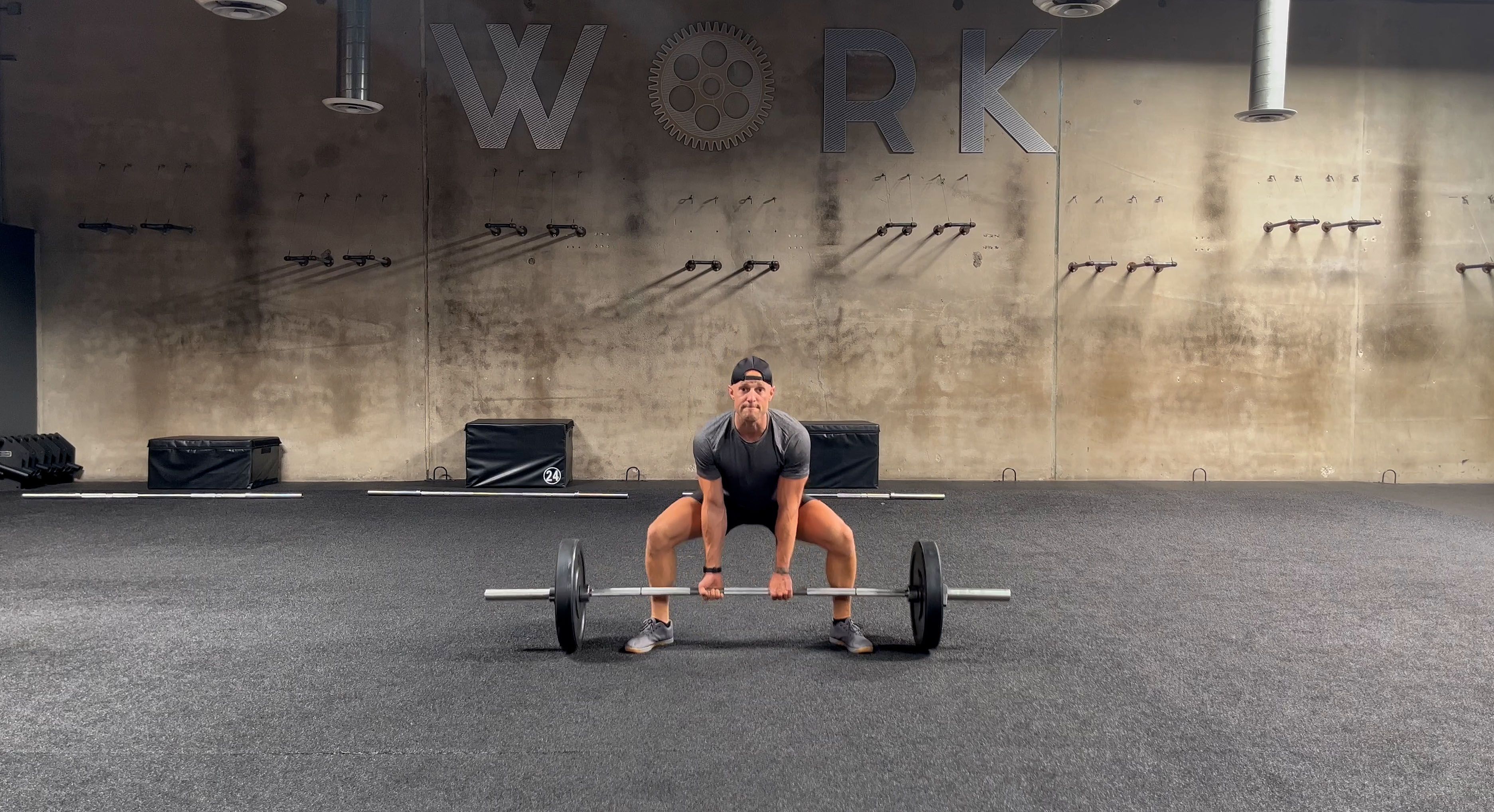
Each move is demonstrated by Miklaus in the video above so you can learn the proper form. You will need a heavy set of dumbbells and a loaded barbell. (If you don’t have a barbell, stick with the heavy dumbbells.) While you’ll want to start with lighter weights to get the form down, make sure to work up in weight. And don’t be afraid to go heavy: “Choose weights that are so heavy you literally cannot complete more than the prescribed reps,” Miklaus advises.
Why it works: “Traditional deadlifts still have a very heavy quadriceps emphasis. The sumo deadlift allows the athlete to get deeper into their glutes and also target the oft-forgotten adductor muscles. For any runner who has ever experienced a ‘groin’ injury, selling them on the idea of strong adductors should be pretty easy,” Miklaus says.
Make sure you extend all the way upright at the top before putting the other leg on the box in order to get the most benefit,” he says. They’ll help strengthen pretty much every part of your leg, including down at your ankle,” Miklaus says. Imbalances bilaterally, tight joints, weak connective tissues, and even sore muscles from previous training sessions will all lead to compensatory movements when we run,” Miklaus says.
Even if you do manage to avoid getting hurt, consistently skipping leg day could be robbing you of speed and power. In your legs, these fibers help you go from a jog pace to a true sprint pace,” Miklaus says. Instead, they need direct targeting from heavy resistance training, and very fast, explosive exercises.”
Extract — continue reading at the source.