If you buy through our links, we may earn an affiliate commission. This supports our mission to get more people active and outside.Learn about Outside Online's affiliate link policy Picture this: You’re halfway through a 20-mile day when the sky opens up, dumping sheets of rain on you and your hiking partners. You pull out your shell, zip it up, and keep crushing.
An hour later, you notice you’re starting to feel awfully damp. Your shell isn’t leaking, but it might as well be: Your exertion has turned it into a sweatbox. The best rain jackets are next to useless if you end up sweating them out.
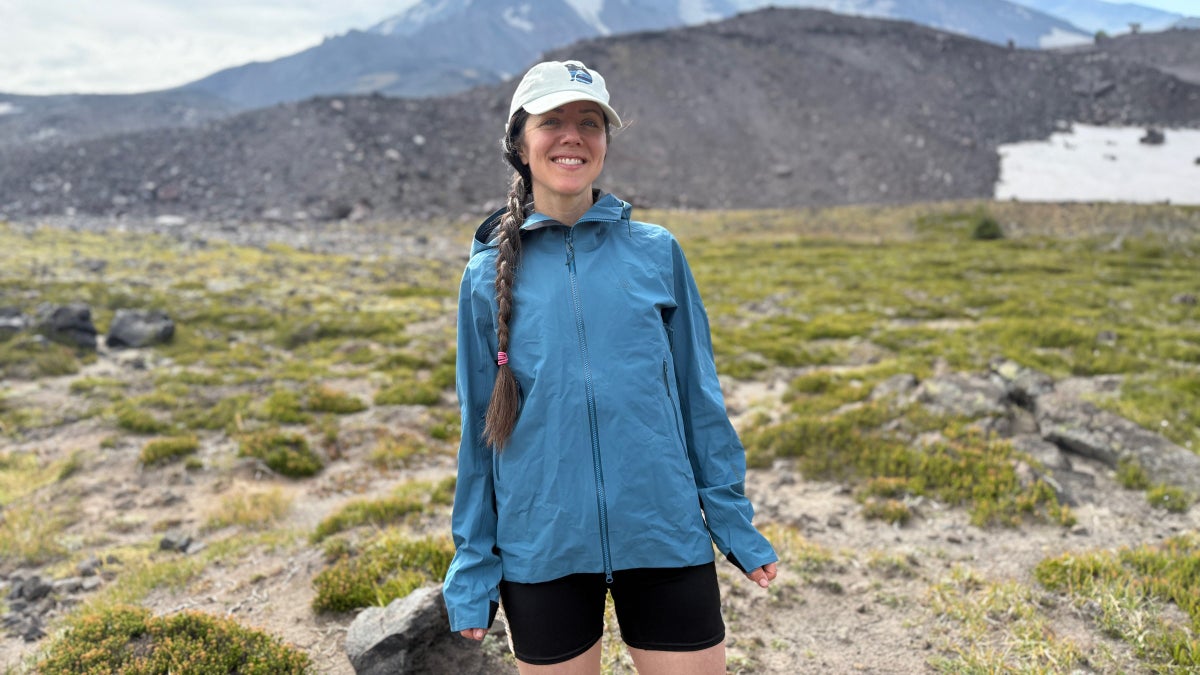
If you’re the kind of hiker who always steams up your shell, picking one that has the breathability and venting options to keep you cool and dry is a must. We went through our testers’ favorite rain shells of 2026 and chose the best picks for hikers who always overheat. Weight: 15.3 oz (men’s) / 13.9 oz (women’s) Sizes: Men’s S-XXXL / Women’s XXS-4X Pros and Cons + Very breathable + Slightly stretchy + Certified carbon neutral – Too slim for layering Our favorite rain jacket on the market today is also the most breathable we’ve tested: After wearing the Aspire (the Foray is the men’s equivalent) on a steep, 7-mile hike into a cabin in Alaska’s Chugach National Forest, tester Kate Paskievitch reported that she stayed dry the entire time—even with 40 pounds on her back.
Outdoor Research’s AscentShell Dry, a 40-denier, 100-percent recycled three-layer nylon fabric, helped, but credit mostly goes to the full-length side zippers, which helped us bleed off heat quickly. Weight: 10.9 oz (men’s) / 9.9 oz (women’s) Sizes: Men’s XS-XXL / Women’s XS-XXL Pros and Cons + Excellent adjustability + Superior breathability + Dialed-in details – Expensive Let’s acknowledge the elephant in the room first: Any rain jacket that costs $600 had better be really good. Fortunately, this model from Canada-based 7mesh delivers.
Diagonal pit zips kept us from sweating out the Guardian Apex, even when our testers’ arms were down. And the nylon face fabric was both surprisingly breathable and tough enough that it remained snag-free, even after a long bushwhack through brambles. Weight: 5.8 oz (men’s) / 5.5 oz (women’s) Sizes: Men’s S-XXL / Women’s XS-XL Pros and Cons + Very light and packable + Partially plant-based – No hand pockets At just 5.8 ounces for a men’s medium—roughly the same as the ever-popular Frogg Toggs Ultra Lite—the Marmot SuperAlloy Bio takes up barely any space, making it an ideal just-in-case piece to tuck into your pack.
And it performs, too: The 2.5-layer NanoPro fabric kept our tester dry even after she wore it under a heavy pack in 50-degree temperatures, but was still tough enough that it didn’t fray after heavy use. Weight: 25.4 oz (men’s) / 25.0 oz (women’s) Sizes: Men’s S-XXL / Women’s XS-3XL Pros and Cons + Soft and supple + Lots of venting options + Easy to repair and actually recyclable – Heavy and bulky – Too warm for summer weather The Velez Adventure Smock is not the lightest jacket in our test: The jacket, which eschews a waterproof-breathable membrane for a DWR-treated polyester face backed by wicking fabric, is better suited for colder-season temperatures. So what makes it a good jacket for hikers who run hot?
Extract — continue reading at the source.


