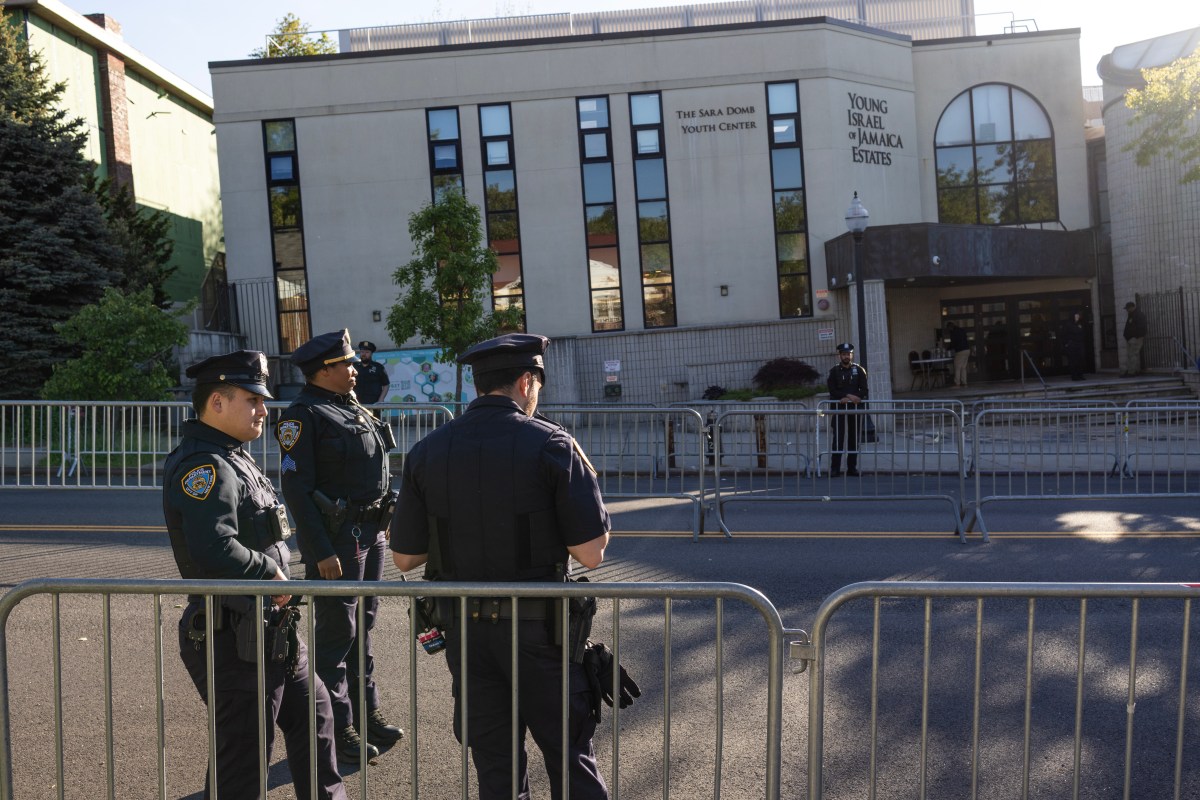
The bill for securing Jewish communal life in the United States has crossed $1.015 billion a year just as Rosh Hashanah begins at sundown on September 11, tying the High Holidays to the 25th anniversary of the 9/11 attacks and sharpening a question: who pays when worship itself has to be protected? The Jewish Federations of North America (JFNA) said on September 3 that Jewish communal security spending is up 33 percent from a 2024 estimate of $765 million and averages roughly $225,000 across more than 4,500 institutions, including synagogues, Jewish community centers, schools, summer camps and other nonprofits. The group said the figure excludes privately owned Jewish businesses, such as kosher restaurants, markets and Judaica shops, which means the full cost of Jewish public security is likely higher than the nonprofit tally.
The $1 billion figure is more than a security estimate; it puts a price on a condition now built into Jewish communal life in the United States: before a congregation can pray or a child can attend Hebrew school, many institutions must first pay to make the space safe enough to enter. No legislature imposed that cost, but it functions like a tax on Jewish life, diverting money from education, elder care and social services into guards, cameras, security directors, building hardening and training. Simply put, it's a tax to be a practicing Jew in the U.S.
Fingerhut, JFNA’s president and CEO, told Newsweek that Jewish institutions are now spending “enormous sums simply to ensure that people can worship, educate their children and gather as a community without fear of violence.” “This is not something we should accept as the new normal,” Fingerhut said. The opportunity cost is the heart of the “tax” frame: JFNA estimates the current security spend could send 44,000 children to Jewish day school, cover every child attending Jewish summer camp or fund every Birthright trip to Israel for a decade. Fingerhut put the trade-off in institutional terms: “Every dollar our community spends on guards and cameras is a dollar not spent on Jewish education, on caring for our elderly, on taking care of those in need.” For the High Holidays, the trade-off becomes visible because JFNA says more Jews gather in synagogues than at any other time of year.
The overlap between Rosh Hashanah and the 25th anniversary of the September 11 terrorist attacks gives this year’s High Holidays a sharper public meaning. September 11 changed how Americans think about security, terrorism and vulnerable public spaces. A quarter-century later, that burden is no longer confined to airports, federal buildings, or government agencies; it has become part of the operating cost of synagogues, Jewish schools, camps, and community centers.
The post-9/11 homeland security system now reaches deeply into private religious life, including through the federal Nonprofit Security Grant Program, which helps at-risk nonprofits pay for security upgrades. Jewish institutions don’t ask themselves whether they need protection but how much of that cost they must carry themselves. The timing also complicates the politics of the issue.
Supporters of more federal funding argue that protecting synagogues is part of protecting religious freedom and public safety, not a narrow communal benefit. In fact, the same grant program also serves churches, mosques and other nonprofits facing threats. The concern is not limited to the United States.
Extract — continue reading at the source.