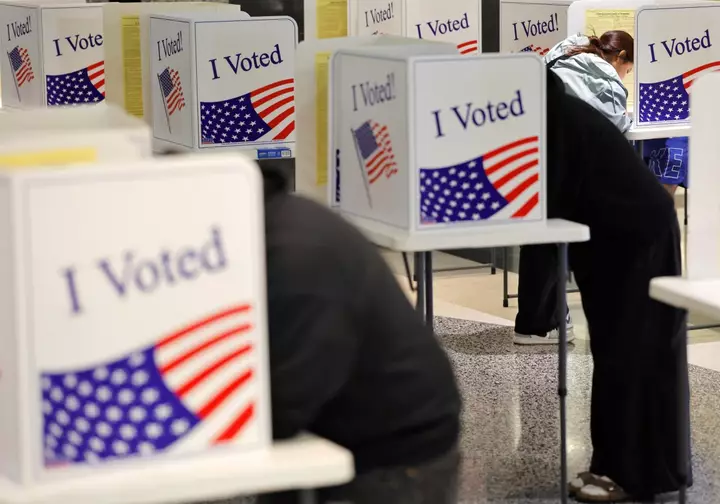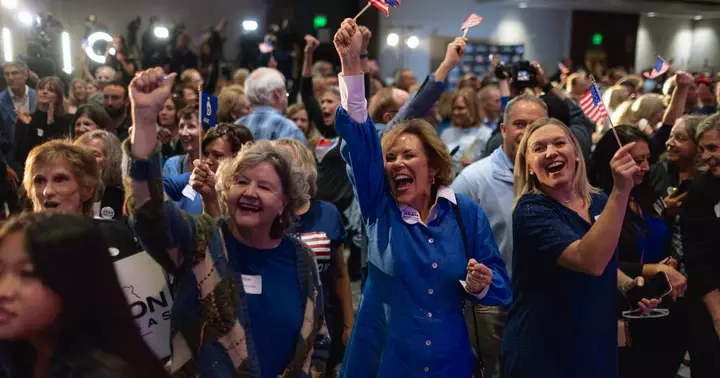
In a stunning U.S. midterm election, Democrats regained control of the House of Representatives and the Senate, as well as several governorships, winning big in Republican strongholds like South Carolina, Texas and even Kansas. While some races were yet to be called Wednesday morning, the result is a monumental rebuke of U.S. For Europe, which has weathered Trump’s incessant verbal attacks and tariff threats for the last two years, it was a rare ray of hope in transatlantic politics — if not because Washington would become a more predictable partner, then at least because the U.S. president might be too distracted to focus his usual ire on Europeans.
European Parliament Vice President Sophie Wilmès, a former Belgian prime minister, heralded a “major shift in the balance of power in the U.S. Congress,” adding: “I hope it will lead to a calmer, more constructive relationship with Europe.” It remains to be seen how Trump will shift his stance on Europe, if at all, with Congress no longer under his control. As president, he still retains many of the executive’s powers on foreign policy.
German Defense Minister Boris Pistorius called the Democratic victory “historic” but cautioned against Europe expecting too much. Against climate change denial and against the privileges of the elites.” Polish Foreign Minister Radosław Sikorski reshared his own tweet from June last year responding to Elon Musk, a key Trump ally. For Europe’s ascendant far right, which has long balanced admiration for Trump with the reality that he is deeply unpopular across the continent, the midterms are an uncomfortable reminder of the political risks of being too closely associated with the U.S. president.
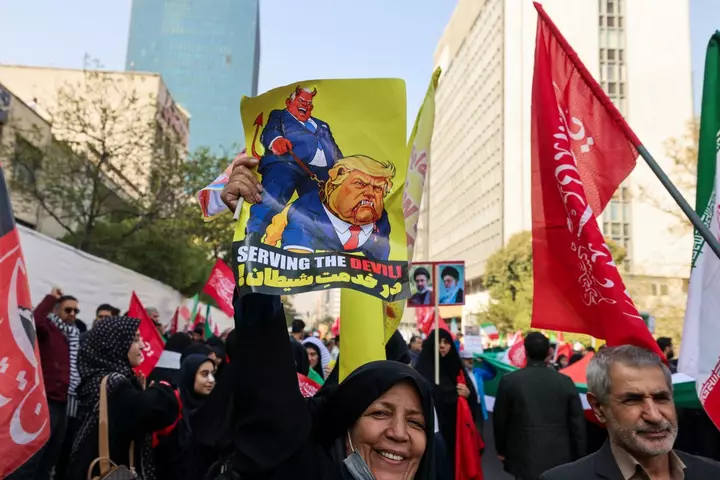
Jordan Bardella, leader of France’s National Rally (RN), was keen to chalk up Trump’s “unfavorable” result to his decision to go to war with Iran more than anything else. Bardella added that the RN’s presidential candidate Marine Le Pen was still leading in the French polls ahead of next year’s election and insisted defeats for nationalist politicians in Brazil, Hungary and now the U.S. did not bode ill for his party’s chances. But the cost-of-living crisis was top of American voters’ minds, according to polls.
That’s also the case in European countries, from France to Spain to Greece, which are grappling with soaring rents and widespread anger at apparently impotent governments. Marine Tondelier, leader of France’s Greens, said Trump had “made the United States the laughingstock of the world” and called the result a “warning for France” ahead of the presidential election in April. Ambassador to NATO Matthew Whitaker sought to downplay the prospect of a shift in Washington’s foreign policy following the midterm elections, insisting that the issues facing the U.S. and its European allies remained unchanged.
Paris, London and Frankfurt opened slightly higher on Wednesday, following the Democrats’ sweeping victory. For all the celebrations, European officials were also quick to acknowledge that a Democratic-controlled Congress does not automatically translate into a more accommodating U.S. administration. Trump retains considerable room to maneuver on foreign policy, including on the issues that have most strained transatlantic ties: European security, trade and Russia’s war in Ukraine.
Extract — continue reading at the source.