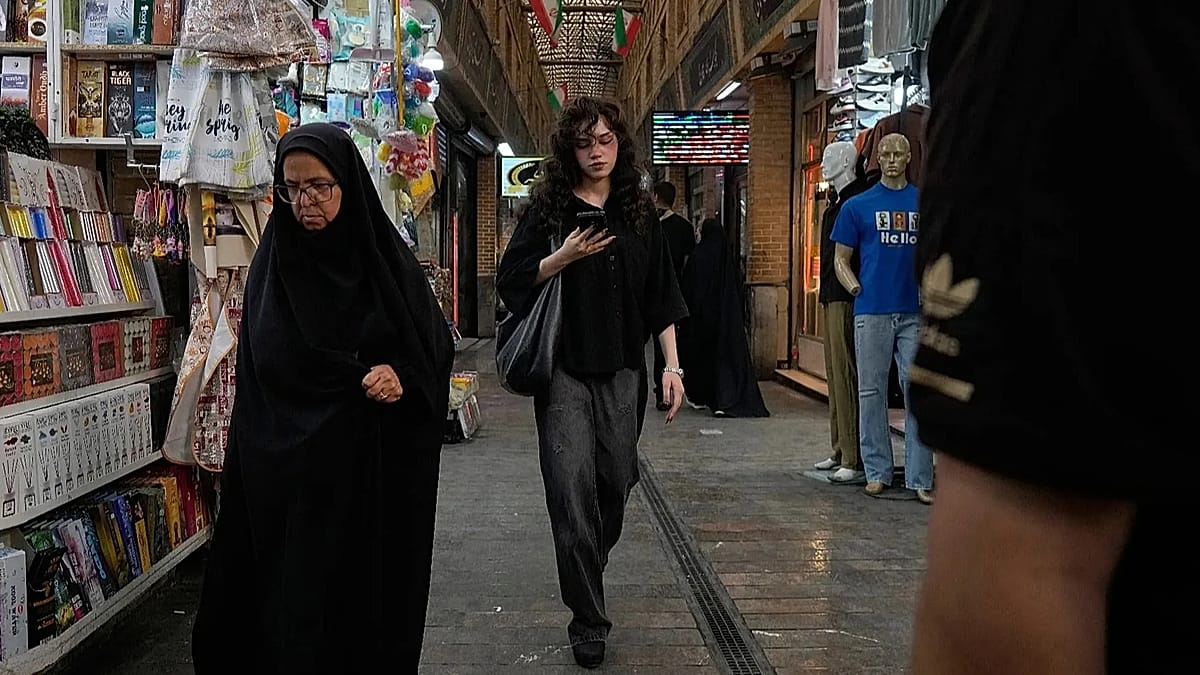
Six months after the war between the US and the Islamic Republic of Iran erupted, the economic fallout inside Iran has reached a severe and unprecedented intensity. While ordinary citizens previously weathered decades of international sanctions, the combination of ongoing war and a reinstated US naval blockade has paralysed everyday life, plunging the national currency into a historic tailspin and forcing families into drastic household austerity. On Wednesday, US President Donald Trump reiterated Washington's stance while boarding Air Force One for a trip to Dallas.
"They’re in very bad shape. Their country is destroyed now," Trump told reporters. "As you probably saw by the numbers, they have 300% inflation." According to Iran’s free currency market data, the Iranian rial continued its sharp decline, falling from around 1.45 million rials per US dollar in March 2026 to over 2.1 million rials by early September.
The economic shockwaves have hit the currency market hard over the past 10 days. By Thursday, the free-market exchange rate for the US dollar comfortably breached 234,000 tomans (2.34 million rials), while the euro soared to an all-time high of 273,000 tomans (2.73 million rials). Iran's official currency is the rial, although most Iranians conduct everyday transactions in tomans — a colloquial unit equal to 10 rials.
Shops, restaurants and property listings quote prices almost exclusively in tomans. This marks a further decline since early September, when the rial had already lost over 63% of its value against the dollar since March, when Iran's Central Bank Governor pledged a $2 billion liquidity injection while conceding that spiralling inflation was placing "heavy pressure on people's livelihoods." While Tehran frequently attributes the economic crisis entirely to external pressure, some domestic political figures acknowledge structural failures at home. Hassan Ghashghavi, spokesman for the Iranian Parliament’s National Security and Foreign Policy Commission, admitted that internal mismanagement remains the primary driver of the crisis.
"Regarding the economy, we must look inward. Injustice — especially in distribution and the concentration of wealth within a tiny elite compared to the vast majority — alongside widespread financial corruption and factional self-interest, impacts our economy far more than the United States does," Ghashghavi said. "Surveys conducted before and after the 12-day conflict (with Israel in June 2025) show that while severe blockades exist, roughly 35% to 65% of our national economic problems stem from domestic issues," he added.
"Lack of planning, failure of the three branches of government to perform their duties properly, and internal missteps account for a significant share. Only about 35% of the problems are rooted in foreign policy and US sanctions." Compounding the hardship, the government implemented a sudden 100% increase in fuel prices on Tuesday. Under the new rationing framework, vehicle owners receive a monthly allowance of 60 litres at 1,500 tomans per litre, and an additional non-subsidised tier of 50 litres at 3,000 tomans per litre.
Extract — continue reading at the source.


