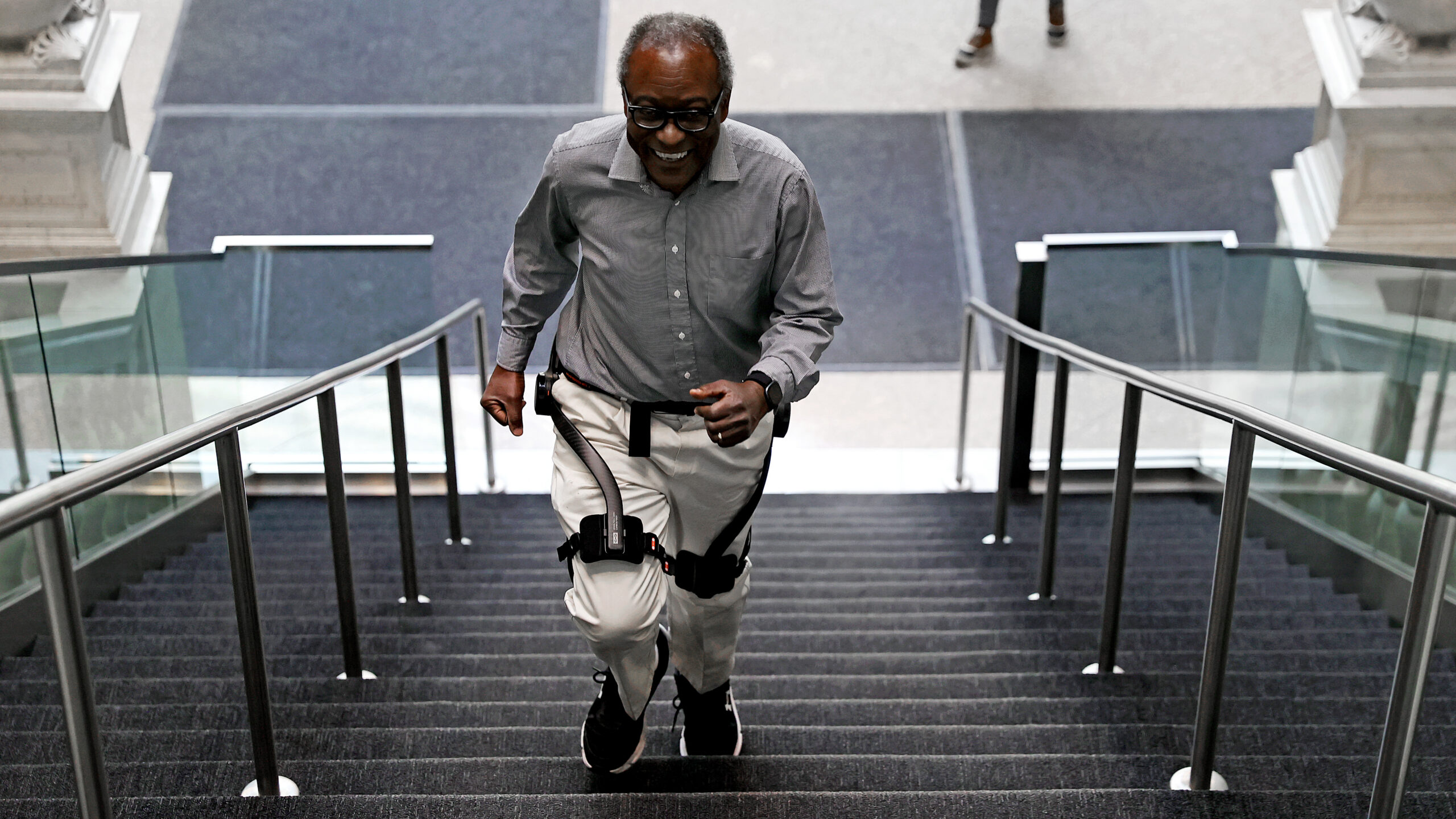
This year, members of Seattle Mountain Rescue have been setting off into the wilds of the US Pacific Northwest wearing an unusual piece of kit. They’ve been hiking into the wilderness with powered assistive devices attached to their hips and legs. Designed to increase lower-body strength when climbing or carrying heavy loads, these pieces of equipment are being tested to see if they can boost rescuers’ speed and endurance when it matters most—during searches for stranded people.
Devices like these are called human exoskeletons. They attach to parts of the body to create an external—or “exo”—mechanical structure. This powered frame enhances the wearer’s physical capabilities.
In physically demanding fields, workers are increasingly using these devices during strenuous tasks. IKEA has used SuitX exoskeletons for several years now. These assist warehouse workers with handling heavy materials.
Ford, Boeing, and Mazda Toyota have also all adopted the tech on some of their assembly lines. In Finland, a recent project called ExoPELA assessed whether exoskeletons could reduce muscle load and strain in rescue and firefighting work. It found noticeable benefits for users in certain real-world tasks.
And in early 2026, the Ukrainian military revealed its soldiers had been using Hypershell exoskeletons on the front lines to help with carrying artillery shells. According to test results, soldiers wearing the devices “become less fatigued, work faster, and maintain combat effectiveness for longer,” Colonel Vitalii Serdiuk told the Ukrainska Pravda newspaper in March. Multiple consumer and clinical devices, designed for everyday assistance, rehabilitation and exercise, are also now available.
Some estimates have valued the total sector at around $500 million (£370 million) currently, and predict it could double or triple in size by the mid-2030s. Exoskeleton technology has progressed significantly over the past decade. This has largely been thanks to robotic motors, sensors, and control systems becoming more affordable and accessible.
Extract — continue reading at the source.


