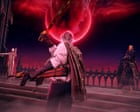
Lowanro City’s skyline is dominated by an oppressive clock tower, silhouetted against a moody red sky and an impossibly large, ominous moon. A retractable bridge splits the map in two, and a network of slimy sewers runs beneath the city streets, offering flanking routes for crafty players. This layered and multi-tiered map bears all the hallmarks of the team behind some of the most memorable stomping grounds in video games.
But The Duskbloods, which I recently spent two days playing in Tokyo, is a strange departure from developer FromSoftware’s usual offerings. These have included massive single-player RPGs with light, experimental multiplayer components such as Elden Ring and Bloodborne. Those games have always attracted duellists – players who love to invade other people’s games to fight them to the death – but this Nintendo Switch 2 exclusive is a different proposition entirely.
Matches whittle down eight players over three phases, culminating in a free-for-all battle between three survivors. In each phase, players sweep the map forming alliances, proposing to each other with bouquets of flowers (yes, it’s still weird), killing AI creatures and bosses, holding capture points, collecting items, and fighting one another. All of these actions earn a currency called Virtue, and it’s the two players with the least Virtue who are culled at the end of each phase.
Battles against AI feel like playing a more familiar FromSoftware game at 2X speed. Jumping, dodging, blocking and sprinting while in battle drain stamina, but attacking does not, so you’re encouraged to see your entire attack chains through and take chances you wouldn’t usually take. The regular fodder enemies are almost like the mobs in a MOBA game (like League of Legends) – they’re a means to an end, a resource to be farmed as quickly as possible.
When you fight a boss, other players are given the option to teleport directly to your side to help and share the spoils. This is where The Duskbloods is most fascinating: even other players are resources, and choosing when to accept alliances or engage in fights is a key part of tactical play. Game director Hidetaka Miyazaki says he was inspired by board games and pen and paper RPGs.
That’s immediately clear. Players start each match with a Sigil, which gives them a personal objective such as marrying another player (bonding you until the final battle) or hunting down heretics. These objectives interact and give players opposing goals, so your ability to read the room is vital, even if “the room” is just a cluttered UI (user interface) that constantly moves around your screen.
Extract — continue reading at the source.