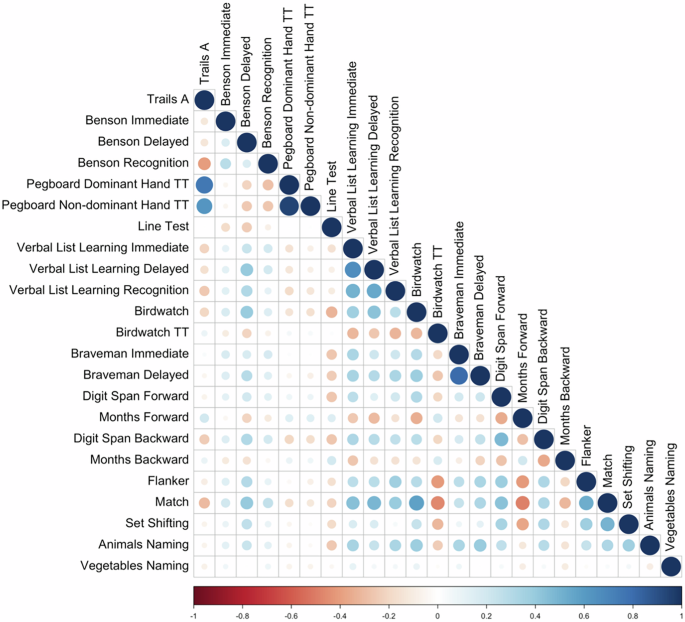
This study evaluated the feasibility and internal factor structure of an adapted multi-domain and multi-modal (paper/digital) cognitive test battery for cognitively unimpaired multilingual Kenyan adults. The battery was translated into Swahili, back-translated, culturally adapted with community input, and refined through expert review. It was administered to 148 adults (37.26% male; mean age 57.68 years, range 45–79) using paper-based measures of learning, memory, attention, fluency, and visuoconstruction, along with tablet-based tasks assessing attention, set-shifting, symbol-matching, visuoperception, and visual associative learning.
Participants found the tests relevant and acceptable, recommending language simplification, short breaks, and flexibility in language use. High completion rates and positive engagement supported feasibility. Exploratory factor analyses identified a four-factor structure explaining 61.4% of variance, reflecting executive control, rote memory, contextual memory, and visuospatial functioning with preliminary evidence for acceptable model fit, pending cross-validation.
Findings indicate feasibility and provide initial evidence for construct validity based on the internal structure of the test battery. These results advance multidimensional cognitive phenotyping for brain health assessment in Sub-Saharan Africa. Multi-domain cognitive assessments are needed for diagnosis, treatment planning, and outcome tracking of people with dementia1.
Although brief screening may be the first step in identifying whether cognitive impairment is present, a comprehensive multi-domain assessment is essential for characterizing cognitive phenotypes linked to different dementia syndromes. When paired with Alzheimer’s disease biomarkers, cognitive phenotyping can determine pretest probability of amyloid positivity and indicate whether multimorbidity should be considered2. Moreover, multi-domain assessments can monitor disease progression3 and track response to interventions4.
Validation of multi-domain assessments in global settings is essential for ensuring that populations around the world can benefit from available interventions, a core component of the World Health Organization (WHO) dementia research blueprint5. Early and accurate diagnosis of cognitive impairment is critical for achieving maximum treatment benefit6. However, valid cognitive diagnostics are elusive in many low- and middle-income countries (LMICs) across Sub-Saharan Africa7.
This is often attributed to lower levels of educational attainment, multilingualism, and cultural differences relative to high income countries (HICs), where most cognitive tests were developed8. When digital tests are deployed, limited familiarity with technology can also compromise their validity9, particularly in older adults10,11. Therefore, it is essential to enlist stakeholders from target populations to determine the face validity of tools and to assess the feasibility of administration procedures, prior to psychometric validation12,13.
Extract — continue reading at the source.


