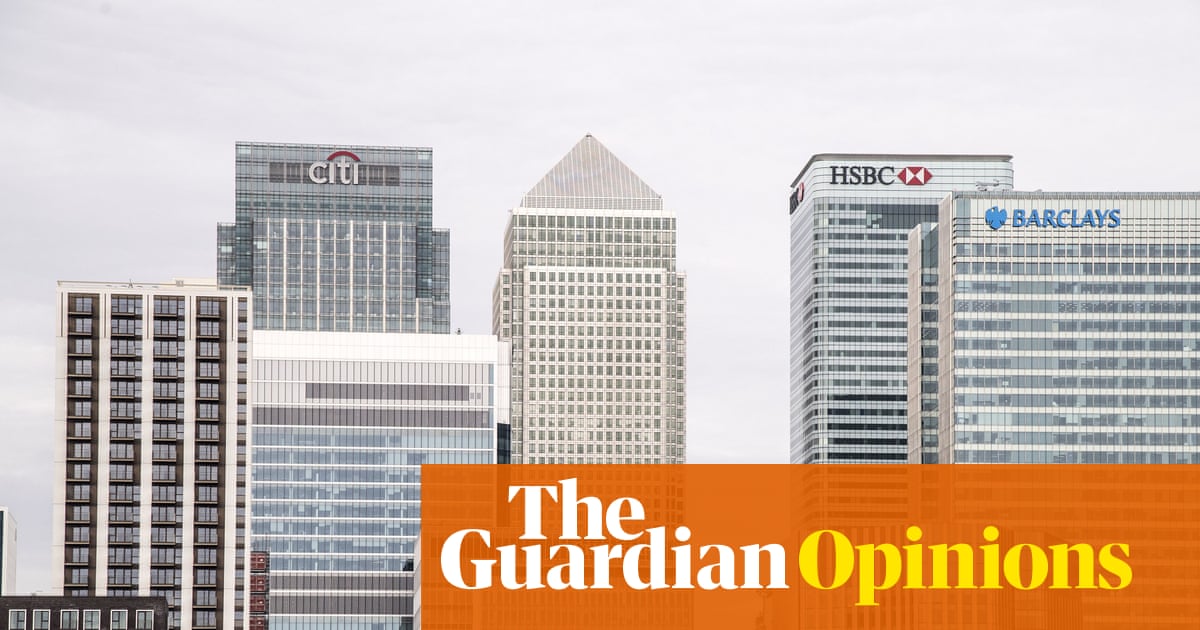
John Healey is planning to tax British banks, the Guardian revealed, in the forthcoming budget. It’s about time for the chancellor to act. Banks have been raking it in.
The campaign group Positive Money reported this summer that Britain’s four biggest banks made £29bn in the first half of this year, up a fifth on 2025. These windfalls owe more to higher interest rates than better products or services. Households and businesses pay more to borrow.
Meanwhile, the Bank of England pays the banks tens of billions in interest on their reserves, with the Treasury footing the bill. The chancellor is said to favour restoring the bank surcharge from 3% to 8%, which could raise around £2bn a year. This would recover a very modest share of the sector’s bonanza.
Louis XIV’s finance minister, Jean-Baptiste Colbert, said that “the art of taxation consists in so plucking the goose as to obtain the largest possible amount of feathers with the smallest possible amount of hissing”. Britain’s banks have plenty of feathers. That hasn’t stopped them hissing.
The banks say that they already face higher taxes than other companies, that they won’t be able to lend as much, and that their profits won’t last. But banks aren’t taxed on their windfall gains, and what levies they face are less than those paid by oil and gas companies. The Bank of England said banks spent £7.7bn on dividends and buying back shares in the first quarter of 2026 without affecting lending.
Higher taxes might mean trimming shareholder payouts. There’s nothing to suggest productive lending must take the hit. Over the past five years Barclays, HSBC, Lloyds and NatWest – which control the majority of UK personal and business accounts – made profits of £200bn.
Extract — continue reading at the source.