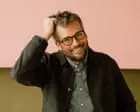
The ILM artist recounts animating a ‘Star Wars’ shot at Tippett Studio’s now-closed Berkeley facility, while detailing the movie’s redesigned creatures and practical effects, and a tribute to Miyazaki’s ‘My Neighbor Totoro’ Industrial Light & Magic animation supervisor Hal Hickel approached Jon Favreau’s “The Mandalorian and Grogu” with a deceptively simple question: “What would Phil do?” The Phil in question was stop-motion pioneer Phil Tippett, whose work on the original “Star Wars” trilogy provided a template for everything from lumbering AT-AT walkers to a spectacular battle involving two giant droids animated by hand. Speaking at View Conference in Turin on Thursday, Hickel, who recently marked 30 years at ILM, detailed how the team mixed digital animation with physical sets, mechanical rigs and traditional stop-motion. He also recounted returning to Tippett’s Berkeley stage to animate a shot himself.
For the movie’s opening AT-AT battle, Hickel revived animation tests developed for “Rogue One,” which had involved inserting computer-generated walkers into footage from the original trilogy to study its lighting, textures and stop-motion feel. The new walkers moved even more slowly to emphasize their enormous weight. A full-sized interior set extended through a walker’s neck into its movable head, while a planned exchange of gunfire between characters riding on two walkers was filmed but ultimately cut.
The smaller AT-RT presented a different challenge. Animators studied ostriches before feeding their digital movement curves into a six-axis mechanical rig carrying the performers. Initial tests shook the contraption so violently that Hickel joked, “Poor Grogu.
He was not going to survive.” Favreau wanted the vehicle bouncy, but not too fast or implausibly smooth. His broader direction for Mando’s action, Hickel recalled, was “less James Bond, more Jackass” — perilous escapes that appear perpetually on the edge of disaster. Rotta the Hutt, voiced by Jeremy Allen White, required an even bigger departure from familiar “Star Wars” imagery.
Instead of Jabba’s sedentary bulk, Rotta needed to move like a powerful fighter while remaining a character audiences could sympathize with. Legacy Effects made full-size physical references, while ILM developed a digital muscle system and explored movements inspired by elephant seals and sumo wrestlers. But after shooting, Favreau worried the original design looked too much like “Battletoads.” “He just didn’t feel Hutt-y enough,” Hickel said.
He also revealed that Rotta had the second-largest amount of dialogue after Mando, prompting the decision to have him speak English rather than require younger viewers to read extensive subtitles. The softer side of that characterization even included an homage to Hayao Miyazaki’s “My Neighbor Totoro”: Dave Filoni drew Grogu asleep on Rotta’s chest during a production meeting. Another sequence turned the holographic chess monsters from the 1977 “Star Wars” into full-sized combatants.
Extract — continue reading at the source.