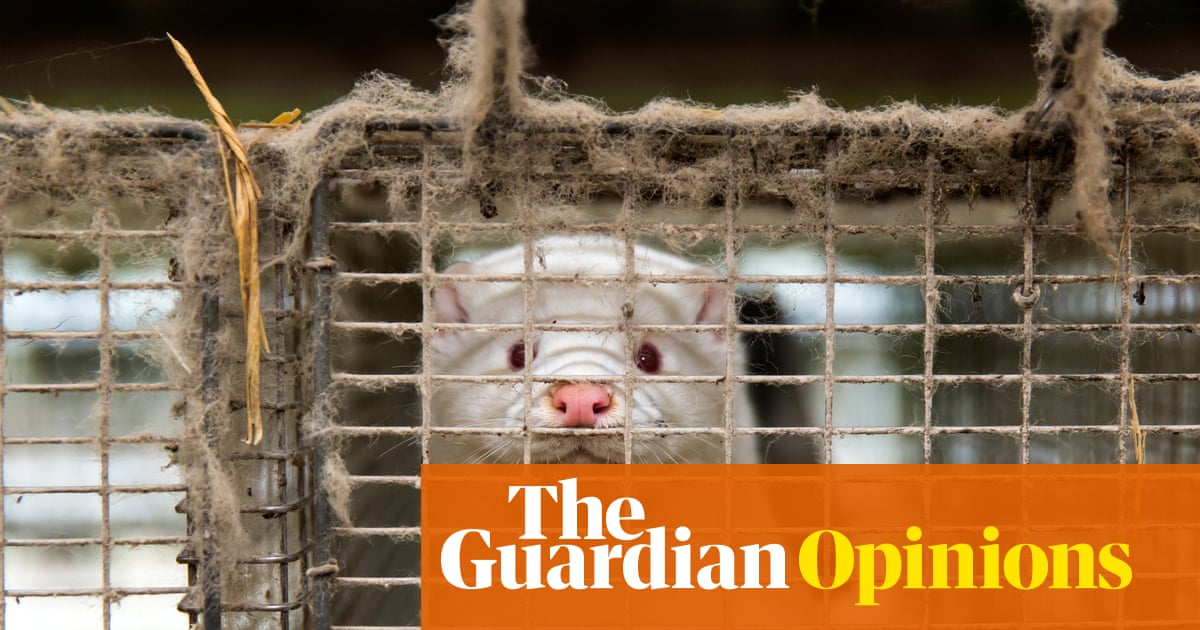
It’s certainly a candidate, not least because the chain of events that could trigger a plague far worse than Covid-19 looks like the opening sequence of a disaster movie. A really bad disaster movie, in which the levels of carelessness and turpitude defy belief. A report by the investigative news service ProPublica reveals that bird flu has been raging in a mink farm in Utah since August, and it appears next to nothing has been done by public officials.
In 2023, I warned in the Guardian that mink farms could scarcely be better designed to generate lethal plagues. This is for three reasons: mink are fed on the offcuts of chickens, cows and other farm animals, in which new viral variants often develop; mink readily host both avian and human flu viruses, which can then exchange genetic material, turning a bird disease into a human one; and mink possess extremely high “zoonotic potential” – the ability to infect animals of other species, including human beings. I pointed out that bird flus that jump into the human population can be extremely dangerous: of those known to have contracted the H5N1 variant since 1997, 48% have died.
The first death in the US from avian flu this year has just been announced: the victim caught it from an infected dairy herd. While it is devastating to wild bird populations and some mammals, fortunately its transmissibility between humans is so far extremely low. If the perfect mixing vessel of a mink farm were to generate a variant that was both highly lethal and more transmissible, you would do well to get on with writing your will.
Both for this reason and because of the pointless cruelty of the fur business, I called for a global treaty to ban mink farming. I didn’t expect governments to leap into action, however compelling the case might have been. But nor did I expect them to act as if their aim were to assist a deadly virus.
This is how officials in the US appear to have behaved. ProPublica discovered that, instead of trying to contain the virus by shutting down the farm and slaughtering the mink, Utah departments have sought to contain the story. Public health officials have failed to test workers on the farm for symptoms, or track their contacts, despite the fact that they’re in touch with the infected mink every day, and are often bitten or scratched.
Because of complaints from the state agriculture department that “farmers were annoyed” by testing. Utah’s state veterinarian, Amanda Price, said that the outbreak was “devastating”. But she wasn’t talking about public health.
Extract — continue reading at the source.