Elon Musk’s X has shut down a suspected Chinese “bot farm” seeking to deepen divisions in the United States surrounding the cost of the AI boom to ordinary households. The “influence” operation fed off American public angst over AI infrastructure, especially data centers—and the next U.S. target is likely already in the sights of China's propaganda army. Hundreds of fake accounts—some using AI-generated imagery that suggested data center operators were exploiting the public—were “posting in a manner that could manipulate a legitimate debate about American AI and energy policy,” X said.
Musk’s social media platform, which has leaned heavily into AI through its chatbot Grok, is the latest U.S. tech company to discover this pattern, and the latest to fight a two-front narrative war against the U.S. public and now China. China is in a race with the U.S. to dominate the AI era, from the diffusion of its own AI models worldwide to setting the standards for AI governance. Beijing has never been in a stronger position to lead, and a low-cost propaganda campaign on X is only one small sign that it’s apparently willing to do whatever it takes to win.
Trying to slow the expansion of America's data centers is one way China is working to get ahead. Its next target may be the American power grid on which those data centers—and AI firms—so heavily rely. In the U.S., AI is already a major economic driver and the main attraction for private capital investment.
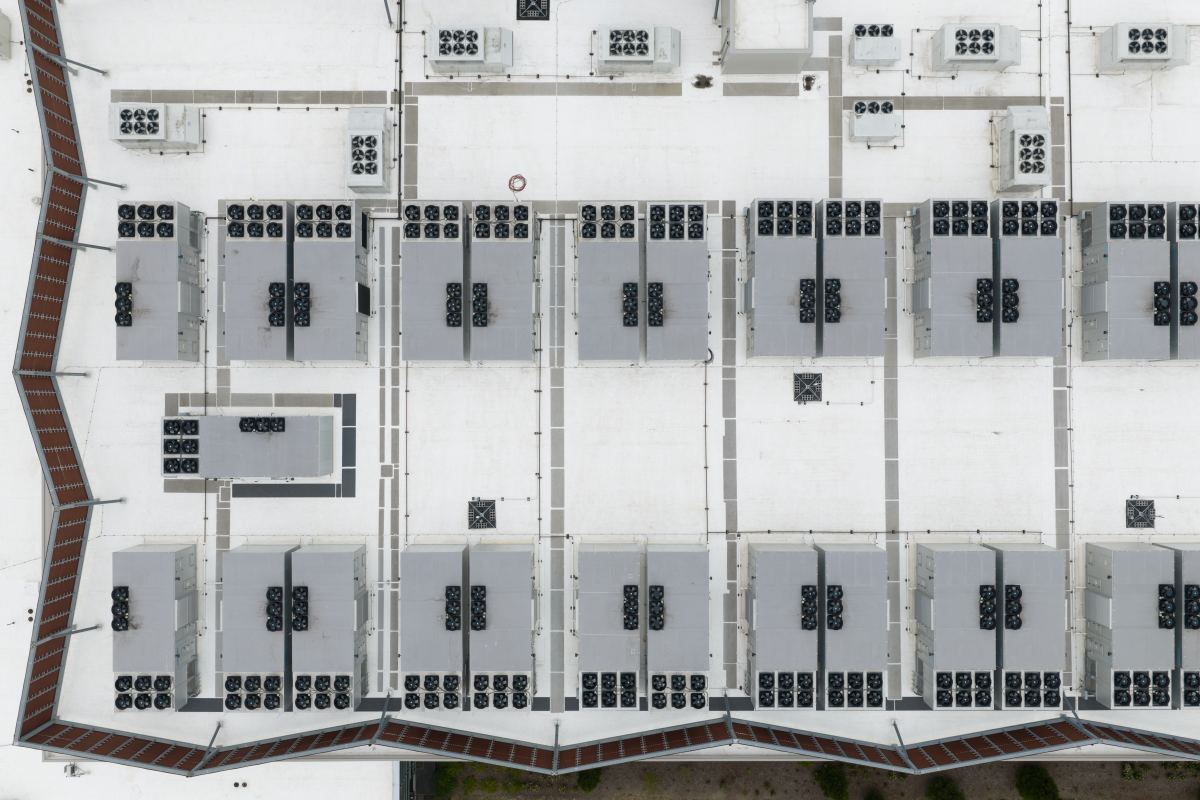
The debate over America’s AI buildout centers on the critical hardware they house for the industry—powerful computer chips, dense memory drives and high-speed fiber-optic networks. The massive complexes are a significant drain on local power grids and require around-the-clock cooling, typically with industrial-scale fans or with evaporative water towers. Both are resource intensive and have led to concerns that they will drive up energy bills for local households.
Some states have begun taking action to limit the proliferation of data centers or mitigate their impact on local areas. The White House has championed the expansion of data centers but also acknowledged concerns about energy bills for ordinary Americans with its "Ratepayer Protection Pledge" in March to ensure tech firms pay "the full cost of their energy and infrastructure, no matter what." Under that pledge, companies "agree to protect American consumers from price hikes due to data center energy and infrastructure requirements, and lower electricity costs for consumers in the long term." U.S. states that back data centers believe the tax revenues could fund public goods, and that the private sector could help upgrade aging utilities, including the infrastructure needed for energy generation. Environmental groups are concerned that data centers will occupy hundreds of acres of land previously reserved for agriculture, residential purposes, or protected areas.
The disagreement is happening in plain sight—on the internet, on television screens and in newspapers. China is watching and its propaganda army is capitalizing on it to hobble its main rival, according to X. The China-linked bot farm, which comprised 200,000 active and backup accounts, posted “claims that AI data centers are driving up household electricity prices and straining the grid,” X said.
Extract — continue reading at the source.