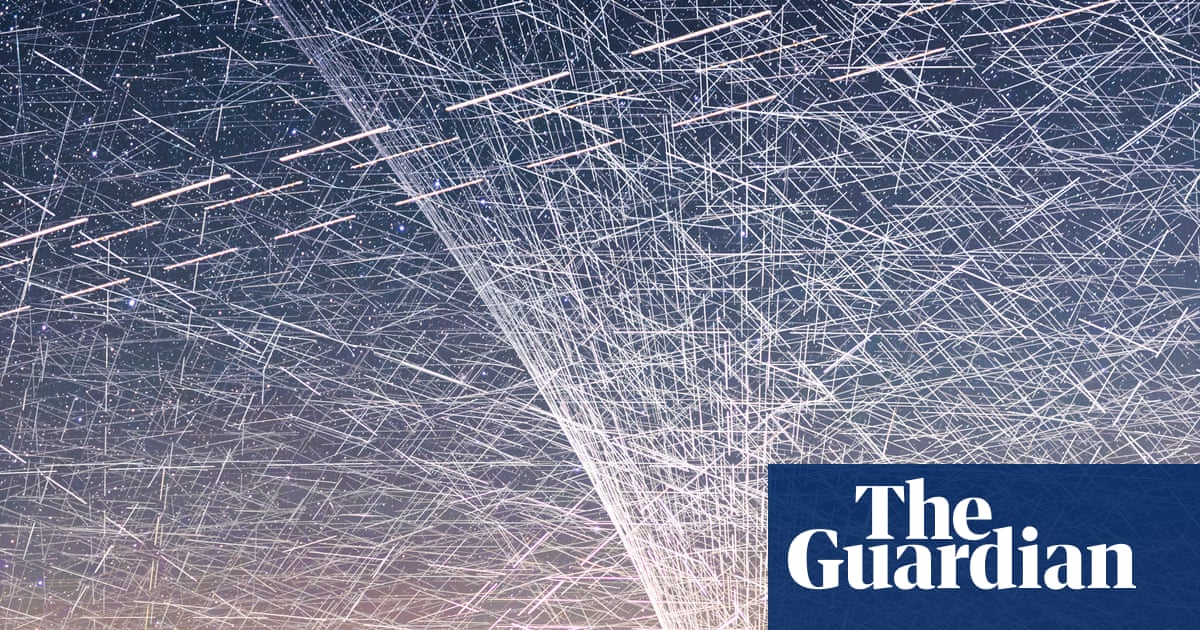
To create his spectacular image – now viewed millions of times online – Brendan Larsen spent two hours in September snapping hundreds of photographs of the night sky over Mount Taranaki in the North Island. Larsen, 51, says he set his camera up to take an unlimited number of eight-second-long shots, with a two-second gap in between each photo. Larsen spent about 40 hours layering the individual photos – each of which contained about 25 satellites – over one another, using Adobe Photoshop.
Much of the time was spent painstakingly erasing stars, to reveal the satellites. When Larsen uploaded the image to his social media channels in mid-October, it quickly went viral, gaining him 15,000 new followers, clocking up tens of millions of views and igniting thousands of comments. Some viewers dismissed the photo as AI – but Larsen understands why.
Still, it is “frustrating”. It is also exasperating, he says, to see his image downloaded and recreated by AI, with obvious flaws. In anticipation of the AI accusations and backlash, Larsen documented his creative process on video, which he hopes will also allow viewers to form an emotional connection to the landscape.
As a child Larsen was “absolutely blown away” by the number of stars over parts of rural New Zealand. But he has noticed an increase in light pollution and the number of satellites over the six years he has been photographing the sky. Studies have warned that metal particles from space activities – such as rocket launches and satellite reentries – could affect atmospheric chemistry and the ozone layer, while the UN has warned increased space activity poses risks to ground safety, darkness and astronomy.
While satellites don’t yet overwhelm the sky to the naked eye, Larsen worries about the future state of the night sky. He hopes his image will ignite debate and reflection over how satellites can be used responsibly.
Extract — continue reading at the source.


