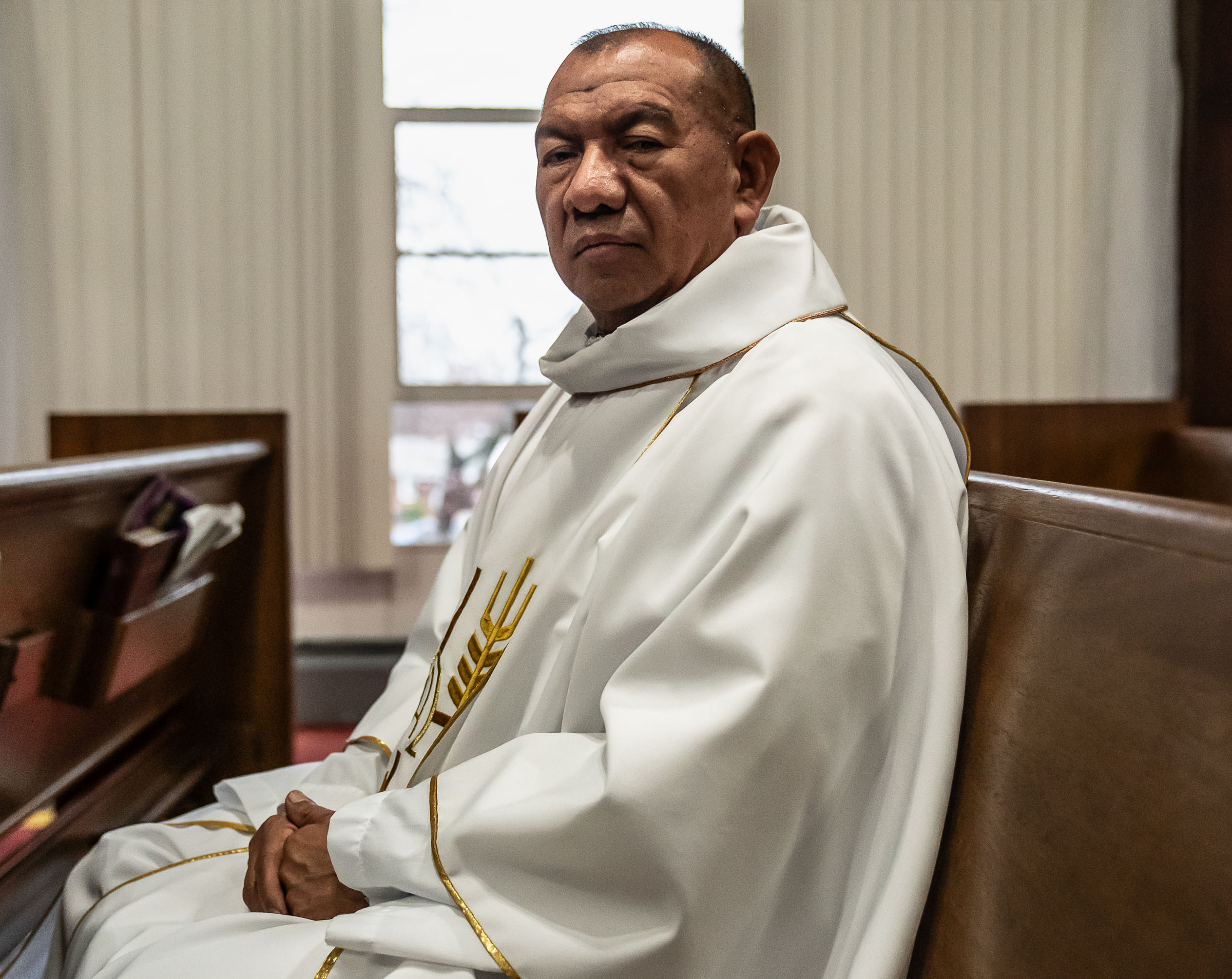
When a mother returned to Maryland earlier this year after four months in Immigration and Customs Enforcement detention, her children, ages one and four, did not recognize her at first. In her absence, they had lived with Vidal Rivas, an Episcopal priest who had agreed to be their temporary guardian if immigration authorities took her into custody. Rivas’ wife slept beside the children to soothe them while their mother was gone.
When his wife became sick, Rivas took on more of the childcare. The experience was demanding. But Rivas, 62, stands ready to do the same for 29 other children whose immigrant parents have named him as their standby guardian.
Two more families are making similar arrangements with him, he says. Matthews Episcopal Church in suburban Washington for nearly two decades. Inside the church hangs a sign bearing the same message in English, Spanish and Haitian Creole: “We love migrants.” For Rivas, the words have become a commitment to the families who fear an immigration arrest could suddenly separate them from their children.
Rivas began encouraging families to name him as a standby guardian last year, shortly after President Donald Trump returned to office. Nearly all of the parents are Salvadoran, like him, and have been bracing for the Trump Administration to end Temporary Protected Status, or TPS, for roughly 170,000 immigrants from that country. Under Maryland law, parents can designate a standby guardian in the event they are arrested by immigration authorities.
The designated guardian automatically becomes the child’s legal guardian for six months, with the possibility to extend if approved by a judge. Rivas says some parents have talked to him about contingency plans in case they remain in a detention center for longer. Maryland was among the first states to revise its guardianship laws to help prevent the children of detained immigrants from entering foster care.
During Trump’s first term, state lawmakers passed a law allowing families to name a temporary guardian if detention or deportation separates their family. In July, Massachusetts made a similar change in state law, joining Virginia, New York, California, Nevada, and Washington, D.C. to streamline such arrangements. After the mother of two young children was released, Rivas and his wife remained close to the family.
Extract — continue reading at the source.