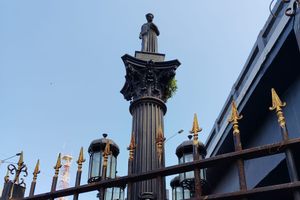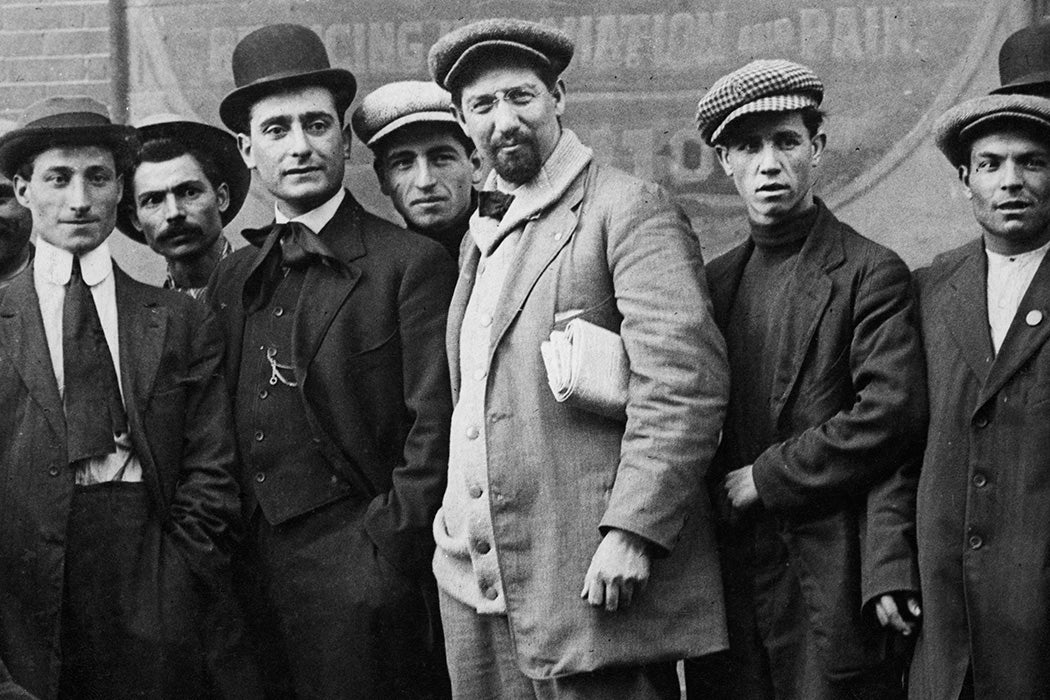
As the anniversary of Christopher Columbus’ 1492 voyage to the Americas approached, a newspaper opined that, rather than being a hero, the navigator was “a pirate and adventurer,” the figure who inaugurated the era of “colonial politics” and was guilty of committing a “series of terrible massacres and usurpations against the native people and the Africans.” This interpretation, while supported by a substantial body of historical scholarship, is sharply contested by leaders of some Italian-American organizations, who laud Columbus as a symbol of ethnic pride. As a consequence, across the United States, Italian-American organizations and conservative advocacy groups have fought legal battles against the removal of Columbus statues or the renaming of the holiday to Indigenous Peoples Day. Russo, the national president of the Italian Sons and Daughters of America, writes that “parades and days created in Columbus’ honor were the outlets through which Italians in America expressed their pride and heritage,” while the National Italian American Organization’s official statement describes the explorer as having undertaken a “courageous voyage,” and the Columbus Heritage Foundation says that it opposes “hateful attacks against statues fueled by misleading and misinformed narratives.” More recently, Donald Trump entered these debates, signing an executive order that declared Columbus the “original American hero” and later enthusing, “We love the Italians!” What makes the newspaper article quoted above so interesting is that these criticisms of Columbus weren’t published in 2026 and they didn’t appear in The Nation or The Progressive.
Instead, they were written in 1892 and published in the Italian-American newspaper Il Grido degli Oppressi (The Cry of the Oppressed). Italian-Americans are often perceived as politically conservative as they’ve moved from being predictably Democratic voters to Republican ones. Supreme Court justices Antonin Scalia and Samuel Alito, former White House counsel Pat Cipollone, Trump’s 2016 campaign chairman Paul Manafort, former Secretary of State Mike Pompeo, media personality Jesse Watters, and of course former New York mayor Rudolph Giuliani are all prominent conservative Italian-Americans.
According to a 2016 BuzzFeed News analysis of post-election polling, Americans of Italian descent were the second-largest European ethnic group to vote for Trump, ahead of the Irish and English, and behind only German-Americans, with a 2023 poll from the Italian American Policy Center concluding that 51% of Italian-Americans voted for Donald Trump. These findings led author Christine Grimaldi, writing in The Los Angeles Review of Books, to refer to such voters as “Paesanos of shame.” Critic and novelist John Pistelli reflects that many of Trump’s attributes his critics revile and his supporters celebrate—his brashness, loudness, vulgarity, and tackiness—embody negative stereotypes long associated with an ethnic group to which he does not belong. Just as Bill Clinton was sometimes referred to as the first Black president, Pistelli writes, Trump is “the first Italian-American president.” Pistelli mournfully notes that “We were the first of the white ethnics to make the break with the left, and we made it more thoroughly than anyone else,” wondering about the possibility of a “redemptive political identity.” Yet underneath all of the present-day stereotypes of Italian-Americans as insular, provincial, or conservative, there is a too often obscured history of political radicalism.
Today, left-wing Italian-Americans (such as myself) may agree with Grimaldi and Pistelli that we’ve been saddled with Alito, Pompeo, and Giuliani, but only a century ago Italians were associated with radical thinkers such as the poet and journalist Pietro Gori, the theorist Giuseppe Ciancabilla, the revolutionary Errico Malatesta, the lawyer Francesco Merlino, the politician Vito Marcantonio, and the labor activist Luigi Antonini. Paul Avrich notes in Sacco and Vanzetti: The Anarchist Background that Italians “comprised one of the largest and most militant of the ethnic groups which made up the immigrant anarchist movement,” while Paul C. Mishler and William Mello, writing in the journal International Labor and Working-Class History, describe a “lost world” of Italian-American radicalism, one often obscured by later images of Italian-American conservatism.
For much of the past century there has been scant everyday evidence of this once vibrant radical politics, though faint cultural memories can still be found for those looking. Richard Lenzi, writing in his 2019 study Facing Toward the Dawn: The Italian Anarchists of New London, recounts a woman in Connecticut who remembers her fisherman father having “read the old anarchist papers,” while the son of a stonemason explains that the “anarchy thing… happened when they first came over.” Whereas today the stereotype of Italian-American politics centers on somebody like Giuliani defending Trump, the community was once associated with radicals like Luigi Galleani who wrote in 1925 that “Anarchism rejects authority in any form.” This political tradition first emerged in the impoverished regions of southern Italy, the Mezzogiorno, or “land of the mid-day sun.” The region—including Naples, Calabria, and Sicily—was also the homeland of many of the Italian immigrants who arrived in the United States during the first half of the twentieth-century. Meyer writes that this was a place “whe
Extract — continue reading at the source.
/https://tf-cmsv2-smithsonianmag-media.s3.amazonaws.com/filer_public/1a/ea/1aead3d9-9466-45ac-a8bb-112bea0fccfe/full-res-for-display-3840x2160.jpg)