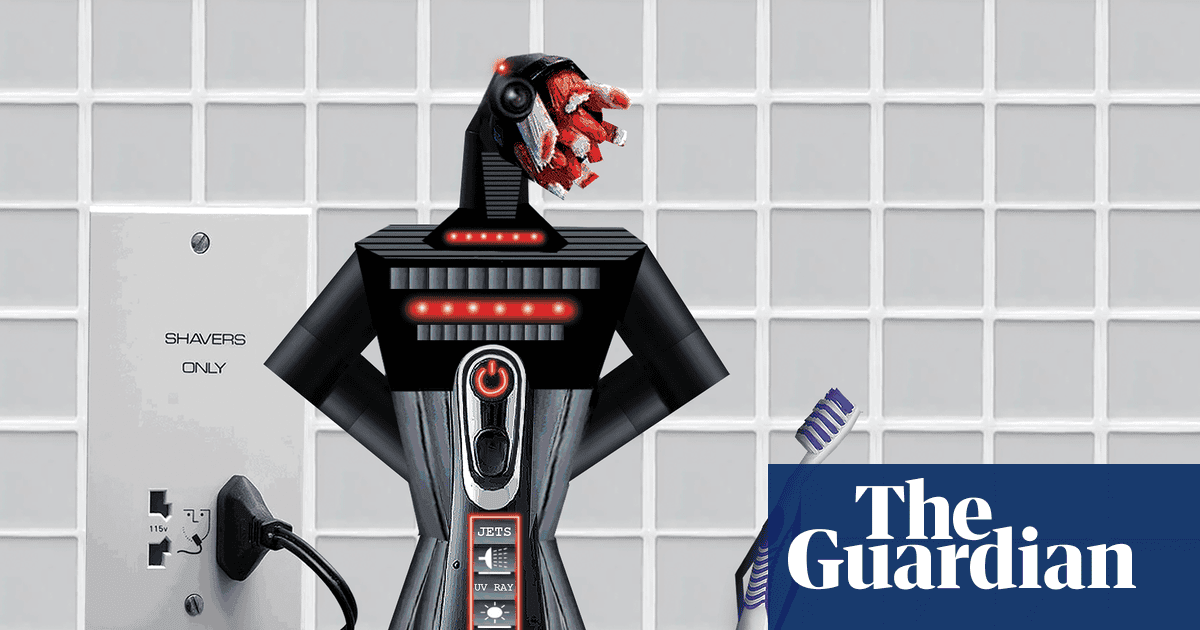
A December 1969 report from the consumer magazine Which? explored a relatively new gadget that, it predicted, many people would be giving as Christmas presents: the electric toothbrush. For those who hadn’t yet seen one, the magazine described it as “not that much different in principle from an ordinary brush – you have a stick with a brush on the end. The difference is that an electric one moves the brush head for you”.
Nearly six decades on, electric toothbrushes can do a lot more than merely jiggle, offering multiple speeds and movement sensors for real-time tracking of where you’ve brushed – some even promise gum-massage or tongue-cleaning modes. Prices range from about £25 for a basic Oral B model to £599.99 for a Philips Sonicare model that gives “smart coverage feedback”. The latest super-toothbrush – a mere £419.99 – features a camera and a built-in water jet to clean between teeth, using AI to identify gaps.
Created by Dyson, it’s still, essentially, a stick with a brush on the end (although there is another toothbrush on the market that’s shaped like a mouthguard, with individual brushes, that claims to clean your teeth in 20 seconds). In the UK, 59% of adults use an electric toothbrush and sales, including replacement heads, reached £361m in the last year, according to market intelligence company Mintel. Any product launch by Dyson – still associated with reinventing the vacuum cleaner – feels like something of an event, so its incursion into oral health does feel significant, says Rachel Bairsto, the head of museum services at the British Dental Association.
Was everybody appalled at the sight of a toothbrush in the bathroom? I don’t know.” With many toothbrushes now, she says, “I think there’s definitely a status symbol [aspect] to it.” We’re more interested in oral health than ever, says Dr Zaeem Jafri, a dentist and the founder of Nova Smiles, an online advice website. One reason why is because there’s really good evidence now that gum health is linked to your general health, so gum health is now part of the wellness conversation.
People are taking it more seriously.” There is growing evidence that gum disease, she says, comes with an “increased risk of diabetes and cardiovascular disease. Those are the two key ones, [but] there’s lots of other conditions related to it.” A poor oral microbiome has been associated with a range of diseases, including Alzheimer’s and several types of cancer, as well as depression. Both Dr Reena and Jafri recommend rechargeable electric toothbrushes over manual ones, but neither are urging their patients to go out and buy a Dyson brush, or spend similar sums on other brands.
Jafri has tested Dyson’s CameraJet, along with many other electric toothbrushes. He found it messy – the water jet was hard to angle, and he says it didn’t seem to find all the gaps between his teeth. He points out that a non-foaming toothpaste is needed for an adequate camera view – sold by Dyson, with the cheapest at £8.49.
Extract — continue reading at the source.