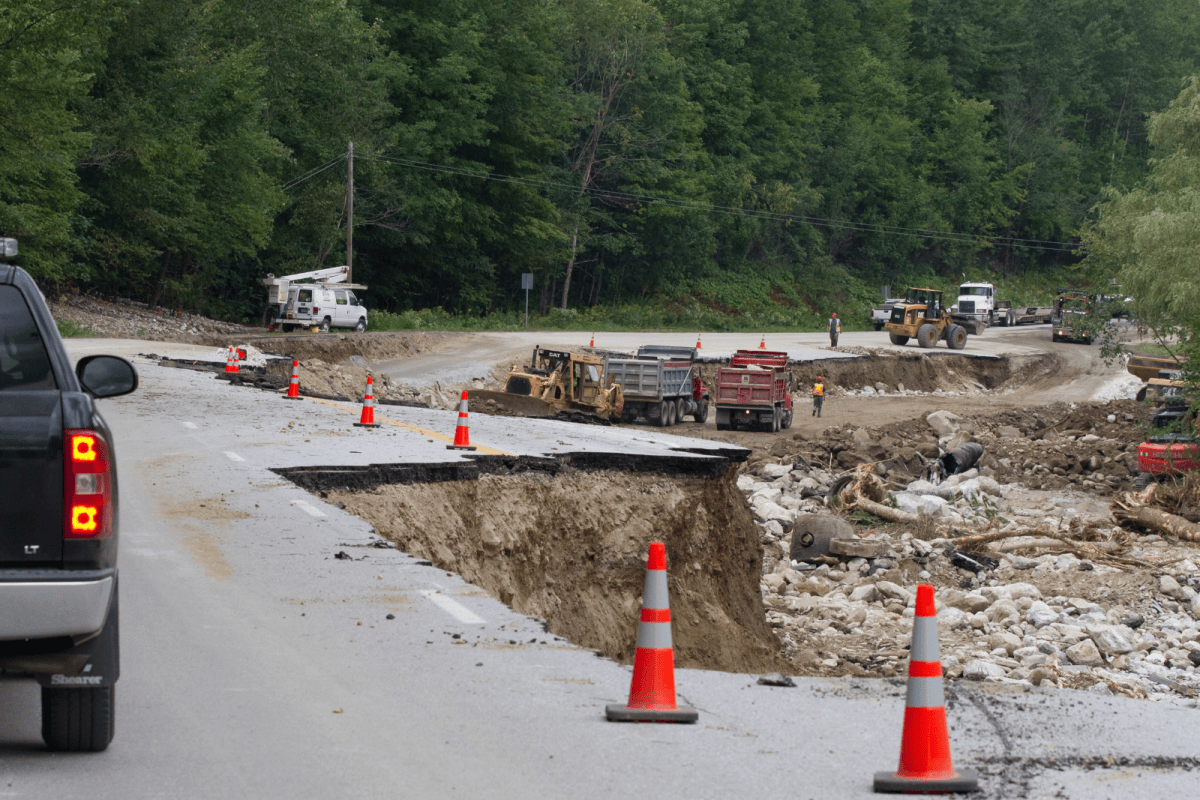
When a disaster strikes, communities have counted on the federal government to be there on their worst days. But climate change is causing greater damage, more often, and the safety net has shrunk rather than grown. At Newsweek’s Pillars of Stability event, Melissa Hoffer, Massachusetts’ climate chief, said the state once budgeted for around 26% of its climate funding to come from the federal government.
When floods hit Massachusetts in 2023, the state had no resilience fund and didn’t qualify for federal aid either. Without federal support, states are more vulnerable. Reporting by the New York Times in May revealed that over the last decade there have been increased review times and higher denial rates for Federal Emergency Management Agency emergency relief funds.
Now climate change is reaching places that used to be safe. Douglas Farnham, Vermont’s chief recovery officer, noted during the panel discussion that Vermont used to be considered a “climate refuge,” but the 2023 and 2024 floods changed that view. It isn’t the immediate damage and repair costs that must be considered either.
Hoffer predicts the future economic health of towns in southern Florida, where coastal homes pay for local services through property taxes, will be next to be hit: “I think we will start to see the bankruptcies of towns in southern Florida, probably within the next 10 to 15 years.” As those places become too risky or too expensive to live in because of the disaster and repair costs, homes lose value and towns lose the tax money they run on, meaning even less capital for resilience support. Hoffer said that the key is to tie disaster aid to building back stronger. For its new resilience fund, Massachusetts “created eligibility criteria [for funding] that require you to build back more resiliently,” she said.
That way, the state is not paying to keep rebuilding the same places, and instead builds them better. Vermont shares the mindset. Following storm Irene in 2011, the Federal Emergency Management Agency helped Vermont pay to rebuild to stronger standards.
Now states must increasingly find that money themselves. Part of the challenge is that resilience is hard to budget for. No one knows when a storm will hit or how much damage it will do.
Extract — continue reading at the source.