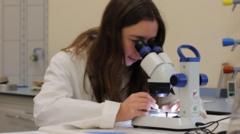
Should the apocalypse arrive, Wales as we know it may depend on conservationists Ellyn Baker and Kevin McGinn and their cotton bags full of seeds. The duo are in charge of carefully collecting and storing native wild seeds to create a living genetic library that could restore the country's ecosystem after a disaster. Ellyn, 25, and Kevin, 38, meticulously plan their summer so they can be in the right place at the right time when plants release their seed - a window of just days in some cases - that, if missed, can take several years to happen again.
But these seeds are not just being saved for some global catastrophe - they have already been used to restore species that have been wiped out. Inside a small lab tucked away in the National Botanical Gardens of Wales in Carmarthenshire, humming freezers full of labelled silver packets are the last line of defence to save wild species from extinction. Wales has about 60 species of plant that are not found anywhere else and, if they are wiped out, then that species ceases to exist on the planet, said Kevin, the curator of the seed bank and herbarium.
One-sixth of all plants in Wales are threatened with extinction and if they are lost there would be far reaching consequences for humanity. Ellyn and Kevin have collected more than five million seeds since 2018 - with half of everything they collect sent to a bomb-proof vault where seeds from around the world are kept ready to restart ecosystems in every continent. If a flood or a drought wiped out all of Wales' wild species of plants, it would be this seed bank that could restore the country and save the ecosystem, said Kevin.
"That would be the worst-case scenario," Ellyn added. "As long as the conditions after the apocalypse were still OK for the plants to grow, because obviously they would have been through a lot." Kevin said it was much more likely for extinctions to happen in localised areas, something that has already happened. Kevin said people often suffered from "plant blindness" where the benefits to the environment, and society itself, are overlooked.
"When plant species are lost, ecosystems become less resilient to pressures such as climate change, disease and extreme weather," he added. "This can trigger knock-on effects, for example, insects that rely on specific plants may decline or disappear too. "Changes like this can affect people.
Floral diversity supports pollinators and fewer pollinators can reduce crop yields, impacting food production and local economies. "Plant diversity also helps maintain soil health, which is vital for farmland, flood mitigation and communities." With fewer plant populations, genetic diversity - the range of different genes within a species, some of which could help it adapt to new environments - are lost. "Genetic diversity is a resource for us too as humans, especially the wild relatives of crops.
Extract — continue reading at the source.


