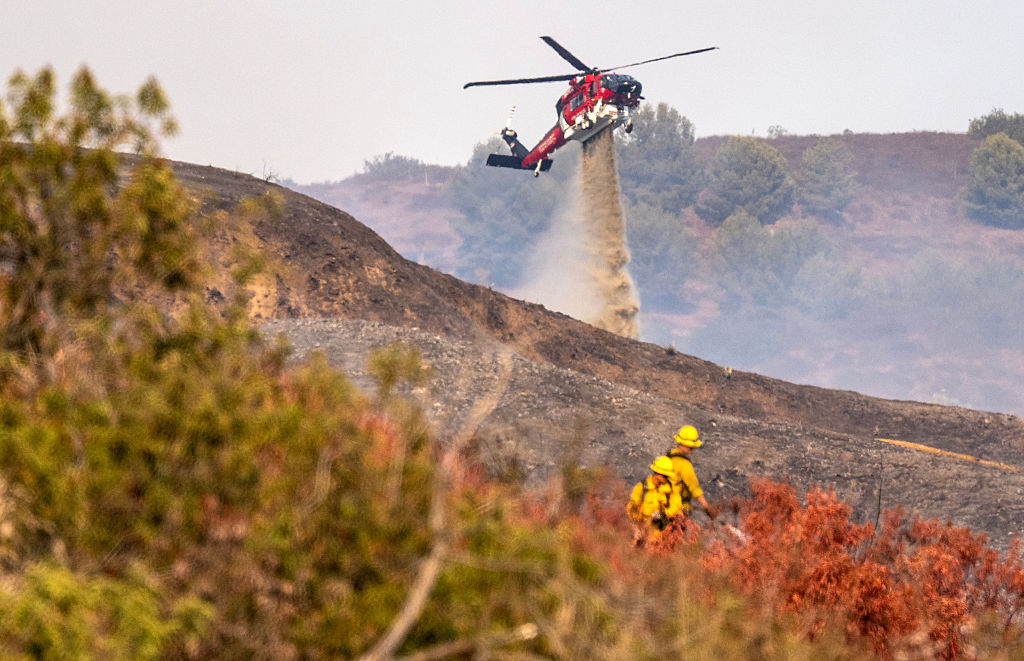
The United States is on pace to see one of its most active wildfire seasons on record. According to a new AccuWeather report, large fires were active in at least 13 states as of Sept. 9, while more than 8.4 million acres had burned nationwide this year—about 1.3 million acres above the full-year annual average over the previous decade. The extraordinarily active season is testing a recently overhauled federal wildfire-response system while placing mounting financial pressure on governments, taxpayers, insurers, and individual households.
The Los Angeles fires in January 2025 were high-profile incidents that drew widespread attention to the nation’s risk. They were notable as sudden, highly concentrated, urban conflagration events—and they stand in contrast to the 2026 wildfire season, which has garnered less attention with the incidents geographically dispersed across the U.S. However, almost twice as much land has burned so far in 2026 as had burned at the same point in 2025, according to AccuWeather.
The Palisades and Eaton fires in L.A. showcased just how costly massive wildfires are in terms of infrastructure damage, loss of life, and economic impact. Collectively, the fires burned about 37,500 acres and destroyed nearly 17,000 structures, killing at least 31 people. Munich Re estimated total damage at $53 billion, including $40 billion in insured losses—“by far the largest insured loss on record from a wildfire event,” according to the United Nations.
Read More: What Happens When the World Is on Fire In response, President Donald Trump signed an executive order on June 12, 2025, calling for the consolidation of wildfire response resources within the Interior and Agriculture departments within 90 days. Wildland Fire Service was formed as a result. The order also directed agencies to review rules that might impede wildfire response, develop performance metrics, release relevant historical satellite data, and evaluate the sale of excess military aircraft for wildfire response.
Those provisions carried deadlines ranging from 120 to 210 days. Since then, the Administration has overhauled how the federal government fights fires. One of the largest shifts involves focusing on wildfire suppression.
Since April, Interior Secretary Doug Burgum has directed crews to presume a full-suppression strategy for every wildfire under the management of the Interior Department. While managers are instructed to select tactics according to on-the-ground conditions, the presumptive approach is suppression. The move has drawn criticism as states compete for limited firefighting resources, and as federal forecasters expect above-normal significant-fire potential in parts of the West through September.
Extract — continue reading at the source.