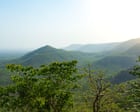
Last week, however, we learned that the forest cover programme had barely taken root when the government’s auditors released their findings of the flagship Green India Mission. The shortfall of 97.57% from India’s initial pledge in 2014 was stark enough to alarm the government’s own auditor, who described the progress as “negligible”. Yet if you ask the government about forest cover, you’ll get a far greener picture.
I’m writing this on the day the UK Met Office issued a calamitous warning – 2027 could be the hottest year yet, on account of the strongest El Niño in more than a century. For India, a disrupted monsoon season puts agriculture and millions who depend on it at risk. Which makes the question of what’s happening to India’s green cover feel far more urgent than an academic disagreement over numbers.
I went down the rabbit hole of reports, datasets and government’s parliamentary disclosures. The government’s last comprehensive report from 2023 (released a year later) touted that forest cover in India has grown since 2021. But other, independent, assessments have found that forest cover is lower than what the government has claimed in recent years, or that it has reduced.
The discrepancy lies in some creative accounting. Last year, dozens of former civil servants wrote to the government criticising the forest report. They described its methodology as unreliable and nonscientific, pointing to the inclusion of smaller orchards, as well as coconut and rubber plantations, in the calculation of forest cover.
We have broadened the definition to include a lot more,” Pooja Choksi, founder of environmental consultancy Ficus Research Consulting, told me. The government has defended its methodology, saying its definition is internationally accepted and includes tree-covered land outside forests as well as orchards and bamboo and palm plantations. Even as the government pledged to increase forestation, over the past five years India has approved the diversion of forest land for development projects covering an area roughly equivalent to the size of Hong Kong, according to data shared in parliament this month.
The pace has accelerated, with the last financial year seeing the single largest chunk cleared yet. Mining was the single-biggest sector, accounting for 22% of all diverted forest land, followed by road works and irrigation projects. The pressure on forests is concentrated in some states.
Extract — continue reading at the source.