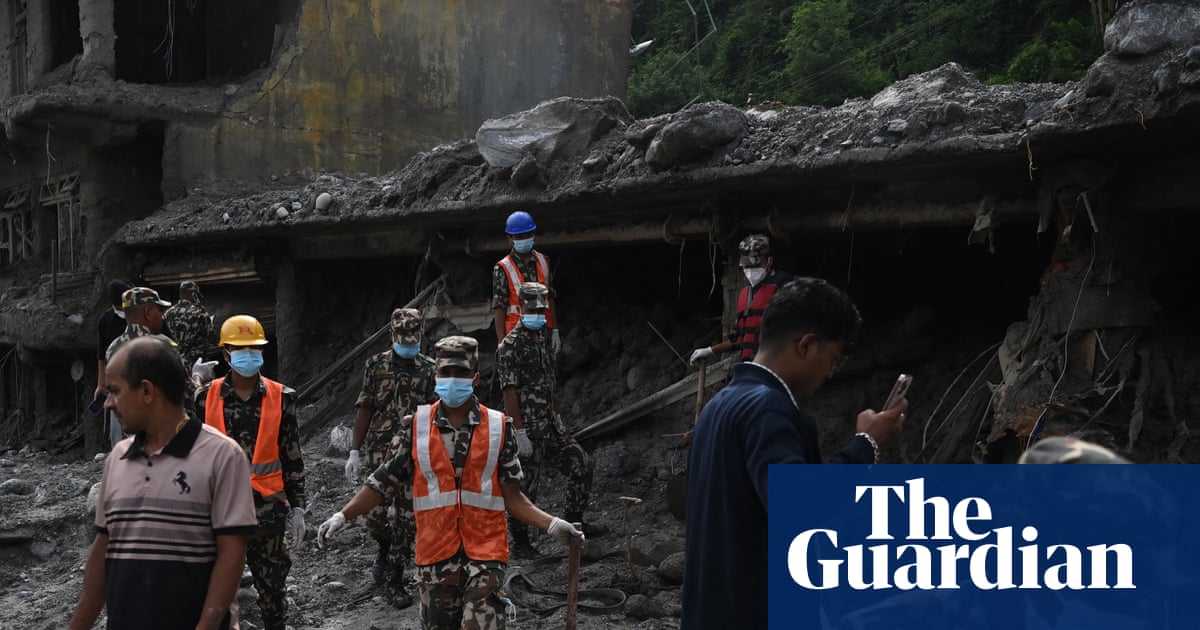
The bodies of some of those killed in the Nepal-Tibet flood disaster may never be found, and some of those that are may never be identified, a world-renowned forensic scientist says. Prof Richard Bassed, the head of forensic medicine at Melbourne’s Monash University, spent three months in Thailand after the 2004 Boxing Day tsunami and also helped to identify victims of Victoria’s catastrophic Black Saturday bushfires in 2009. Now he has watched as authorities in Nepal and Tibet struggle to find and identify the dead amid the agonies of the living after last week’s devastating flash flood.
More than 1,250 people have been confirmed dead, with more than 5,000 missing. The difficult terrain, and inadequate communications and resources, would all hamper efforts, Bassed says. I imagine there’s a number they’ll never find.
I imagine they’ll be finding bodies next year.” Authorities are still finding bodies from the 2011 Japanese tsunami, he says. The bodies from the 2004 tsunami were relatively easy to recover, but it still took a year to identify 5,000 people, he says. For me, it’s kids,” he says.
The randomness of a tsunami, the randomness of this massive flood. This week Nepali police urged relatives of missing tourists to provide “a fresh blood sample for DNA profiling and two passport-sized photographs” to the pathology laboratory at the police hospital in Kathmandu. But authorities in Nepal and Tibet face “extreme challenges”, Bassed says.
They include the danger of more mudslides, the complexity of co-ordinating across international borders and the likelihood of local mortuaries and other infrastructure being overwhelmed by the number of bodies. The mix of nations and religions also brings issues of different cultural beliefs around how and whether people should be buried. The International Committee of the Red Cross and other international bodies have published Management of dead bodies after disasters: A field manual for First Responders to help people deal with bodies in a “proper and dignified way”, including by taking down details that will later help experts identify the remains.
First responders – often locals who are not forensic experts – are trained to follow those guidelines, tagging bodies in the hope they will later be matched to a missing person. They give each body a unique code (for example the name of the place, the name of the team and a number). They will also take photos of the body and any distinguishing features such as gold teeth, clothing and tattoos, including that code in the image.
Extract — continue reading at the source.


