More than a flowering of the arts at the dawn of the 20th century, the Harlem Renaissance marked the breakthrough moment when Black Americans asserted their creative control, defining a culture that had been purpose-built to exclude them. The imprints were all over the Jazz Age – on bookshelves and radio, in flapper dresses and cloche hats, in Hubert Julian’s daring flights and the fractious debates between Marcus Garvey and WEB Du Bois. Like the David committee of the Italian Renaissance or the American Revolution’s Continental Congress, the Harlem Renaissance is one of those moments that makes you wonder: what was it really like?
Those Cotton Club nights? The rent parties with all those New Negroes – a heady brew of southern émigrés, Caribbean vanguards and New York lifers – holding forth and hootin’ and hollerin’, high on the fact that they had found one another? Could they appreciate the significance of the moment as they were making it?
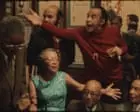
Sometimes we forget that it is The Now. We’re constantly looking to the next thing, looking outside.” Once Upon a Time in Harlem looks back – to the August day in 1972 when Liani’s grandfather, the prolific and pioneering film-maker William Greaves, threw a cocktail party at Duke Ellington House, invited over the surviving luminaries of the Harlem Renaissance and switched on the cameras. (With Ellington himself too ill to attend, it fell to his sister, Ruth, to play host.) For four hours, these extraordinary partygoers – some seeing one another for the first time in 50 years – reminisced, made merry and reckoned with the Harlem Renaissance’s modern-day legacy. The 100-minute film itself is a time capsule, a cinematic Hall of Mirrors at Versailles in which the Harlem Renaissance gazes back at its own legacy, leaving future generations to unearth, interrogate and work from the reflections they find.
It’s the kind of artefact today’s Black creatives should have in their library – for inspiration, for accountability, to ground themselves. But until hard copies are available – “That will exist!” says William’s son, director David Greaves, adding that streaming is still a long way off – audiences will have to catch Once Upon a Time in theaters, as the film opens nationwide this month. William Greaves – an Actors Studio member alongside Marlon Brando before directing the groundbreaking meta-documentary Symbiopsychotaxiplasm – devoted himself to the project until his death in 2014 at age 87.
Greaves kept rolling after the party, through the 80s and 90s. Liani remembers William and his wife, Louise Archambault Greaves, turning up with their cameras to a Harlem Aids walk she was working in the 2000s. Among Liani and David’s inheritances was some 60,000 feet of 16mm film held in storage.
And just like in Symbiopsychotaxiplasm, he had to kind of step away in order for the film to be great.” So Liani and David kept the focus squarely on the party. They enlisted the help of preservation specialist Bill Brand to restore the 1972 footage, an 18-month process, before sending it off to a finishing house. And then the titans of the Harlem Renaissance start filling the frame: the photographer James Van Der Zee, demurring from an invitation to play Duke’s piano before letting his shockingly nimble fingers wander.
Extract — continue reading at the source.