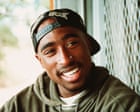
Thirty years after the killing of Tupac Shakur, conspiracy theories and rumors about the perpetrator’s identity, one man has now been held criminally responsible for the rap icon’s death. A Las Vegas jury convicted Duane “Keffe D” Davis, a 63-year-old former South Side Compton Crips gang leader, of murder for his role in the drive-by shooting. During the two-week long trial, prosecutors argued Davis was the “on-the-ground, on-site commander of the effort to kill Tupac” and had sought revenge after the musician was involved in a fight with his nephew, Orlando “Baby Lane” Anderson.
The conviction brings long-awaited resolution to the case, which has captured public attention and dominated headlines for decades. Shakur, the son of members of the Black Panther party was at the height of his career in 1996. The rapper had released the hit album All Eyez on Me, which sold millions of copies, and had become a global superstar.
In September 1996, he was in Las Vegas attending a Mike Tyson fight at the MGM Grand hotel. While heading to an afterparty that evening, he was attacked just off the Las Vegas strip alongside Marion “Suge” Knight, the founder of Death Row Records. As they waited at a red light, a Cadillac pulled up next to Shakur’s vehicle and shot him multiple times.
Shakur died days later, at age 25. Shakur’s death, at a young age and an ascendant point in his cultural power, turned him into an almost saint-like figure within hip-hop. A flood of posthumous songs, music videos and albums were released after the murder, eulogizing his legacy as one of the most prolific and talented artists of his generation.
There were no arrests made in his killing and Las Vegas police faced criticism that the department had bungled the investigation and failed to pursue crucial leads. Questions and conspiracy theories persisted for decades, but few official answers. The killing was for years viewed as connected to the east coast-west coast rivalry between different hip-hop groups and record labels.
Shakur had a longstanding feud with Christopher Wallace, a Brooklyn rapper, better known as Biggie Smalls or The Notorious B.I.G., that had involved numerous diss tracks and threats between their camps. Wallace was murdered in Los Angeles less than six months after Shakur’s killing, adding to the lore around the feud. Both Shakur and Biggie quickly became pop culture icons representing a golden era of 90s hip-hop.
Extract — continue reading at the source.