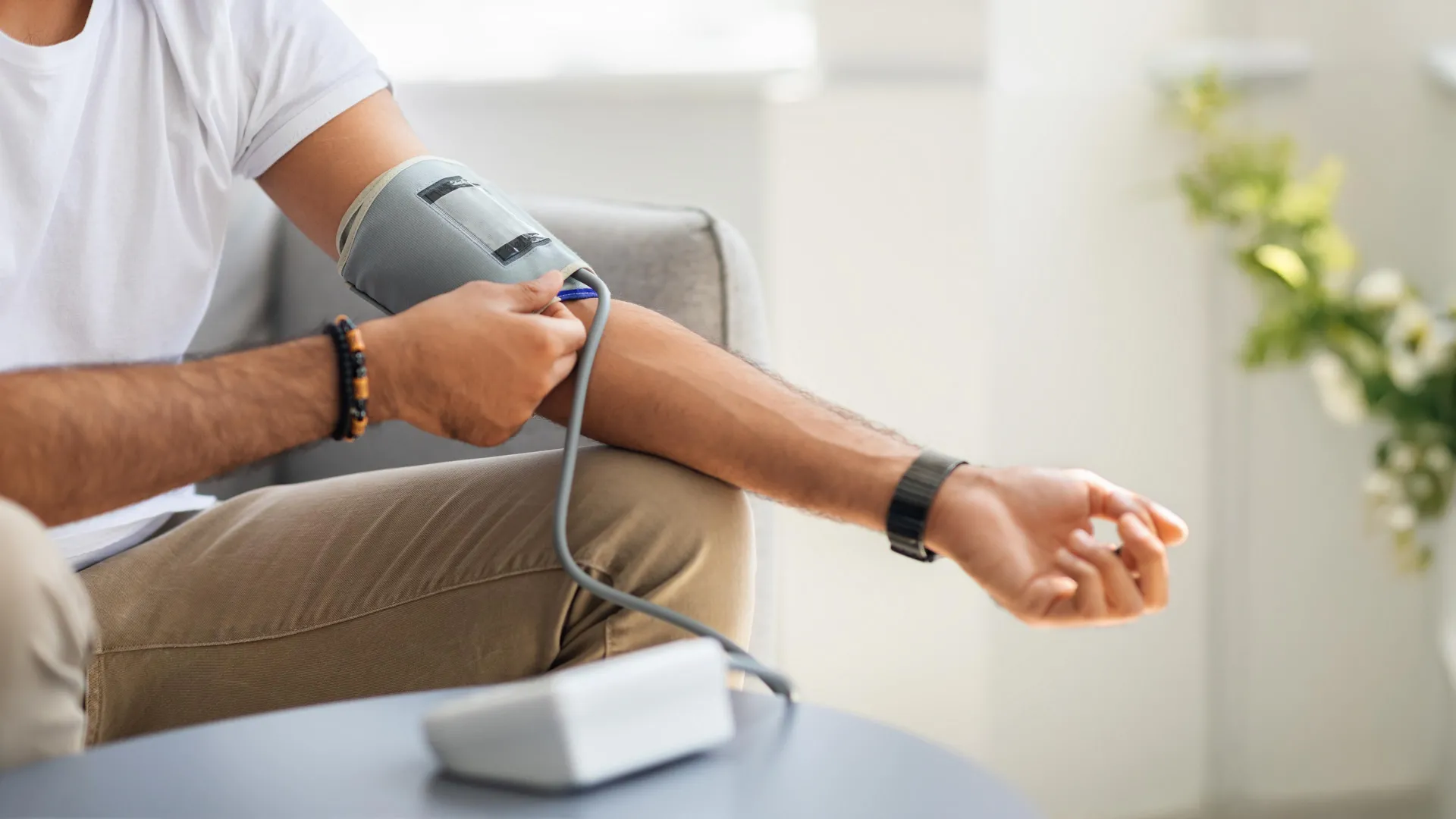
A Johns Hopkins Medicine-led study suggests that the way a patient positions their arm during a blood pressure (BP) check can meaningfully affect the result. Common arm positions used during screenings may make blood pressure appear higher than it actually is, potentially contributing to an incorrect diagnosis of hypertension. In a report on the study, published in JAMA Internal Medicine, researchers compared three arm positions: an arm supported on a desk, an arm supported on a lap, and an unsupported arm hanging at the patient's side.
They found that resting the arm on the lap increased systolic pressure (the top number in a BP reading) by nearly 4 mmHg, while allowing the arm to hang unsupported at the side increased systolic pressure by nearly 7 mmHg. Arm position can make a major difference The results show that arm position makes a "huge difference" in obtaining an accurate blood pressure measurement, according to Tammy Brady, M.D., Ph.D., vice chair for clinical research in the Department of Pediatrics at the Johns Hopkins University School of Medicine, medical director of the pediatric hypertension program at Johns Hopkins Children's Center, deputy director of the Welch Center for Prevention, Epidemiology, and Clinical Research and senior author of the study. The researchers say the findings reinforce clinical recommendations that call for the patient's arm to be firmly supported on a desk or another surface during blood pressure measurement.
According to the American Heart Association, nearly half of U.S. adults have elevated blood pressure, a diagnosis made when the measured force of blood flowing through blood vessels is higher than what is generally considered normal, on average 120/80. If left untreated, high blood pressure can increase the risk of heart attack, stroke and other serious cardiovascular problems. Hypertension often produces few or no noticeable symptoms, making early and regular screening during routine medical visits an important part of managing the condition.
In many cases, blood pressure can be controlled through lifestyle changes such as weight loss, healthy diets and exercise, along with treatment using any of a variety of medications. The latest clinical practice guidelines from the American Heart Association outline several steps intended to improve measurement accuracy. These include using an appropriate cuff size, supporting the back, keeping the feet flat on the floor with the legs uncrossed, and positioning the arm correctly.
The middle of an adjustable BP cuff should be at mid-heart level while the arm rests on a desk or table. Despite those recommendations, the researchers say blood pressure is frequently checked while patients sit on an exam table with little or no support for their arms. Sometimes a clinician holds the patient's arm, while in other cases the patient rests the arm in their lap.
For the Johns Hopkins study, researchers enrolled 133 adult participants (78% Black, 52% female) between Aug. 9, 2022, and June 1, 2023. Participants ranged in age from 18 to 80 and were randomly assigned to one of six groups that differed in the order in which the three seated arm positions were tested. All measurements were collected during a single visit between 9 a.m. and 6 p.m.
Extract — continue reading at the source.


